Introduction
Choosing the right concrete batching plant capacity is essential for meeting project deadlines, controlling operating costs, and maintaining a reliable supply of ready-mix concrete. Whether you are building residential properties, commercial buildings, roads, bridges, or large infrastructure projects, the capacity of your batching plant should match your actual concrete demand.
Concrete batching plants are available in different capacities, commonly ranging from 25 m³/h to 180 m³/h and beyond. However, a higher-capacity plant is not always the best choice. The right model depends on your project size, required concrete output, working hours, construction schedule, and future production plans.
In this guide, we explain how concrete batching plant capacity works, how to choose the right output for your project, and what to consider before purchasing a concrete batching plant.
1. What Does Concrete Batching Plant Capacity Mean?
Concrete batching plant capacity refers to the volume of concrete a plant can produce per hour. It is usually measured in cubic meters per hour (m³/h).
For example, a concrete batching plant rated at 60 m³/h has a theoretical production capacity of 60 cubic meters of concrete per hour under specified operating conditions.
Concrete batching plants are commonly classified by their rated output:
- Small-capacity plants: 25–35 m³/h
- Medium-capacity plants: 50–75 m³/h
- Large-capacity plants: 90–120 m³/h
- High-capacity plants: 150–180 m³/h and above
These ranges provide a general reference for equipment selection. The actual suitable capacity depends on project requirements and the plant’s configuration.
Theoretical Capacity vs. Actual Production
One important point is that rated capacity and actual production are not always the same.
Theoretical capacity is the manufacturer’s rated output under specified conditions. Actual production may be affected by several factors, including:
- Concrete mix design and batch size
- Mixing and discharging cycle times
- Aggregate feeding and cement delivery
- Material loading and transportation
- Equipment maintenance and downtime
- Operator experience and site management
For this reason, buyers should evaluate the plant’s rated capacity alongside its actual operating conditions rather than relying on the model number alone.
2. Concrete Batching Plant Capacity Comparison
Shanghe Machinery offers concrete batching plant models designed for projects with different production requirements. The following table provides a general guide to selecting a suitable capacity.
| Plant Model | Rated Capacity | Typical Application |
|---|---|---|
| HZS25 | 25 m³/h | Small construction projects and limited concrete demand |
| HZS35 | 35 m³/h | Small to medium construction projects |
| HZS50 | 50 m³/h | Residential and commercial construction |
| HZS60 | 60 m³/h | Medium-sized construction and ready-mix operations |
| HZS75 | 75 m³/h | Medium to large construction projects |
| HZS90 | 90 m³/h | Large building and infrastructure projects |
| HZS120 | 120 m³/h | High-demand commercial and infrastructure projects |
| HZS180 | 180 m³/h | Large-scale concrete production and major infrastructure projects |
Note: These are nominal capacity ratings. Actual output depends on the equipment configuration, mix design, operating conditions, and production cycle.

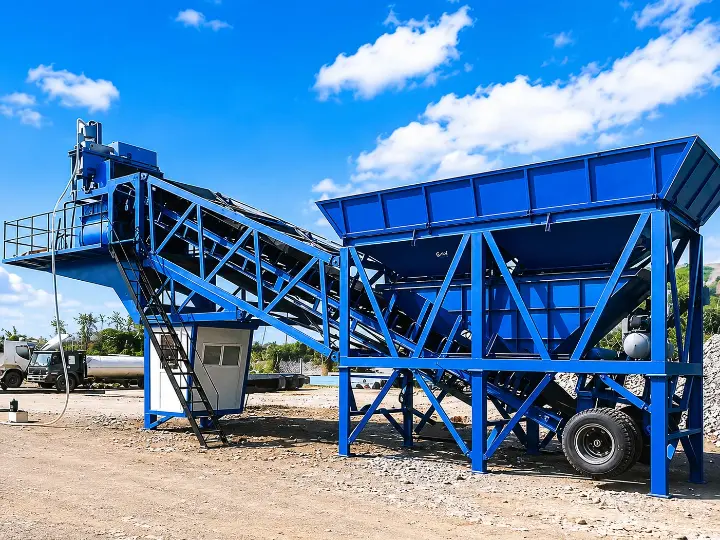
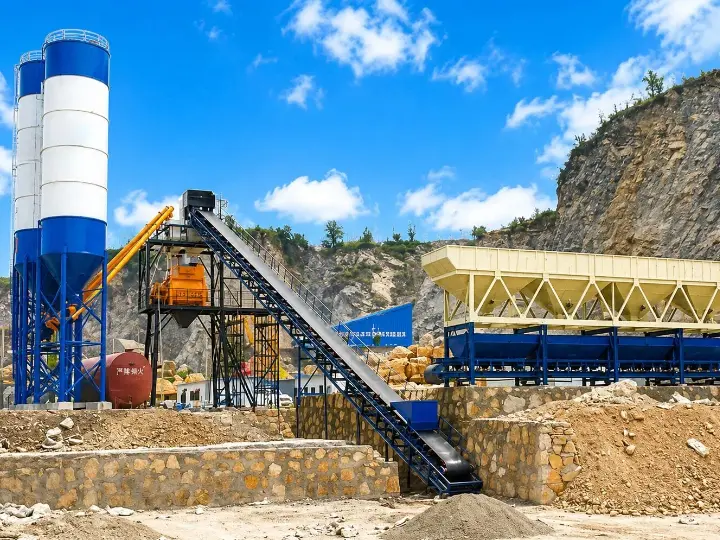
HZS35: For Small Construction Projects
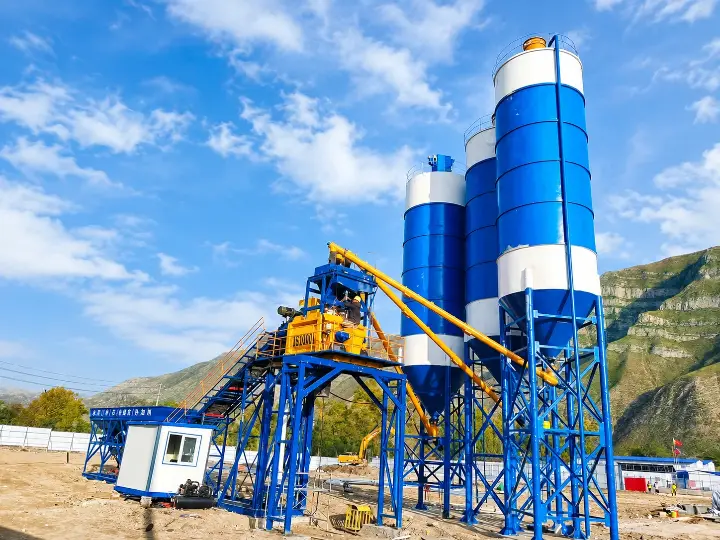
HZS60: For Medium-Sized Projects
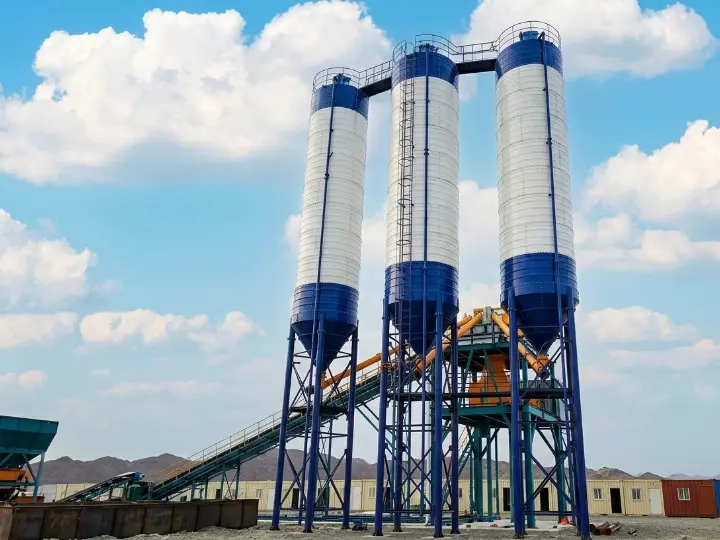
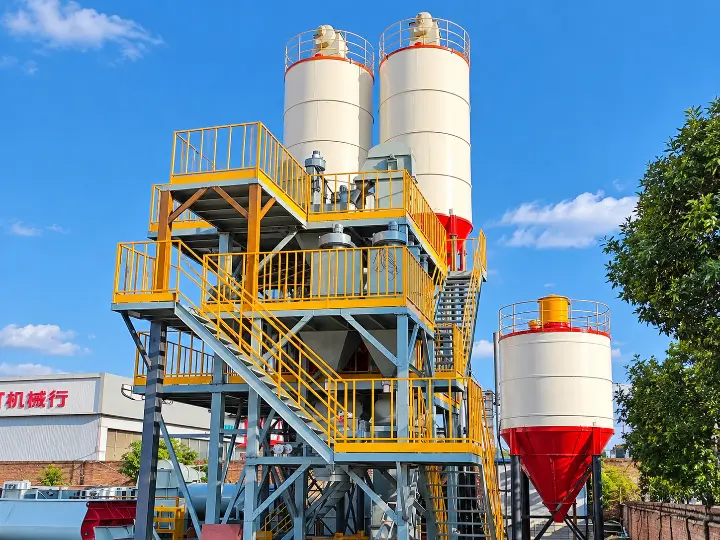
HZS120: For Large Construction Projects
HZS25–HZS35: For Small Construction Projects
A 25–35 m³/h concrete batching plant may be suitable for contractors working on small buildings, residential developments, foundations, and other projects with relatively limited concrete demand.
These models can be worth considering when:
- Daily concrete requirements are relatively low.
- The project does not require continuous high-volume concrete supply.
- Investment and operating costs need to be carefully controlled.
- The available installation space is limited.
For contractors who primarily produce concrete for their own projects, a small-capacity plant may provide a practical starting point.
HZS50–HZS75: For Medium-Sized Projects
Concrete batching plants rated at 50–75 m³/h can serve medium-sized construction projects and some ready-mix concrete operations.
Typical applications include residential communities, commercial buildings, small industrial facilities, and local infrastructure construction.
Consider this capacity range if your project requires a regular supply of concrete but does not consistently demand the output of a large industrial plant.
HZS90–HZS120: For Large Construction Projects
A 90–120 m³/h concrete batching plant may be suitable for projects with higher concrete demand, including large commercial developments, industrial facilities, road construction, and infrastructure projects.
These plants are worth considering when:
- Multiple concrete pouring operations need to be coordinated.
- The construction schedule requires higher production output.
- Concrete demand is relatively stable throughout the working day.
- The site has sufficient space and material supply capacity.
The complete production system should be designed to support the required output, including aggregate storage, cement silos, conveying equipment, and concrete transportation.
HZS150–HZS180: For High-Volume Production
For large infrastructure projects and high-volume ready-mix concrete production, a 150–180 m³/h plant may be worth evaluating.
These plants can support demanding production schedules, provided that raw materials, transportation, power supply, and downstream operations are properly coordinated.
A high-capacity plant requires careful planning. Purchasing a larger model without sufficient concrete demand or supporting infrastructure may increase investment and operating costs without delivering corresponding benefits.
3. How to Calculate the Concrete Batching Plant Capacity You Need
The most practical way to select a concrete batching plant is to calculate your required concrete output.
You can begin with three basic questions:
- How much concrete does your project require in total?
- How many days or hours are available for concrete production?
- What is the maximum volume of concrete you need to supply during your busiest period?
Step 1: Calculate Your Average Hourly Demand
Use the following formula:
Required average output = Total concrete demand ÷ Total available production hours
For example, suppose your project requires 1,200 m³ of concrete over 20 working days, with 8 hours of production scheduled per day.
Total production hours:
20 × 8 = 160 hours
Required average output:
1,200 ÷ 160 = 7.5 m³/h
This calculation gives an average demand of 7.5 m³/h. However, it does not automatically mean that a 25 m³/h plant is the best choice. Your project may have days with significantly higher demand, so peak-hour requirements must also be considered.
Step 2: Estimate Peak Concrete Demand
Consider a contractor who needs to pour 120 m³ of concrete within 4 hours.
Required average output during the pour:
120 ÷ 4 = 30 m³/h
A plant with a rated capacity of 25 m³/h would not provide sufficient nominal output for this requirement. A 35 m³/h or larger plant could be evaluated, depending on actual production performance and delivery arrangements.
It is important to leave an appropriate operating margin because rated output does not guarantee that the required volume will be produced under every condition.
Step 3: Consider Operating Efficiency
Suppose a project requires 60 m³/h of actual concrete production. If the plant is expected to achieve an assumed operating efficiency of 80%, the indicative rated capacity required would be:
60 ÷ 0.80 = 75 m³/h
In this example, a plant rated at approximately 75 m³/h would be a reasonable model to evaluate.
The 80% figure is an illustrative planning assumption, not a guaranteed efficiency rate. Your actual operating efficiency should be estimated from the plant configuration, material supply, cycle times, transportation arrangements, and site conditions.
4. Five Factors That Affect Your Choice of Plant Capacity
Selecting a concrete batching plant involves more than comparing hourly output figures. The following factors can significantly influence your decision.
1. Project Size and Construction Schedule
A small building project with flexible concrete delivery requirements may not need a high-capacity plant. In contrast, a large infrastructure project with strict pouring schedules may require substantially higher output.
Estimate both total concrete consumption and the maximum hourly demand before choosing a model.
2. Concrete Delivery Requirements
If you operate a ready-mix concrete business, the plant must supply enough concrete to meet customer orders and truck delivery schedules.
Consider the number of mixer trucks, average delivery distance, loading time, and expected waiting time. A high-capacity plant cannot achieve its full potential if concrete transportation becomes the production bottleneck.
3. Available Installation Space
Plant capacity can affect the overall equipment layout, aggregate storage requirements, cement storage, and material handling arrangements.
Before purchasing, assess the site area, foundation requirements, access roads, and space available for trucks and raw material storage.
4. Budget and Long-Term Operating Costs
A larger concrete batching plant may require a higher initial investment and additional supporting equipment.
Evaluate the total project cost, including:
- Main batching plant equipment
- Cement silos and aggregate storage
- Installation and foundation work
- Electrical systems and utilities
- Transportation and commissioning
- Spare parts and routine maintenance
The objective is to choose a plant that meets production requirements without creating unnecessary investment or operating expenses.
5. Future Production Demand
If your business expects to expand, it may be worth considering a plant with additional production capacity.
However, future demand should be assessed realistically. A larger plant is beneficial only when the expected increase in concrete orders justifies the additional investment and operating requirements.
5. Mobile or Stationary Concrete Batching Plant: Which Capacity Should You Choose?
Capacity is only one part of the selection process. You should also consider whether a mobile or stationary concrete batching plant better suits your project.
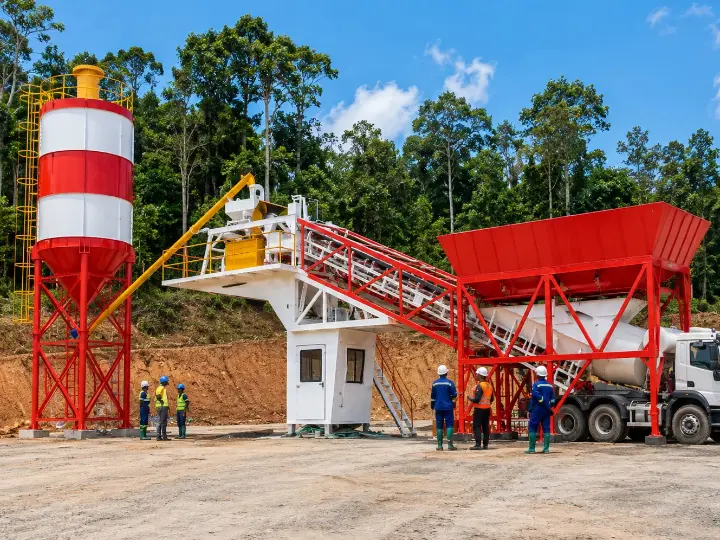
Mobile Concrete Batching Plant
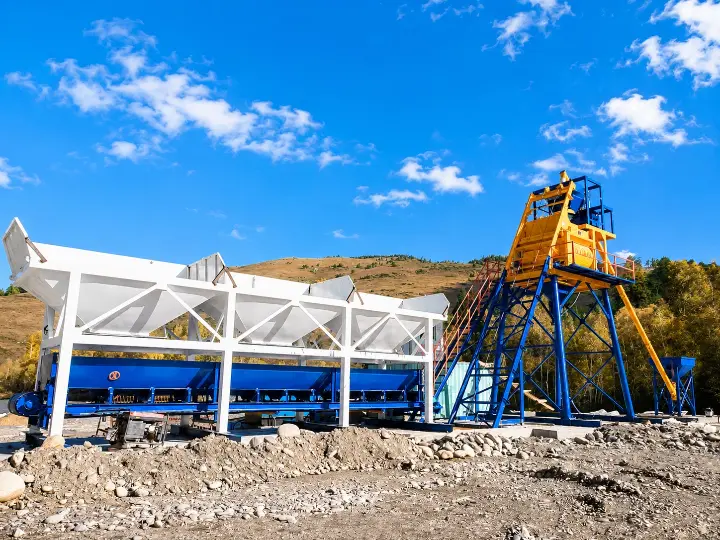
Stationary Concrete Batching Plant
Mobile Concrete Batching Plant
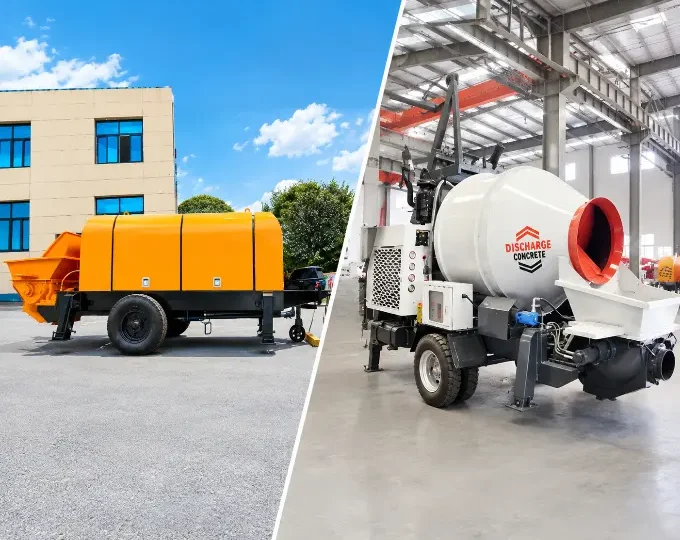
A mobile concrete batching plant is worth considering for temporary construction sites, projects in remote locations, and operations that may need to relocate.
Potential advantages include a layout designed for relocation, flexible site deployment, and reduced reconstruction requirements when moving between suitable project locations.
Before choosing a mobile plant, confirm its rated output, transport dimensions, installation requirements, and the extent of on-site assembly required.
Stationary Concrete Batching Plant
A stationary concrete batching plant is often suitable for permanent production facilities, commercial ready-mix businesses, and long-term infrastructure projects.
Its configuration can be designed around the required production capacity, material storage, site layout, and operating workflow.
For projects requiring consistent high-volume production, a stationary plant may offer a more suitable long-term solution.
The best choice depends on project duration, relocation requirements, available space, and production targets rather than capacity alone.
6. Common Mistakes When Selecting Concrete Batching Plant Capacity
Avoiding the following mistakes can help reduce purchasing risks and improve production planning.
- Choosing a plant based only on its rated output
A model’s nominal capacity does not guarantee the same hourly output at every construction site. Evaluate the complete production process and operating conditions.
2. Ignoring peak-hour concrete demand
Average daily consumption may appear low, but a project may still require a large volume of concrete within a short period. Always calculate peak demand.
3. Underestimating transportation requirements
Mixer trucks, loading arrangements, and delivery distances can limit the amount of concrete supplied to the project.
4. Overlooking supporting equipment
Aggregate batching systems, cement silos, conveyors, water supply, and electrical systems must be compatible with the production target.
5. Choosing a plant without considering future needs
A plant that meets current demand may become insufficient as the business expands. Compare the cost of additional capacity with realistic future sales and project requirements.
7. How to Choose the Right Concrete Batching Plant from Shanghe Machinery
At Shanghe Machinery, we provide concrete batching plant solutions for different construction and commercial production requirements.
When selecting a plant, we recommend evaluating the following information:
- Required capacity: Your target hourly output in m³/h
- Project type: Residential, commercial, industrial, or infrastructure construction
- Plant configuration: Stationary or mobile
- Concrete application: Concrete for your own projects or commercial ready-mix supply
- Site conditions: Available space, foundation, power supply, and material storage
- Supporting equipment: Cement silos, aggregate batching systems, conveyors, and other accessories
Our HZS series includes models with nominal capacities from 25 m³/h to 180 m³/h, allowing buyers to compare different production options.
The right configuration depends on your actual requirements. Instead of selecting the largest available plant, focus on matching production capacity with your concrete demand, project schedule, and overall investment plan.
Frequently Asked Questions
1. What capacity concrete batching plant do I need for a small construction project?
A 25–35 m³/h concrete batching plant may be suitable for small construction projects with relatively limited concrete demand. However, the final choice should be based on peak concrete consumption, working hours, and delivery requirements.
2. Is a 60 m³/h concrete batching plant suitable for a ready-mix business?
A 60 m³/h plant may suit a small or medium-sized ready-mix operation, depending on customer demand, delivery distances, truck availability, and operating hours. Businesses with higher or more concentrated demand should also evaluate larger models.
3. What is the difference between HZS60 and HZS120?
The HZS60 has a nominal rated capacity of 60 m³/h, while the HZS120 is rated at 120 m³/h. The appropriate model depends on production demand, project schedules, supporting equipment, and investment considerations. Actual output should be confirmed against the manufacturer’s technical specifications and operating conditions.
4. Does a 120 m³/h concrete batching plant always produce 120 m³ of concrete per hour?
No. The rated capacity represents the manufacturer’s nominal production rating under specified conditions. Actual output can vary with mixing cycles, concrete mix design, material supply, equipment configuration, and operating efficiency.
5. How do I calculate the capacity required for my project?
Divide the total required concrete volume by the available production hours to estimate average hourly demand. Then evaluate peak-hour requirements and allow for realistic operating conditions. This approach provides a more reliable basis for selecting a plant than using total project volume alone.
6. Should I choose a mobile or stationary concrete batching plant?
A mobile plant may be more appropriate for projects requiring relocation, while a stationary plant may suit permanent production facilities and long-term operations. Compare site conditions, installation requirements, relocation frequency, and production needs before making a decision.o consider the manufacturer’s export experience, production capability, quality control system, and ability to provide technical support.
Get a Concrete Batching Plant Recommendation for Your Project
Not sure whether you need an HZS35, HZS60, HZS90, HZS120, or HZS180 concrete batching plant?
Share your project details with Shanghe Machinery, including your required concrete output, project location, application, and installation conditions. Our team can help you evaluate suitable capacity options and supporting equipment for your project.
Contact Shanghe Machinery today to discuss your concrete batching plant requirements and request a customized quotation.
Choose the right capacity for your project and plan your concrete production with confidence.