Introduction
Concrete placing is a critical step in construction. Even when a concrete pump delivers concrete efficiently, distributing the concrete accurately across large or complex structures can be challenging. A Concrete Placing Boom provides an effective solution by delivering pumped concrete to specific locations with greater reach, flexibility, and control.
From high-rise buildings and bridges to industrial plants and large foundations, concrete placing booms help construction teams improve pouring efficiency while reducing manual labor.
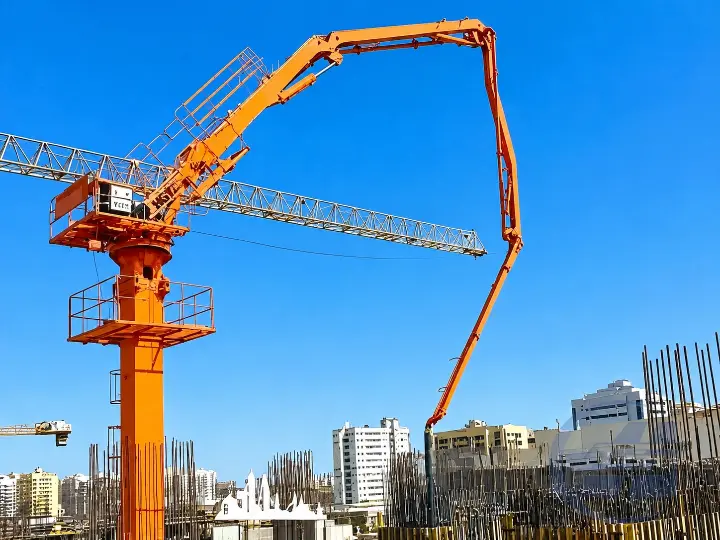
What Is a Concrete Placing Boom?
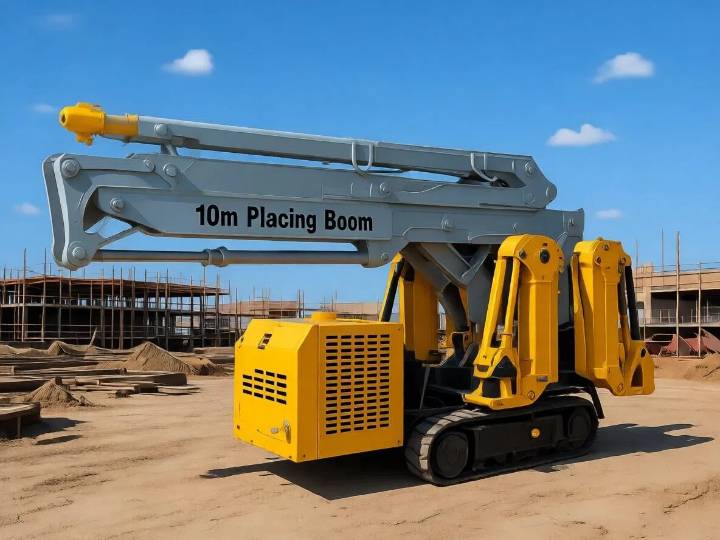
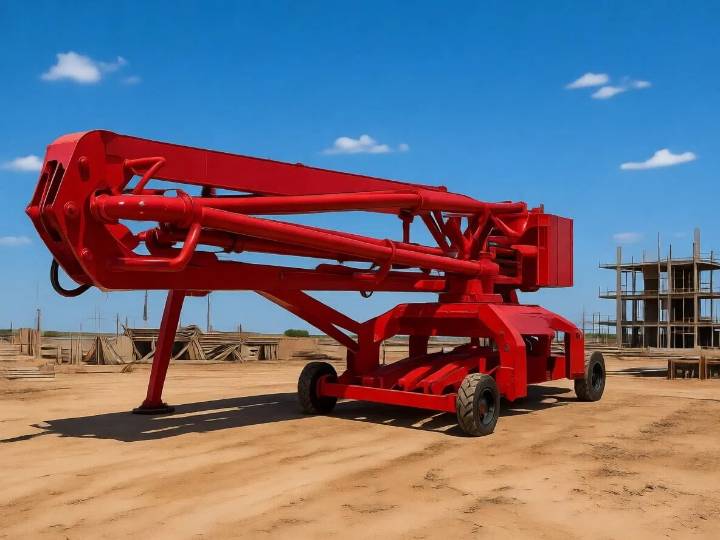
A Concrete Placing Boom is a specialized piece of concrete placing equipment used to distribute pumped concrete over a construction site.
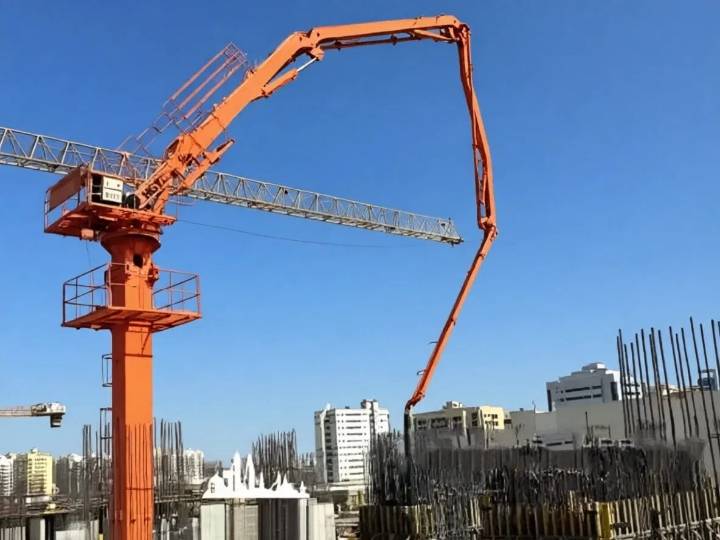
The equipment normally consists of a boom structure, delivery pipeline, hydraulic system, support structure, and control system. Concrete is pumped through the delivery pipeline and discharged through the end hose of the placing boom.
Depending on the project requirements, placing booms can be installed on concrete structures, floors, columns, foundations, or other suitable supporting systems.
Unlike traditional manual concrete distribution, a placing boom allows operators to control the discharge position from a centralized location.
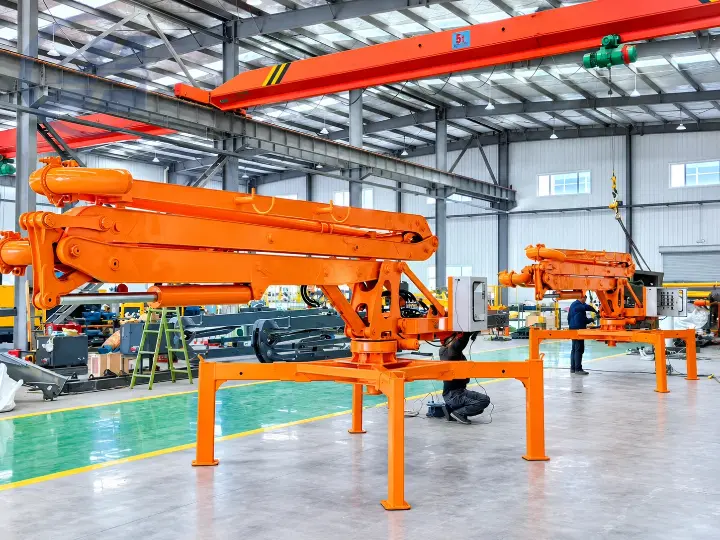
How Does a Concrete Placing Boom Work?
The working process is relatively straightforward:
1. Concrete Is Pumped
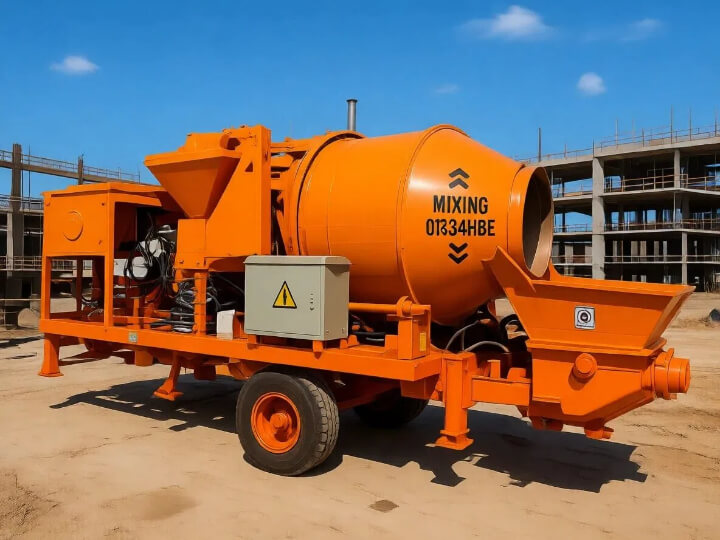
Fresh concrete is transported from a concrete mixer truck or batching plant to a concrete pump.
2. Concrete Enters the Delivery Pipeline
The concrete pump pushes the mixture through the pipeline connected to the placing boom.
3. The Boom Moves Into Position
The hydraulic system allows the boom to rotate, raise, lower, or extend according to the equipment design.
4. Concrete Is Discharged
The concrete reaches the end hose and is discharged directly into the required pouring area.
5. Continuous Placement
The boom can continuously distribute concrete across a large working area, reducing the need for workers to manually move concrete hoses..
Key Advantages
1. Wide Working Coverage
A concrete placing boom can cover a large construction area, depending on its boom length and installation configuration.
This makes it particularly useful for large slabs, foundations, bridges, tunnels, and high-rise construction projects.
2. Improved Concrete Placement Efficiency
Workers do not need to repeatedly move heavy concrete delivery hoses manually. The boom can be positioned quickly, helping accelerate the concrete pouring process.
3. Reduced Labor Requirements
Traditional concrete placement often requires several workers to pull and position delivery hoses. A placing boom reduces this workload and allows workers to focus on leveling, vibration, and finishing.
4. Flexible Operation
Hydraulic movement provides precise control over the boom. Operators can adjust the boom position according to the changing requirements of the construction site.
5. Better Working Conditions
Reducing manual handling of heavy concrete hoses can help improve working conditions and reduce physical strain on construction workers.
6. Suitable for Large Construction Projects
Concrete placing booms are widely used in projects where large quantities of concrete need to be distributed efficiently and continuously.higher cost but provides better performance for demanding projects.
Application
Concrete placing booms are suitable for a wide range of construction applications.
- High-Rise Buildings
In high-rise construction, concrete needs to be transported and distributed across elevated floors. A placing boom provides an efficient way to distribute concrete after it has been pumped to the required height.
2. Bridges
Bridge decks, piers, foundations, and other structural components often require controlled concrete placement. A placing boom can provide flexible coverage around the construction area.
3. Industrial Buildings
Large factories, warehouses, power plants, and other industrial facilities often involve large concrete slabs and foundations. A placing boom can improve concrete distribution efficiency.
4. Foundations
Large foundations require substantial volumes of concrete to be placed within a limited period. Using a placing boom can help maintain a more continuous pouring operation.
5. Tunnels and Infrastructure
Infrastructure projects often have difficult-to-access pouring areas. The flexible movement of a placing boom can help deliver concrete to areas that are difficult to reach manually.
Concrete Placing Boom vs. Traditional Concrete Hose Placement
Traditional concrete hose placement relies heavily on manual labor. Workers must move and position the hose as the concrete pouring area changes.
A concrete placing boom changes this process by allowing the delivery pipeline to be supported and controlled by the boom structure.e from a reliable manufacturer is usually a safer choice.
| Feature | Concrete Placing Boom | Manual Hose Placement |
|---|---|---|
| Working Coverage | Large | More Limited |
| Labor Requirement | Lower | Higher |
| Hose Handling | Controlled by Boom | Mainly Manual |
| Placement Flexibility | High | Moderate |
| Operator Control | Centralized | Manual |
| Large Project Suitability | Excellent | More Difficult |
For large-scale projects, the use of a placing boom can significantly improve the organization and efficiency of concrete placement.
How to Choose the Right Concrete Placing Boom
Selecting the right equipment depends on several project factors.
- Boom Length
Boom length determines the approximate working radius and coverage area. A longer boom may be suitable for large construction sites, while a compact model can be more practical for smaller projects.
2. Vertical and Horizontal Reach
Consider both the required horizontal coverage and vertical installation height before selecting the equipment.
3. Concrete Delivery Capacity
The placing boom should be matched with the output capacity of the concrete pump. The pipeline and boom configuration should also be suitable for the required concrete flow.
4. Installation Conditions
Before installation, evaluate the available supporting structure, installation position, working space, and site conditions.
5. Concrete Type
Different concrete mixtures may have different flow characteristics. The delivery pipeline diameter and equipment configuration should be selected according to the concrete specifications.
6. Project Requirements
Construction type, pouring volume, working height, site layout, and expected construction schedule should all be considered when choosing a concrete placing boom.
Maintenance Tips
Regular maintenance helps maintain reliable operation and extend equipment service life.
1. Inspect the hydraulic system regularly.
Check hydraulic hoses, connections, cylinders, and other components for leaks or abnormal conditions.
2. Check the delivery pipeline.
Inspect pipelines, elbows, clamps, and wear parts regularly, especially after long periods of operation.
3. Lubricate moving components.
Proper lubrication of bearings, pins, and other moving components helps reduce wear.
4. Check structural components.
Regularly inspect the boom structure, support system, welding areas, and connection points.
5. Clean the concrete pipeline after operation.
Concrete residue inside the pipeline can harden and cause blockages if it is not properly cleaned.
6. Follow the manufacturer’s operating instructions.
Correct operation and regular inspection are essential for safe and reliable performance.
Why Work With a Professional Concrete Placing Boom Manufacturer?
Choosing a professional concrete placing boom manufacturer is important when purchasing equipment for an international construction project.
A reliable manufacturer should be able to provide:
- Suitable boom configurations for different projects
- Detailed technical specifications
- Reliable hydraulic and structural components
- Installation and operation guidance
- Spare parts support
- After-sales service
- Customized solutions when required
For overseas buyers, it is also important to consider the manufacturer’s export experience, production capability, quality control system, and ability to provide technical support.
Conclusion
A Concrete Placing Boom is an efficient solution for distributing pumped concrete across large or difficult-to-access construction areas. By combining hydraulic movement, extended reach, and centralized operation, it can reduce manual hose handling and improve the efficiency of concrete placement.
For high-rise buildings, bridges, industrial facilities, foundations, tunnels, and other large-scale construction projects, selecting the right placing boom can contribute to a smoother and more efficient concrete pouring process.
If you are looking for a reliable concrete placing boom manufacturer or supplier, consider your required boom length, working radius, concrete pumping capacity, installation conditions, and project requirements before making a decision.
Looking for a concrete placing boom for your next project? Contact us for technical specifications, configuration options, and a suitable solution for your construction requirements.