
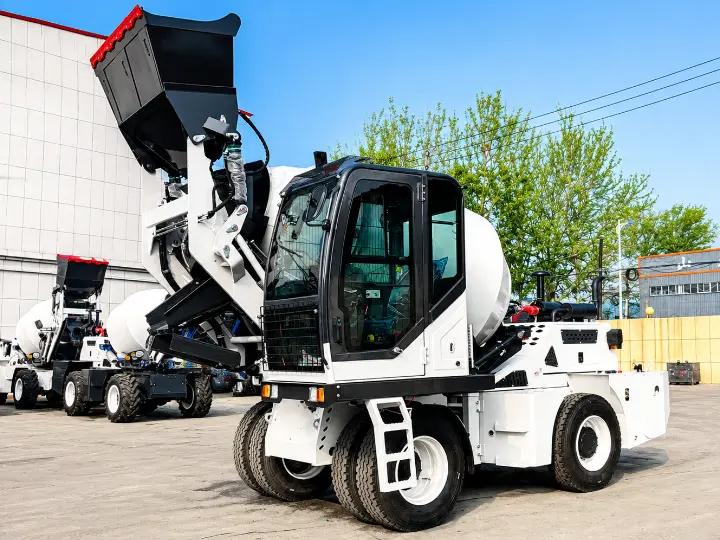
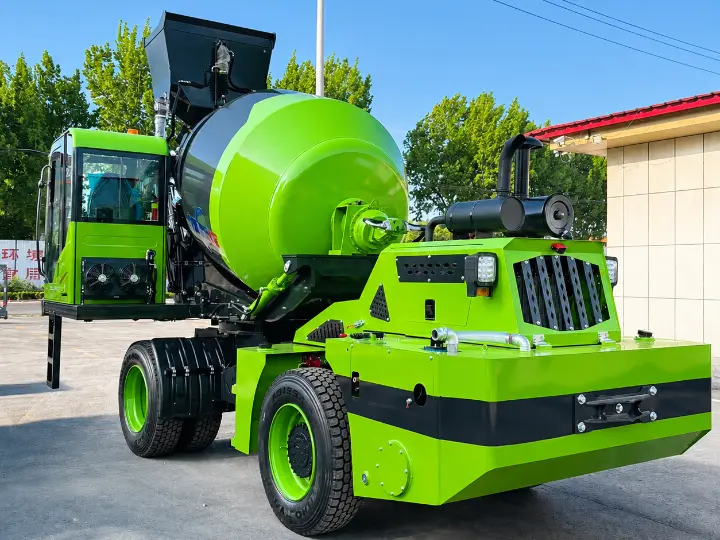
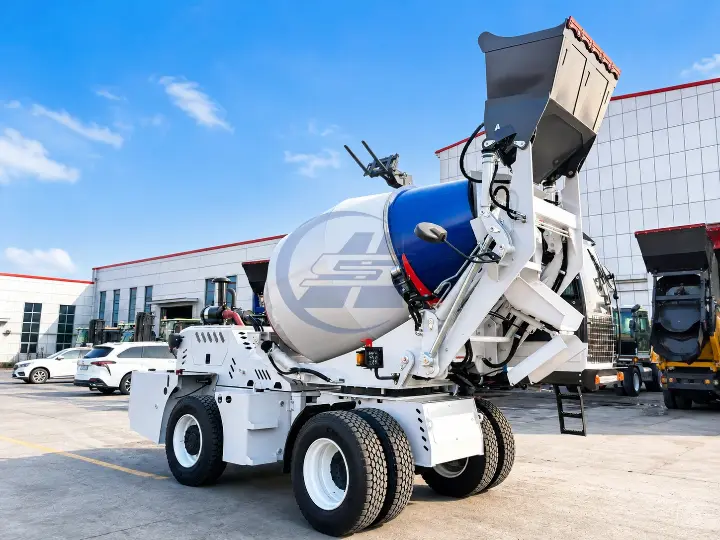
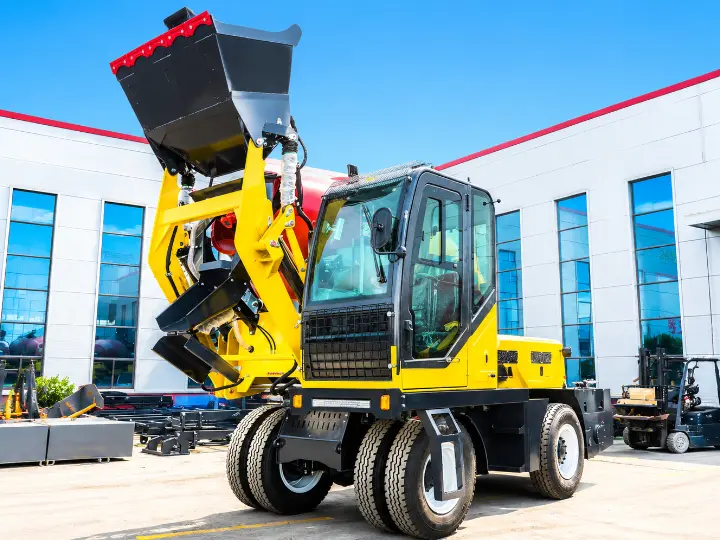
Models & Prices
We offer self loading concrete mixers with different mixing capacities to meet the needs of residential, commercial and infrastructure construction projects.
From compact models for small building sites to larger machines for higher concrete production demands, our equipment can be selected according to your project size, daily output requirements and operating conditions.
Available Self Loading Concrete Mixer Capacities
Choose a suitable model based on your required concrete volume per batch and expected daily production.
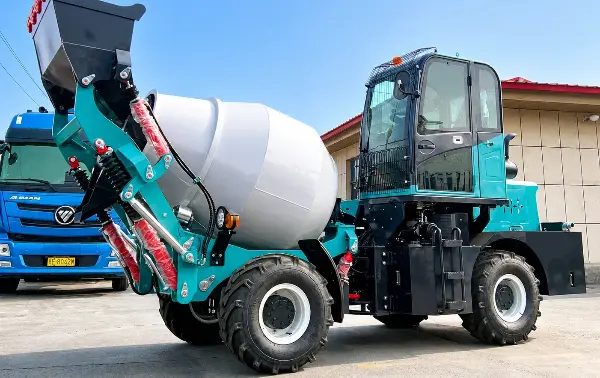
1.2m³ Self Loading Concrete Mixer
Compact solution for small construction projects
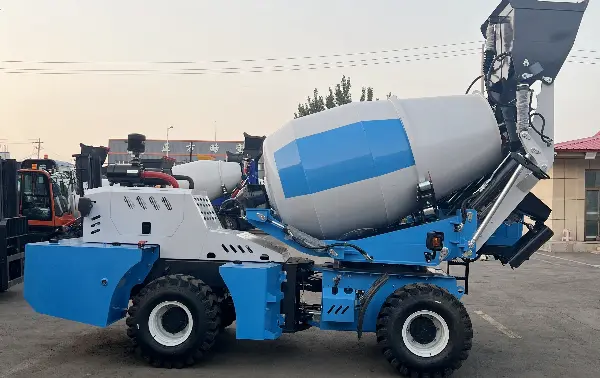
1.5m³ Self Loading Concrete Mixer
For residential and small commercial construction
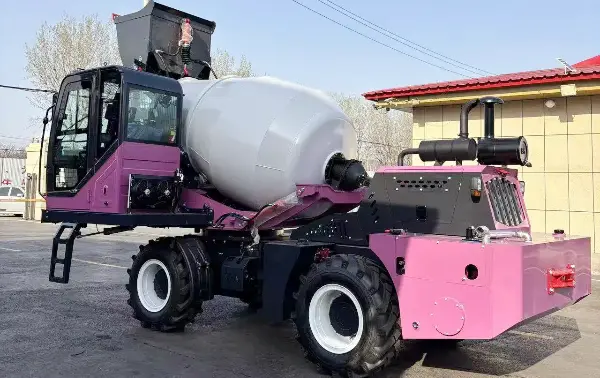
2.6m³ Self Loading Concrete Mixer
For small & medium-sized construction projects
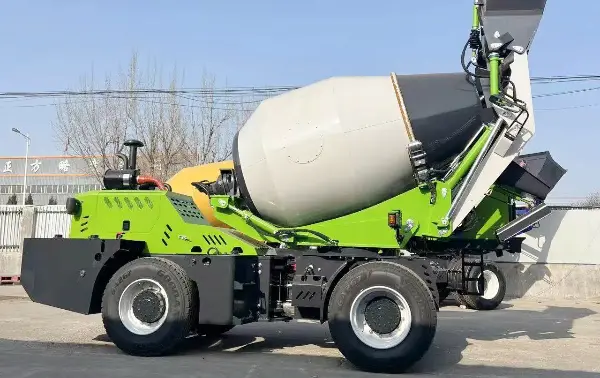
3.5m³ Self Loading Concrete Mixer
For medium-sized construction projects
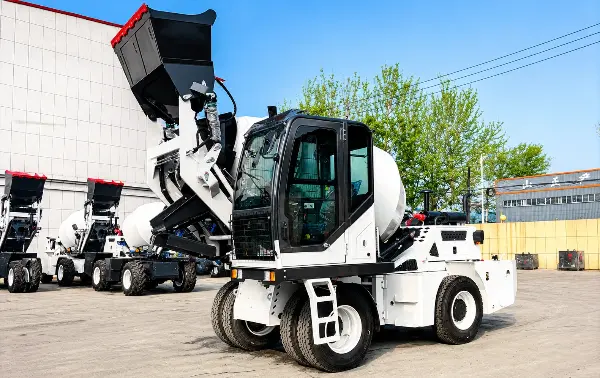
4.0m³ Self Loading Concrete Mixer
For contractors with higher concrete demand
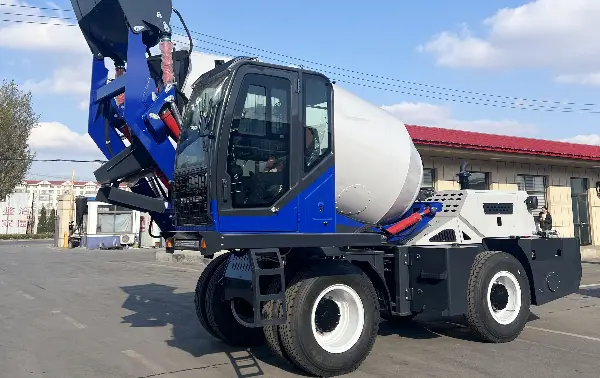
5.5m³ Self Loading Concrete Mixer
Higher-capacity solution for larger projects
Model Comparison Table
| Model Capacity | Suitable Projects |
|---|---|
| 1.2 m³ | Small houses, foundations, rural projects |
| 1.8 m³ | Residential and small commercial buildings |
| 2.6 m³ | Medium-sized building and road projects |
| 3.5 m³ | Contractors and infrastructure projects |
| 4.0 m³ | Higher-volume on-site concrete production |
Self Loading Concrete Mixer Price
The price of a self loading concrete mixer varies depending on mixing capacity, engine specifications, transmission system, drive configuration and optional equipment.
Choosing the right model can help you balance equipment investment, operating costs and concrete production requirements.

1. Mixing Capacity
Larger-capacity self loading concrete mixers generally require more powerful engines, larger mixing drums and stronger chassis structures.
2. Engine and Power System
Engine power, emissions compliance and component specifications can affect both the purchase price and operating costs.
3. Drive System and Mobility
Drive configuration, transmission and axle specifications influence the machine’s mobility and suitability for different terrain conditions.
4. Weighing and Control System
Depending on the model, optional weighing systems and digital controls can help operators manage material quantities and mixing operations.
5. Optional Equipment
Additional features such as water dosing systems, upgraded controls, cameras and other accessories may affect the final quotation.
6. Shipping and Import Costs
International freight, destination port, import duties and local transportation can influence the total purchase cost.
Why Choose Us
1. 4-in-1 Concrete Production Solution
A self loading concrete mixer combines material loading, mixing, transportation and discharge in one machine.
This integrated design reduces the need for separate equipment for suitable on-site concrete production projects.
2. Reduce Labor Requirements
The self-loading bucket helps reduce manual aggregate loading, while the mobile mixer transports concrete to the required placement area.
3. Flexible On-Site Concrete Production
Produce concrete at the construction site instead of relying entirely on ready-mix concrete deliveries.
This can be especially useful for projects located far from commercial batching plants.
4. Suitable for Remote Construction Sites
Self loading concrete mixers can support concrete production in rural and remote areas where access to ready-mix concrete suppliers is limited.
5. Improve Construction Workflow
Combining multiple operations in one machine can simplify material handling and reduce delays between concrete mixing and delivery.
6. Convenient Mobility
Depending on the model, articulated steering and off-road drive configurations help the machine move around suitable construction sites.
One Machine for Loading, Mixing, Transporting and Discharging Concrete.
Main Components
A self loading concrete mixer integrates several systems to complete concrete production and transportation.


1. Self-Loading Bucket
The hydraulic loading bucket collects aggregates and transfers materials into the mixing drum, reducing manual loading work.
2. Mixing Drum
The rotating drum mixes cement, aggregates and water to produce concrete according to the required mix design.
3. Water Supply System
An onboard water system supplies measured water to the mixing drum, depending on the equipment configuration.
4. Weighing System
Available weighing systems help operators manage material quantities and improve batching consistency.


5. Hydraulic System
The hydraulic system powers the loading mechanism and other hydraulic functions according to the machine design.
6. Engine and Transmission
The engine and drivetrain provide the power required for machine travel and concrete mixing operations.
7. Operator Cabin
The operator cabin contains controls for driving, loading, mixing and discharging operations.
8. Discharge System
The drum rotation and discharge chute allow operators to place mixed concrete at suitable accessible locations.
Working Principle
TA self loading concrete mixer completes the concrete production process through four main steps.
Step 1 – Loading Materials
The hydraulic bucket collects sand, gravel and other aggregates and transfers them into the mixing drum. Cement is added using the applicable loading method.
Step 2 – Mixing Concrete
Water and other required materials are added according to the mix design. The rotating drum mixes the materials to produce concrete.
Step 3 – Transporting Concrete
After mixing, the machine travels to the required placement location within the construction site.
Step 4 – Discharging Concrete
The mixed concrete is discharged through the chute into the designated placement area or receiving equipment.
Load → Mix → Transport → Discharge
One integrated machine helps contractors manage multiple concrete production tasks efficiently.m multiple angles without moving the vehicle.
Applications
Self loading concrete mixers are suitable for a wide range of construction projects requiring flexible on-site concrete production.
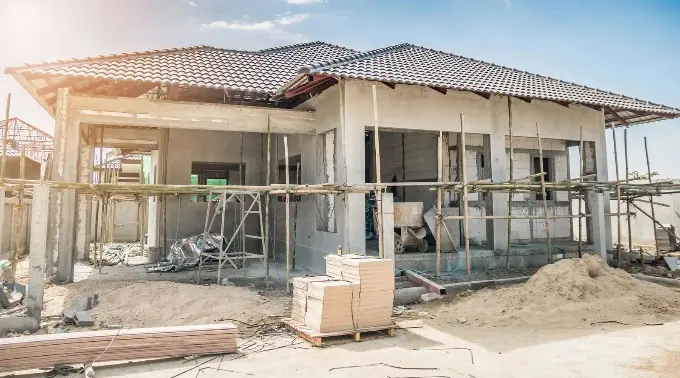
Residential Building Construction
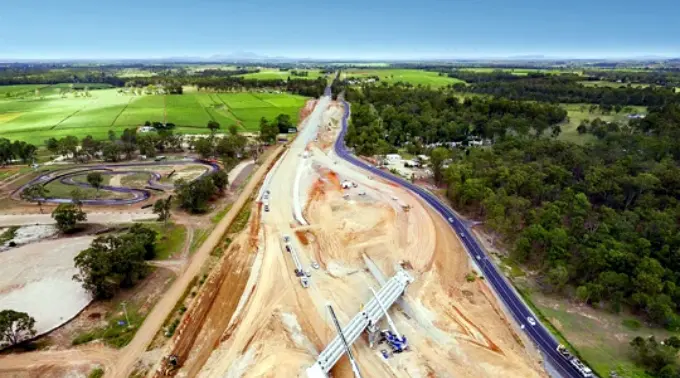
Road & Infrastructure
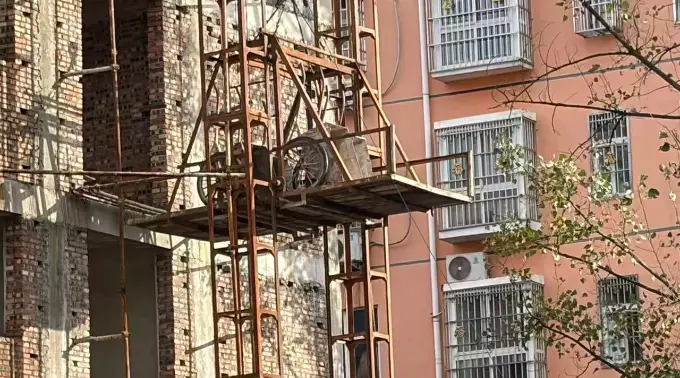
Rural Construction
1. Residential Building Construction
Produce and transport concrete for house foundations, columns, beams and floor slabs.
2. Road Construction
Supply concrete for suitable road paving, roadside structures and small infrastructure works.
3. Rural Construction Projects
Support construction in rural areas where ready-mix concrete delivery may be difficult or expensive.
4. Commercial Building Projects
Provide on-site concrete production for small and medium-sized commercial construction.
5. Remote Construction Sites
Reduce dependence on external concrete delivery when suitable raw materials and operating resources are available.
6. Foundations and Infrastructure
Supply concrete for foundations, drainage structures and other compatible construction applications.
Specification
| Model | SH-1.2 | SH-1.8 | SH-2.0 | SH-2.6 | SH-3.5 | SH-4.0 | SH-5.5 | SH-6.5 |
|---|---|---|---|---|---|---|---|---|
| Discharge Capacity | 1.2m³ | 1.8m³ | 2m³ | 2.6m³ | 3.5m³ | 4m³ | 5.5m³ | 6.5m³ |
| Output/Capacity | 5~10m³/h | 8~12m³/h | 10m³/h | 11~17m³/h | 14~18m³/h | 16~20m³/h | 22~25m³/h | 26~30m³/h |
| Engine Model | YUNNEI supercharged engine | Yuchai 4102 Turbo-charged | Yuchai 4105 Turbo-charged | Yuchai 4108 Turbo-charged | Yuchai Turbo-charged | Weichai deutz 6105 Pressure boost | Weichai deutz 6105 Pressure boost | Weichai deutz 6105 Pressure boost |
| Rated Power | 58KW | 78KW | 78KW | 78KW | 85KW | 91KW | 92KW~110KW | 92KW~110KW |
| Gear | 4 forward 4 back | 4 forward 4 back | 4 forward 4 back | 4 forward 4 back | 4 forward 4 back | 4 forward 4 back | 4 forward 4 back | 4 forward 4 back |
| Oil Tank | 16 liters | 16 liters | 16 liters | 16 liters | 16 liters | 16 liters | 16 liters | 16 liters |
| Water Tank | 400L | 500L | 500L | 500L | 780L | 850L | 1200L | 1465L |
| Water Supply | Time relay | Time relay | Time relay | Time relay | Time relay | Time relay | Time relay | Time relay |
| Overall dimensions(L*W*H) | 6400*2550*2450 | 7300*2650*3750 | 7300*2650*3750 | 7800*2720*3000 | 7800*2720*3300 | 8450*3100*4580 | 8450*3100*4580 | 8450*3050*3860 |
| Curb Weight (kg) | 4185 | 6500 | 6500 | 6500 | 7200 | 8500 | 11200 | 12520 |
| Drum Rotate | 270º | 270º | 270º | 270º | 270º | 270º | 270º | 290º |
Self Loading Mixer vs Traditional Mixer Truck
A self loading concrete mixer and a traditional concrete mixer truck serve different construction needs.
A self loading concrete mixer can load materials, mix concrete and transport it within a construction site.
A traditional concrete mixer truck is primarily designed to transport and agitate concrete, typically supplied by a batching plant.
| Feature | Self Loading Concrete Mixer | Traditional Mixer Truck |
|---|---|---|
| Material Loading | Integrated loading bucket | Generally requires external loading |
| Concrete Mixing | On-site material mixing | Mainly transports and agitates concrete |
| Concrete Transportation | On-site transportation | Transports concrete from a batching plant |
| External Batching Plant | Not always required | Commonly required |
| Typical Application | On-site concrete production | Ready-mix concrete delivery |
| Suitable Projects | Small and medium-sized construction sites | Commercial concrete supply |
Cases
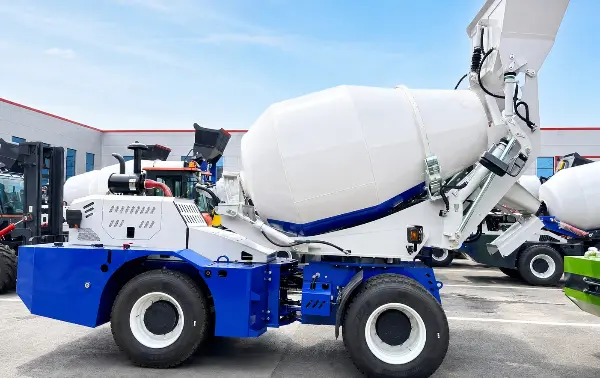
Self Loading Concrete Mixer Case – Malaysia
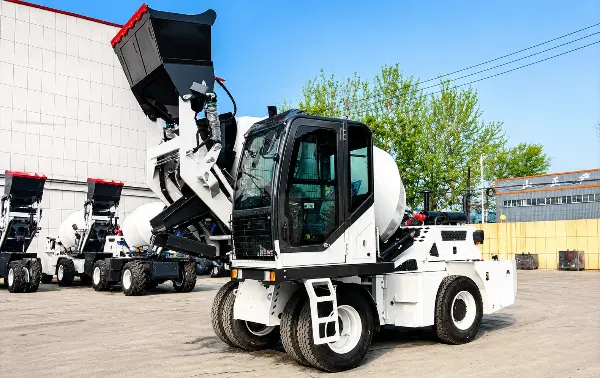
Self Loading Concrete Mixer Case – Kenya
FAQ
Q1: How much does a self loading concrete mixer cost?
The price depends on mixing capacity, engine specifications, drive system, equipment configuration and shipping destination. Contact us for a quotation based on your requirements.
Q2: What capacities are available?
Common market options include 1.2 m³, 1.8 m³, 2.6 m³, 3.5 m³ and 4.0 m³ models. Available capacities vary by manufacturer.
Q3: What is the difference between a self loading concrete mixer and a concrete mixer truck?
A self loading concrete mixer combines material loading, concrete mixing and on-site transportation. A conventional concrete mixer truck primarily transports and agitates concrete supplied by a batching plant.
Q4: Can a self loading concrete mixer produce concrete without a batching plant?
Yes. A self loading concrete mixer can prepare concrete on-site using suitable raw materials and a controlled mix design, without requiring a separate batching plant for many applications.
Q5: How much concrete can a self loading concrete mixer produce per hour?
Hourly production depends on batch capacity, mixing time, loading time, travel distance and site conditions. Actual output may differ from the nominal mixing capacity multiplied by the theoretical number of cycles.
Q6: Is a self loading concrete mixer suitable for rural construction?
Yes. It can be a practical option for rural and remote projects where access to commercial ready-mix concrete is limited.
Q7: Can a self loading concrete mixer work on rough terrain?
Some models offer off-road drive systems and articulated steering. Actual terrain capability depends on the machine specifications, ground conditions, slope and operating load.
Q8: What information is needed for a quotation?
Please provide your required mixing capacity, destination country, construction application and expected daily concrete production.
Q9: Do you provide spare parts and technical support?
Spare parts availability, technical guidance and after-sales support options can be confirmed according to the selected model and supply agreement.


