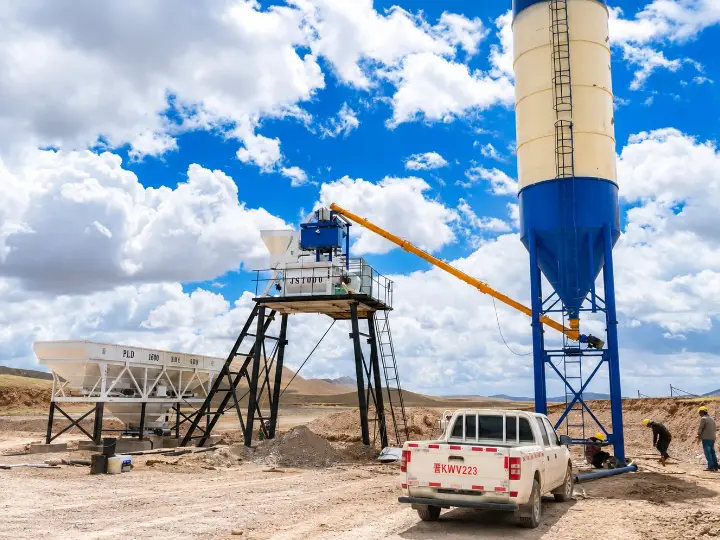
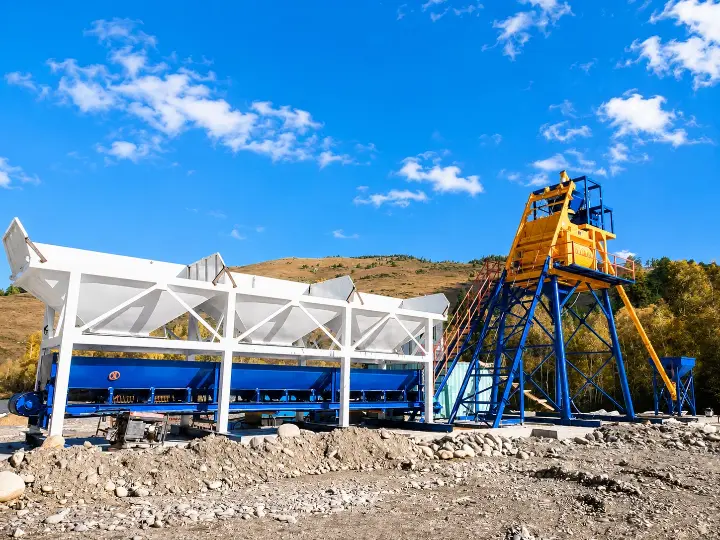
What Is an Automatic Concrete Batching Plant?
An automatic concrete batching plant — also called an automated concrete mixing plant or ready-mix plant — is a centrally controlled facility that measures, mixes, and delivers precise quantities of concrete ingredients without continuous manual intervention. A programmable logic controller (PLC) or dedicated software platform manages every stage of the process: aggregates feeding, cement weighing, water dosing, admixture injection, and mixing cycle timing.
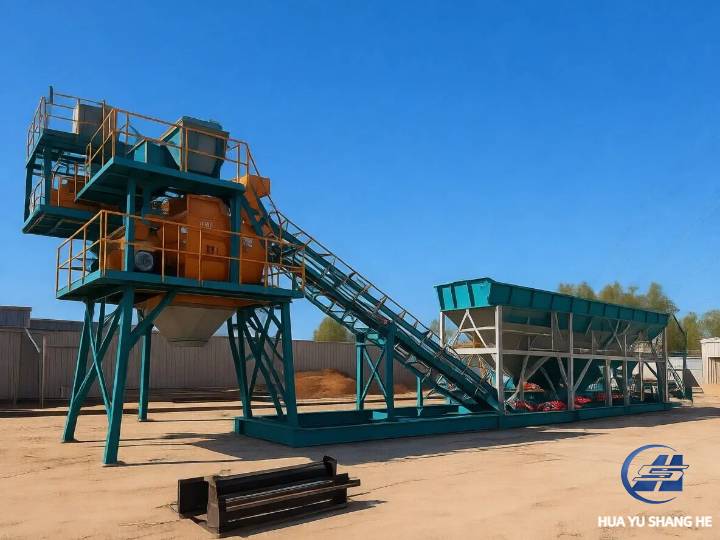
Unlike manual batching, where operators must weigh each material by hand, or semi-automatic systems that still require operator confirmation at several steps, a fully automatic plant executes entire production sequences at the press of a button — or on a programmed schedule. This makes it the preferred choice for large-scale infrastructure projects, precast concrete manufacturers, and commercial ready-mix suppliers worldwide.
| Specification | Value |
|---|---|
| Typical Aggregate Weighing Accuracy | ±1% |
| Max Output of Large Twin-Shaft Plants | 240 m³/h |
| Labour Savings vs. Manual Batching | 30–50% |
| Average Service Life (Proper Maintenance) | 15+ Years |
How It Works: Key Components Explained
Concrete Batching Plant Workflow
Understanding the anatomy of an automatic batching plant helps buyers compare specifications intelligently and operators troubleshoot issues faster.
Key components include:
- Aggregate batching machine
- Cement silo
- Screw conveyor
- Water and additive weighing system
- Twin-shaft or planetary mixer
- PLC control system
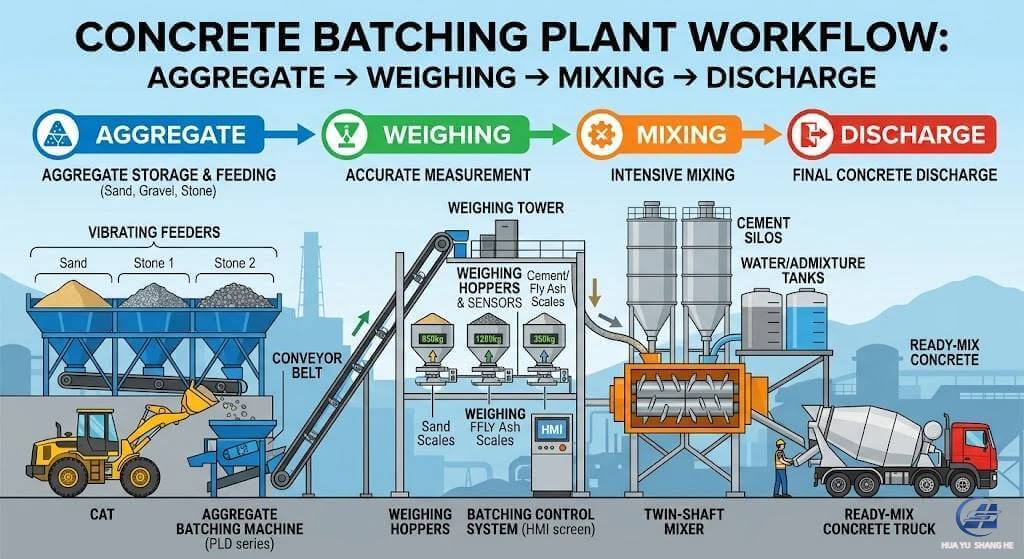
1. Aggregate storage & feeding system
Raw aggregates — sand, gravel, crushed stone — are stored in separate hoppers or bins. Belt conveyors or skip hoists transfer the material to weighing hoppers above the mixer. Load-cell sensors continuously monitor the aggregate weight and signal the control system to shut off the belt when it reaches the target.
2. Cement & fly ash storage
Sealed silos store cementitious materials to prevent moisture ingress. Screw conveyors move powder from the silo to a dedicated weighing hopper. Because cement is expensive and moisture-sensitive, accurate dosing here has an outsized impact on mix quality and project economics.
3.Water & admixture metering
Flowmeters or weigh-scales dose water with accuracy typically within ±1%. Separate metering pumps dispense chemical admixtures—superplasticisers, retarders, and air-entraining agents—and integrate directly with the PLC, ensuring each batch receives the correct volume regardless of ambient temperature or mix design.
4. Twin-shaft or pan mixer
The heart of the plant. Twin-shaft mixers are the industry standard for large automatic plants because they achieve homogeneous mixing in 30–60 seconds, roughly three to four times faster than tilting drum mixers. Precast applications where very dry, stiff mixes are common prefer pan mixers.
5. Control system & software
Modern automatic plants run on dedicated batching software with touchscreen HMI panels. Features include recipe storage (typically 100+ mix designs), real-time production logging, remote monitoring via mobile app, automatic aggregate moisture compensation, and report generation for quality management systems such as ISO 9001.
“The PLC does not get tired, distracted, or ill. That single fact is why automatic plants consistently outperform manual batching over a long production run.”
Types of Automatic Concrete Batching Plants
1. Stationary automatic batching plant
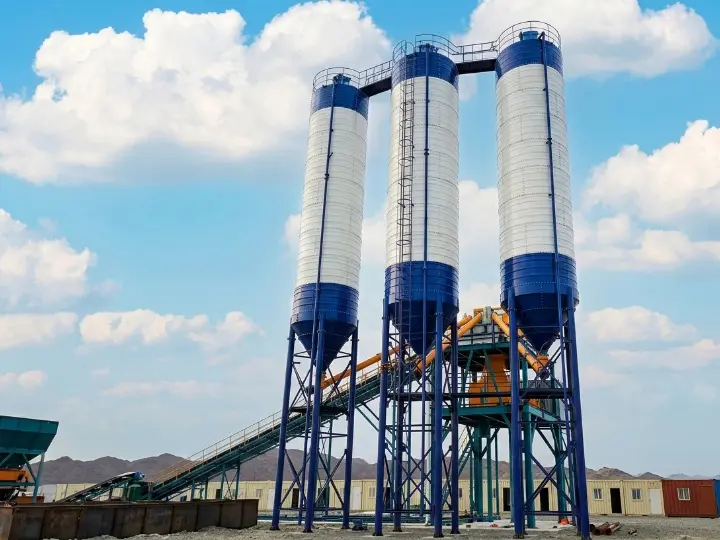
Permanently installed at a fixed site, these plants range from compact 25 m³/hr units up to 240 m³/hr twin-mixer configurations. They suit ready-mix producers, precast factories, and large dam or bridge construction sites with a multi-year production horizon. Foundation engineering requirements are substantial, but output capacity and component lifespan are maximised.
2. Mobile / portable automatic batching plant
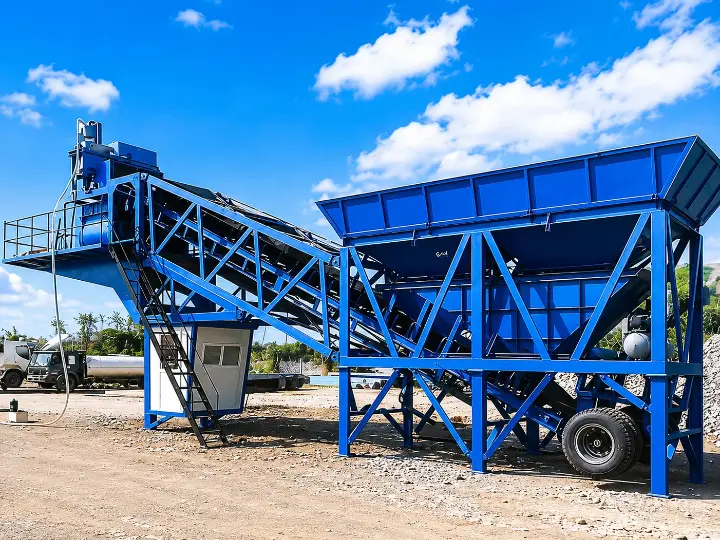
Mounted on a chassis or designed for rapid dismantling and re-erection, mobile plants sacrifice some capacity (typically 25–90 m³/hr) for logistical flexibility. They are the default choice for road-building contractors, pipeline projects, and remote infrastructure jobs where relocating the plant every few months is expected.
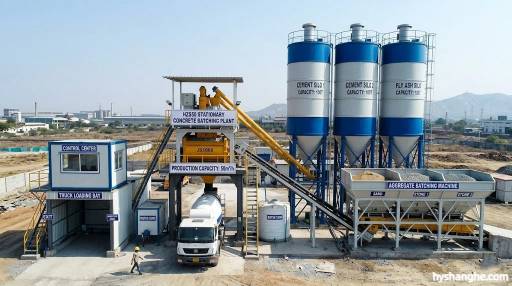
HZS50 Stationary Automatic Batching Plant
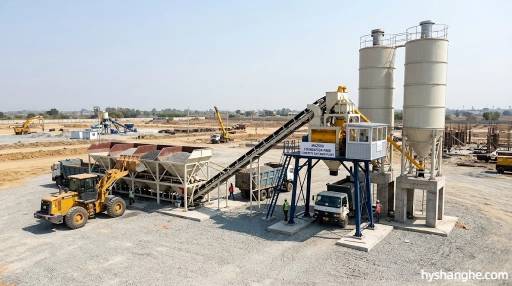
YHZS35 Mobile Automatic Batching Plant
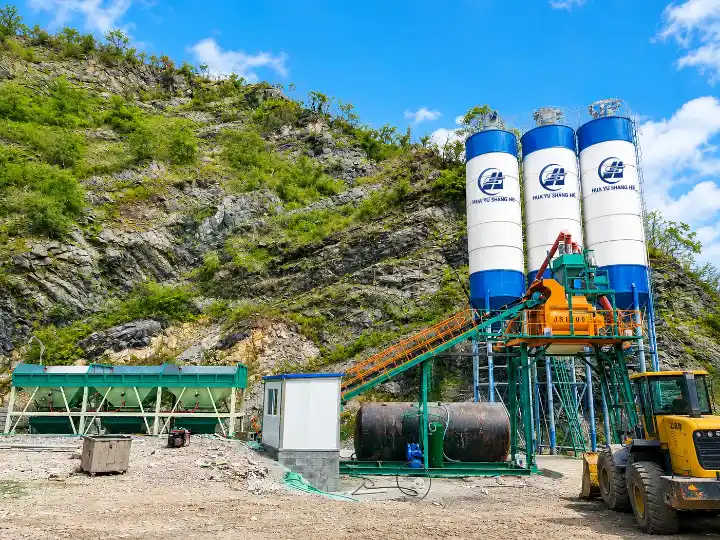
MHZS60 Automatic Concrete Batching Plant
3. Compact / mini automatic batching plant
With outputs of 10–35 m³/hr, compact plants are dimensionally small and require minimal civil work. They are popular with small ready-mix businesses, on-site construction teams, and markets where space or capital is constrained. Despite their size, they still feature full PLC control and load-cell weighing.
4. Dry-mix vs. wet-mix configurations
In a dry-mix (transit-mix) plant, weighed materials are loaded into truck mixers without pre-mixing; blending occurs during transit to the pour site. In a wet-mix plant, materials are mixed in a stationary mixer before loading. Wet-mix delivers higher consistency; dry-mix lowers capital cost and suits markets where truck mixer ownership is widespread.
Benefits Over Manual & Semi-Automatic Systems
Core advantages at a glance
- Precision: Load cells achieve ±0.5–1% aggregate accuracy; ±0.2% for cement — unattainable by hand.
- Speed: Automated sequencing eliminates idle time between ingredients, cutting cycle time by 20–40%.
- Consistency: Every batch follows the same recipe, reducing variance in compressive strength and workability.
- Traceability: Software logs every batch with timestamp, weights, and operator ID for full audit trails.
- Labour efficiency: A single operator can supervise a plant producing 100 m³/hr; manual batching needs several.
- Waste reduction: Accurate dosing cuts overdesign and material waste, lowering cost per cubic metre.
- Safety: Automated dust suppression, enclosed conveyors, and alarm systems reduce operator exposure to cement dust and moving parts.
Choosing the Right Plant Capacity
Capacity is typically expressed in cubic metres of concrete produced per hour (m³/hr). Selecting the right size requires analysis of peak demand, not average demand. A plant running at 90% theoretical capacity will struggle with surge demand; one running at 50% is underutilised capital.
As a starting rule: required plant capacity = (daily concrete demand in m³ ÷ effective production hours) × 1.25 safety factor. The 1.25 factor accounts for mixer cleaning, recipe changes, material refilling, and minor stoppages. Always consult the project schedule for peak pour days, not average daily volumes.
Hot Sale Types of Automatic Concrete Batching Plant
Choose the right model based on your project capacity and budget.
| Model | Capacity | Type | Application |
|---|---|---|---|
| HZS25 | 25 m³/h | Small Automatic Plant | Small projects, rural construction |
| HZS35 | 35 m³/h | Compact Plant | Buildings, precast yards |
| HZS50 | 50 m³/h | Medium Plant | Commercial concrete production |
| HZS60 | 60 m³/h | Stationary Plant | Road, bridge, infrastructure |
| HZS75 | 75 m³/h | High Efficiency Plant | Medium-large projects |
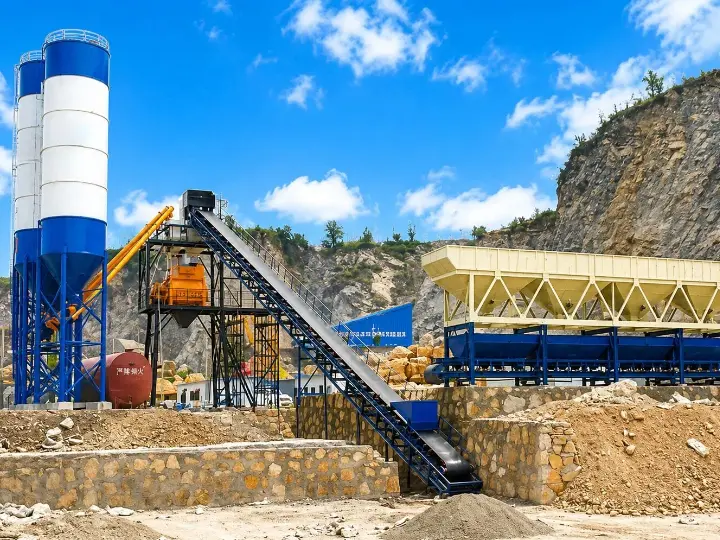
| HZS90 | 90 m³/h | Large Plant | Commercial batching plants |
| HZS120 | 120 m³/h | Large Automatic Plant | Large-scale infrastructure |
| HZS180 | 180 m³/h | High Capacity Plant | Ready-mix concrete plants |
| HZS240 | 240 m³/h | Super Large Plant | Mega projects, airports, highways |
Capacity selection quick reference
- Small projects / on-site mixing (10–35 m³/hr): Compact or mini automatic plant
- Medium ready-mix or mid-size construction (35–90 m³/hr): Standard stationary or mobile plant
- Large infrastructure, precast factories (90–180 m³/hr): High-capacity stationary twin-shaft plant
- Mega-projects, dam, airport construction (180–240 m³/hr+): Twin-mixer or multi-plant configuration
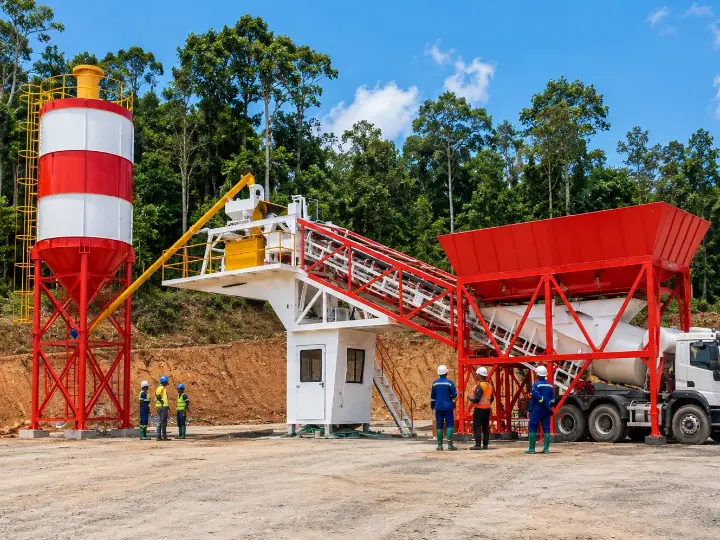
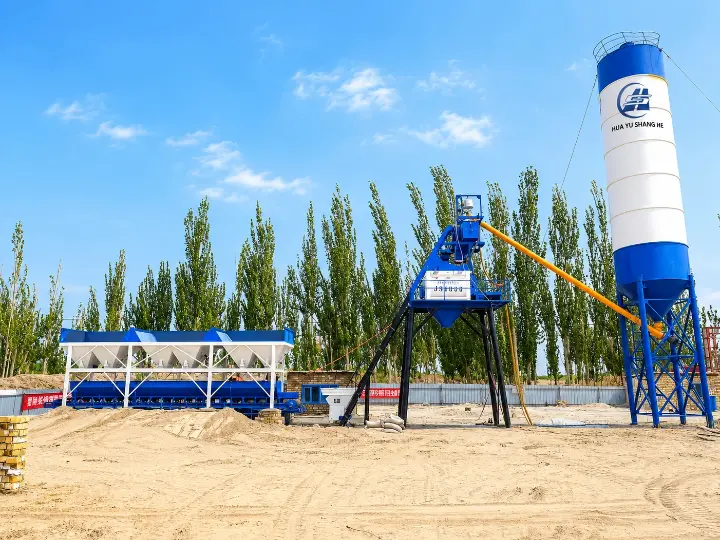
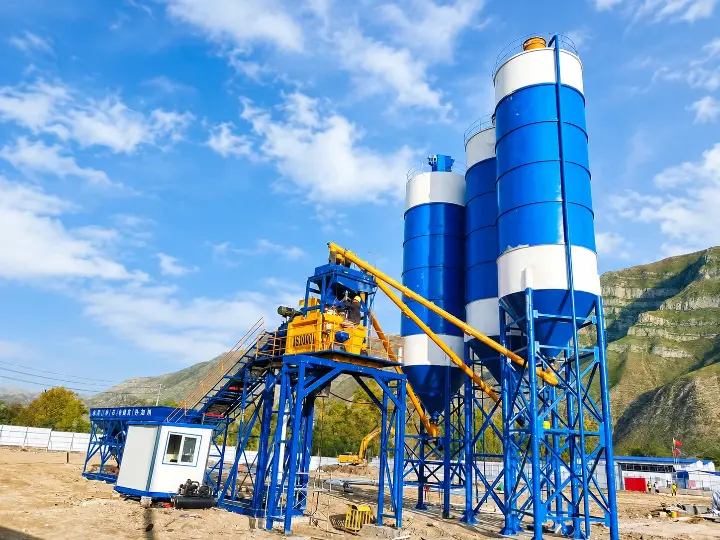
HZS25 Concrete Batching Plant
HZS90 Concrete Batching Plant
HZS50 Concrete Batching Plant
Installation & Site Requirements
Proper site planning prevents costly delays during commissioning. Key considerations include:
- Lead time: Allow 8–16 weeks from order to commissioning for a medium-large stationary plant.
- Ground bearing capacity: Silo foundations and mixer bases require geotechnical assessment; typical soil pressure for a 200-tonne silo can exceed 150 kN/m².
- Electrical supply: Large plants draw 100–400 kW; a dedicated transformer and clean earthing protect the PLC.
- Water supply: A storage tank sized for at least four hours of production avoids supply interruptions halting batching.
- Access roads: Aggregate delivery trucks (30–40 tonnes GVW) need turning radii of at least 15 m.
- Environmental permits: Dust suppression systems, wheel wash facilities, and wastewater settlement ponds are required in most jurisdictions.
Maintenance Best Practices
An automatic concrete batching plant is a high-capital asset. A structured preventive maintenance programme protects that investment and keeps batching accuracy within specification.
1. Daily checks
Inspect mixer blades and liner plates for wear; clean weighing hoppers of residual concrete; verify load-cell zero calibration; check conveyor belt tension and tracking; confirm dust collector bags are not clogged.
2. Weekly tasks
Lubricate mixer shaft seals, conveyor bearings, and skip hoist cables per the OEM schedule. Check admixture pump calibration against a measured volume. Review the control software event log for recurring faults that indicate developing problems.
3. Annual overhaul
Replace mixer blades and liner plates proactively before they reach failure thickness (typically 30–40% wear). Conduct full load-cell recertification. Inspect silo outlet valves and screw conveyor flights. Update control software to the latest firmware and back up all recipe data.
Cost & ROI Analysis
Capital cost is only one dimension of the purchase decision. Total cost of ownership over a 10-year horizon typically includes: equipment purchase (35–50%), civil works (15–25%), installation & commissioning (5–10%), spare parts & maintenance (15–20%), and energy (5–10%).
For a ready-mix business producing 50,000 m³/year, the switch from semi-automatic to fully automatic control commonly delivers payback in 18–30 months through three levers: reduced labour headcount, lower material waste from accurate dosing, and higher plant utilisation enabled by faster cycle times.
Factors that improve ROI
- High production volume (more batches per year = faster amortisation of automation premium)
- High local labour costs (automation replaces expensive skilled operators)
- Multiple mix designs per day (software recipe switching is instant; manual changeover takes time)
- Quality-critical applications where batch reject rates have real financial cost
- Remote sites where skilled labour is scarce or expensive to accommodate
Frequently Asked Questions
- What is the difference between an automatic and a semi-automatic concrete batching plant?
A semi-automatic plant requires operator confirmation at one or more weighing stages before the sequence proceeds. A fully automatic plant executes the entire batching sequence — from aggregate feeding through mixing discharge — without manual confirmation once started. Fully automatic systems deliver higher throughput and more consistent quality.
2. How long does it take to install an automatic concrete batching plant?
For a stationary plant in the 50–120 m³/hr range, civil construction typically takes 3–6 weeks, mechanical erection another 2–4 weeks, and electrical commissioning and trial batching 1–2 weeks. Total timeline from site handover to first commercial production is commonly 8–12 weeks, depending on plant size and site conditions.
3. Can an automatic batching plant be upgraded to handle higher outputs?
Most reputable manufacturers design plants with modular expansion in mind. Common upgrades include adding a second mixer, increasing aggregate bin capacity, installing a second cement silo, and upgrading the control software. Physical footprint limitations and the original civil design govern how far expansion can go.
4. What accuracy should I expect from a modern automatic batching plant?
Industry standards such as EN 206 and ASTM C94 define acceptable tolerances. High-quality automatic plants routinely achieve ±1% for aggregates, ±0.5% for cement and additions, and ±1% for water — well within standard requirements. Load-cell calibration records should be verified at handover and checked annually.
5. What maintenance is most critical to keeping a batching plant running reliably?
Mixer blade and liner wear is the leading cause of unplanned downtime. Monitor blade thickness monthly and replace proactively. Load-cell zero drift and clogged dust collectors are the next most common issues. A daily 15-minute inspection routine catches most problems before they become stoppages.