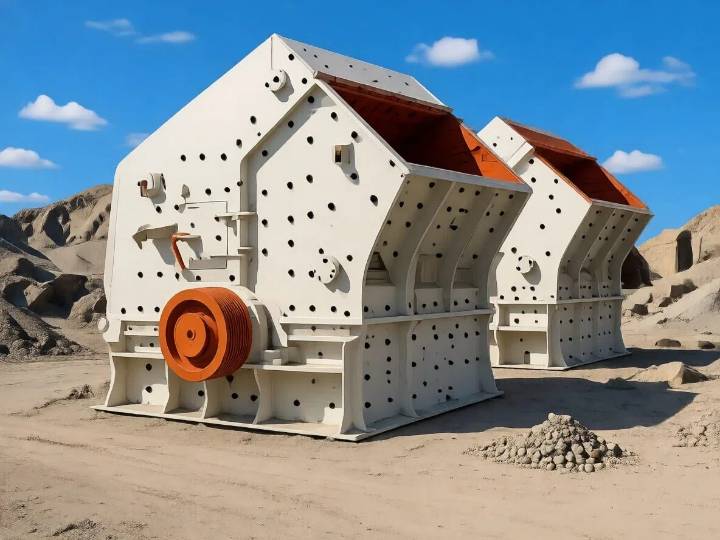
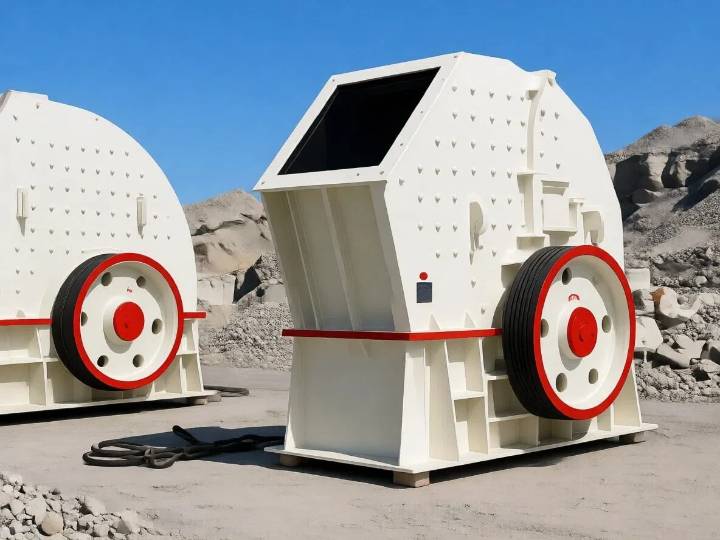
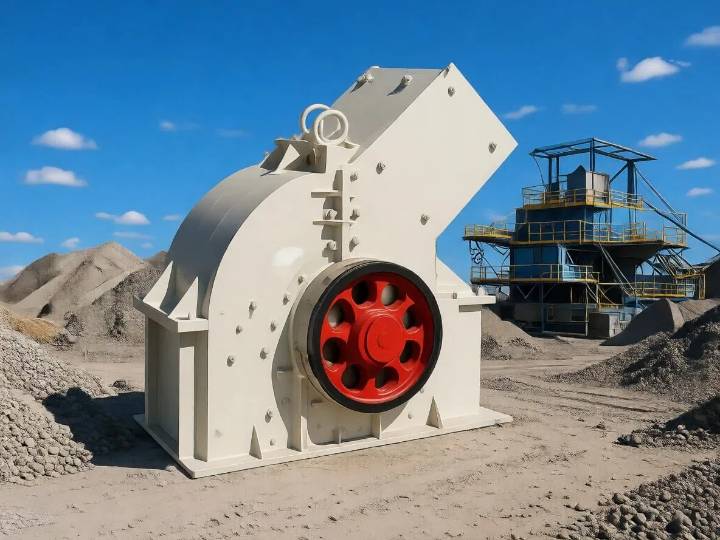
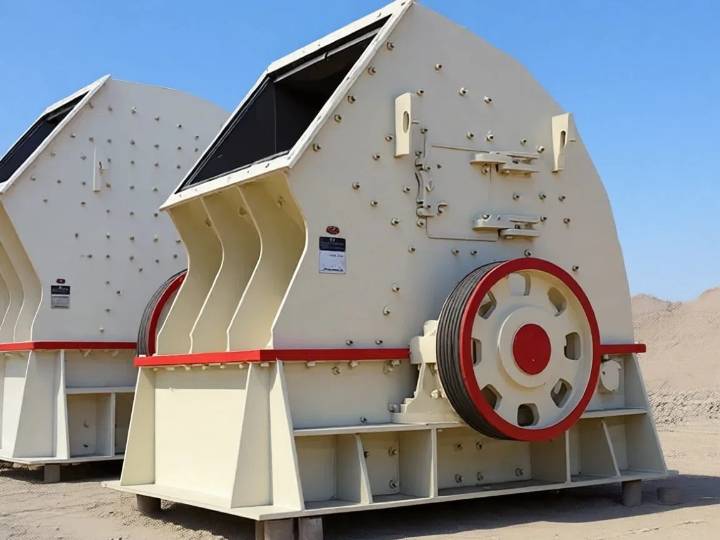
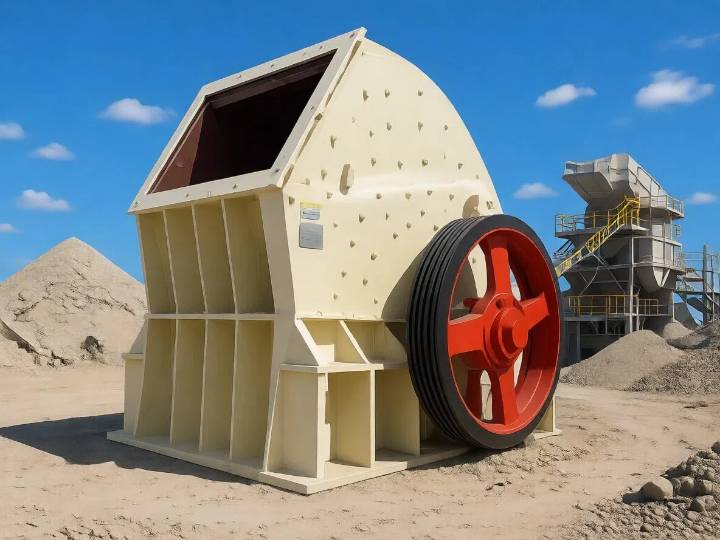
Shanghe Hammer Crusher
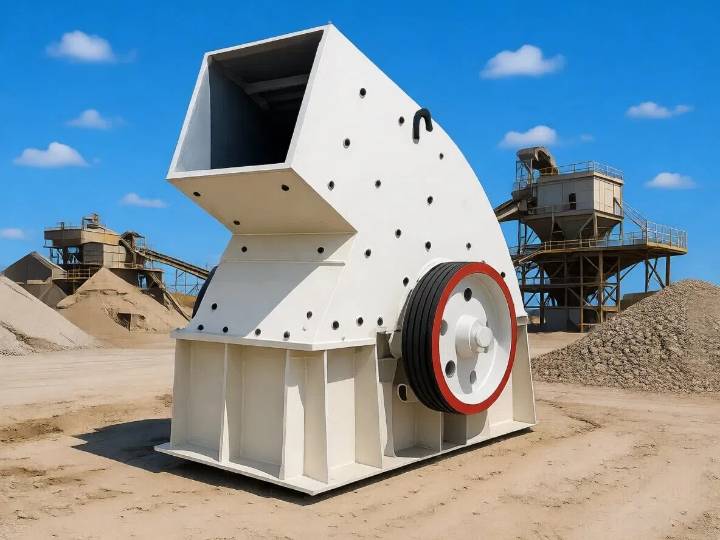

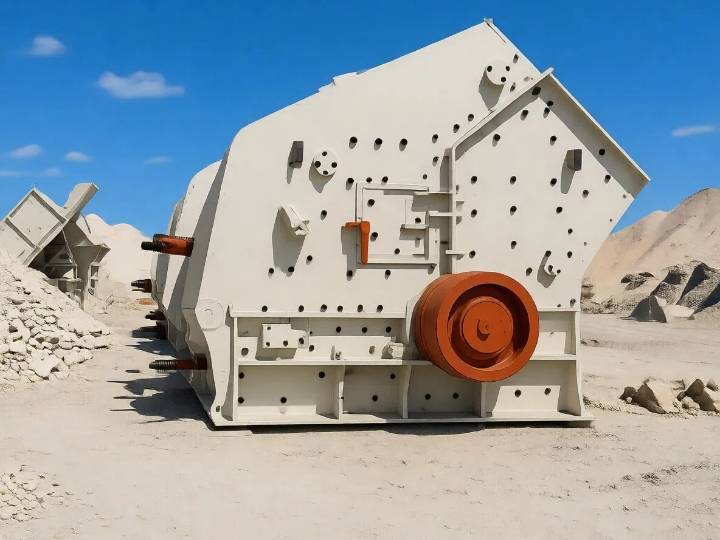
A hammer crusher, or hammer mill, reduces material size through direct impact. Inside its chamber, a high-speed rotor fitted with swinging hammers repeatedly strikes fed material, shattering it against breaker plates until the fragments are small enough to pass through a screen at the bottom. This efficient impact crushing method makes it ideal for processing soft to medium-hard, non-abrasive materials across a wide range of industries.
Hammer crushers are valued for their versatility, high reduction ratio, and operational efficiency, making them a preferred solution across multiple sectors. Their core function of impact-based size reduction is applied to a broad spectrum of materials.
- Mining & Metallurgy: Crushing coal, limestone, gypsum, various ores (like bauxite), and industrial by-products such as slag and coke.
- Construction & Building Materials: Processing aggregates from concrete and brick, as well as raw materials like shale and clay for cement production.
- Energy Production: Sizing coal for power generation and preparing biomass (wood chips, agricultural waste) for biofuel and pellet production.
- Recycling Operations: Shredding and reducing materials like plastics, paper, and glass to facilitate reuse.
- Agriculture & Food Processing: Grinding grains, legumes, and spices for animal feed manufacturing and other food industry applications.
Advantages
The PCZ Hammer Crusher is engineered to optimize your crushing process with tangible benefits:
- Maximized Cost Efficiency: Our one-stage crushing process delivers a final, uniform product, potentially lowering your operational costs by up to 40% by eliminating secondary crushing stages.
- Unmatched Versatility: It is a proven solution across mining, cement, and construction for reducing medium-hard materials (<200MPa).
- Superior Productivity: Experience high-tonnage output—reaching up to 1200 t/h—without sacrificing energy efficiency.
- Cleaner & More Flexible Operation: The wet crushing capability (up to 15% moisture) allows for processing damp materials while controlling dust.
- Long-Term Reliability: We use premium, wear-resistant materials like high-manganese steel in critical components to maximize uptime and equipment longevity.
Types
1. By Rotor Configuration
- Single-Rotor Hammer Crusher: Employs one central rotor shaft. This simpler, more compact design offers a cost-effective solution for standard crushing tasks.
- Double-Rotor Hammer Crusher: Utilizes two parallel, counter-rotating shafts. This configuration provides a higher crushing ratio, increased throughput, and is particularly effective for processing sticky materials or achieving very fine output.
2. By Rotation Direction
- Reversible Hammer Crusher: Features a rotor capable of operating in both directions. This allows both leading edges of the hammers to be utilized, effectively doubling the service life of wear parts and reducing maintenance frequency.
- Irreversible Hammer Crusher: The rotor spins in one fixed direction. This straightforward, robust design is typically applied for crushing less abrasive materials.
3. By Hammer Mounting Method
- Swinging (Articulated) Hammer: Hammers are suspended on hinge pins, allowing them to swing back upon impact. This design offers protection against uncrushable objects and is well-suited for mixed or impure feed materials.
- Fixed (Rigid) Hammer: Hammers are permanently bolted or welded to the rotor. This arrangement provides a more direct transfer of energy, making it efficient for fine crushing of softer, more brittle materials like coal or gypsum.
4. By Capacity and Scale
- Heavy-Duty Hammer Crusher (e.g., PCZ Series): Engineered for high-capacity primary crushing in quarrying, mining, and cement production, with modern models capable of processing over 3000 t/h.
- Small Hammer Crusher (e.g., PC Series): Designed for low-capacity applications, laboratory work, or specialized production like brick manufacturing, with capacities typically below 100 t/h.
5. Specialized Industrial Types
- Ring Hammer Crusher: Specialized for the coal and coke industry, using ring-shaped hammers on a rotor for efficient impact crushing.
- Mobile Hammer Crusher: A self-contained, track- or wheel-mounted unit used for on-site processing in recycling, demolition, and aggregate production.
- Non-Clog Hammer Crusher: Incorporates design features such as a large crushing chamber, grates, or moving breaker plates to prevent material buildup when processing wet, sticky, or fibrous feed.
Working Principle
The crushing cycle follows a continuous sequence:
- Feeding: Material is gravity-fed into the crushing chamber through a top-mounted feed hopper.
- Primary Impact: A motor-driven rotor spins at high speed (typically 1,000–3,000 RPM), swinging a series of hardened hammers. These hammers deliver the initial, powerful blows that fracture the incoming material.
- Secondary Fragmentation: The shattered particles are propelled against stationary breaker plates lining the chamber walls, causing further disintegration. Additional size reduction occurs through particle-on-particle attrition and grinding between the hammers and a bottom grate.
- Sizing & Discharge: The final product size is controlled by a grate bar sieve at the chamber’s base. Only particles smaller than the grate openings are discharged; oversized fragments are retained for further crushing until they pass through.
Key Components & Functions
- Rotor: The central rotating assembly that transmits power and rotational kinetic energy to the hammers.
- Hammers: The primary impact elements mounted on the rotor. They are often designed as swinging (articulated) to withstand uncrushable objects, or fixed for maximum impact on specific materials.
- Grate Bars: A screen-like assembly at the discharge point that determines the maximum product size.
- Breaker Plates: Wear-resistant liners attached to the crusher housing. They protect the structure and provide a critical surface for secondary impact crushing.
Specification
| Model | Rotor diameter x length (mm) | Feed opening length x width (mm) | Feed size(mm) | Processing capacity(t/h) | Power(kw) | Specification L×W×H (mm) |
|---|---|---|---|---|---|---|
| PCZ1308 | Φ1330×790 | 870×780 | ≤380 | 60-160 | 132 | 2880×2130×2390 |
| PCZ1410 | Φ1400×1000 | 1060×740 | ≤450 | 80-210 | 2×90(180) | 2830×2100×2485 |
| PCZ1610 | Φ1600×1000 | 1090×930 | ≤480 | 100-230 | 2×132 | 3370×2415×2750 |
| PCZ1612 | Φ1600×1200 | 1340×1140 | ≤500 | 120-350 | 2×160 | 3370×2613×2750 |
| PCZ1615 | Φ1600×1500 | 1570×1140 | ≤550 | 200-550 | 2×200 | 3370×2925×2750 |
| PCZ1716 | Φ1700×1600 | 1420×1200 | ≤600 | 400-850 | 2×250 | 3520×3000×3210 |
| PCZ1720 | Φ1700×2000 | 2030×1200 | ≤650 | 500-1000 | 2×400 | 3670×3390×3330 |
| PCZ1920 | Φ1900×2000 | 1980×1210 | ≤750 | 800-1500 | 2×500 | 4490×3910×3600 |
| PCZ2225 | Φ2200×2500 | 2530×1610 | ≤1000 | 1500-3000 | 1250 | 4890×5010×4560 |