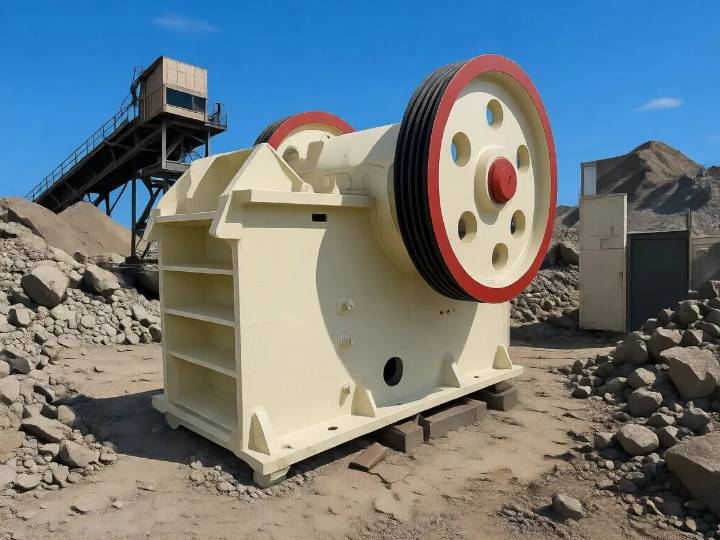
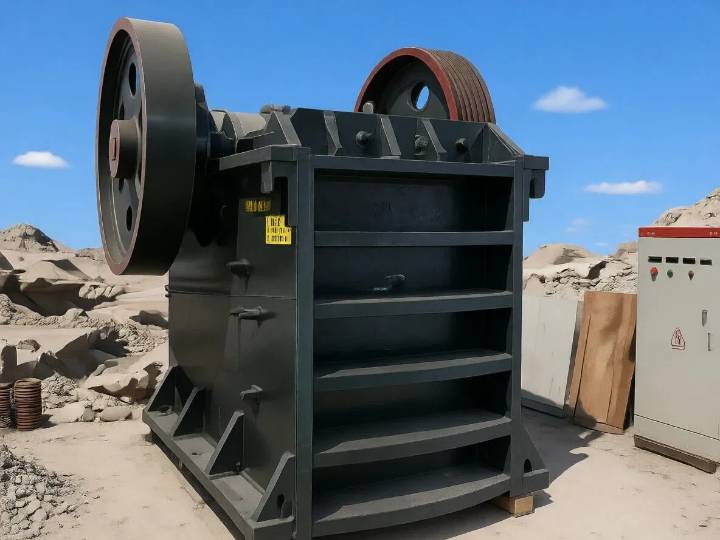
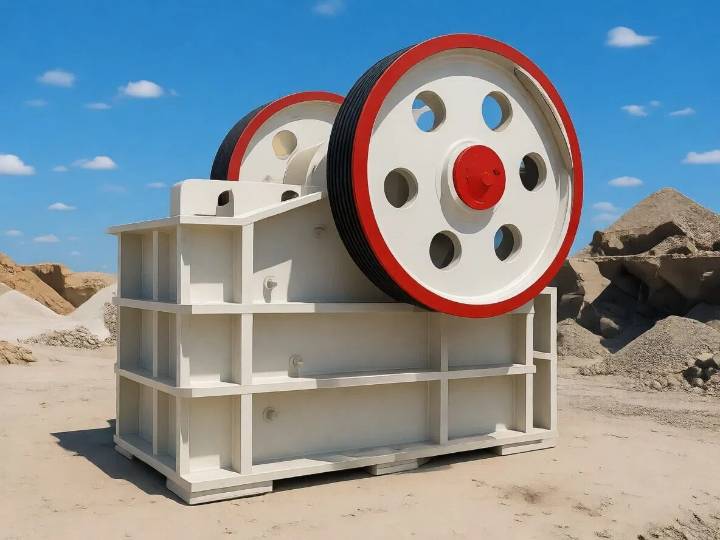
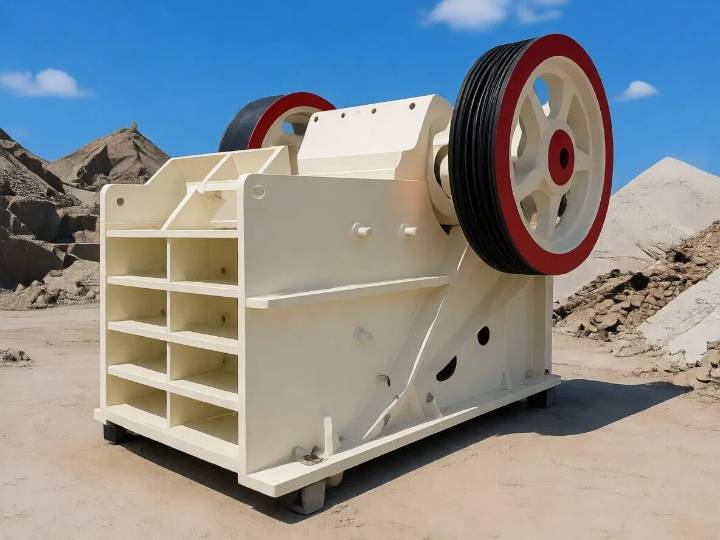
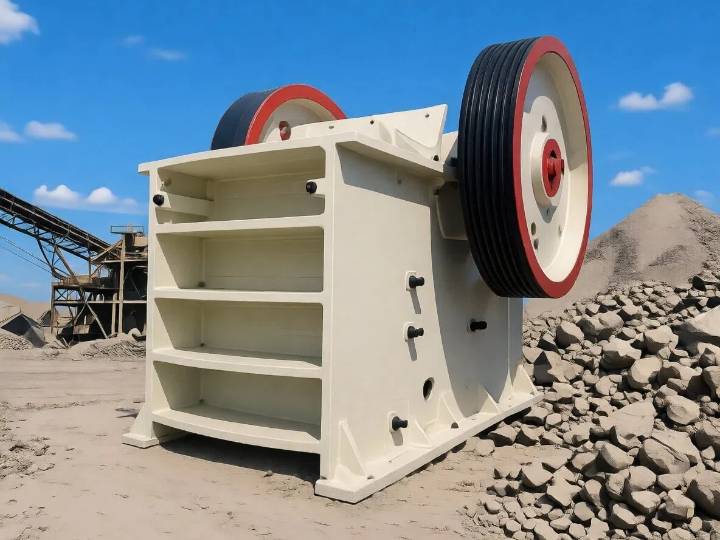
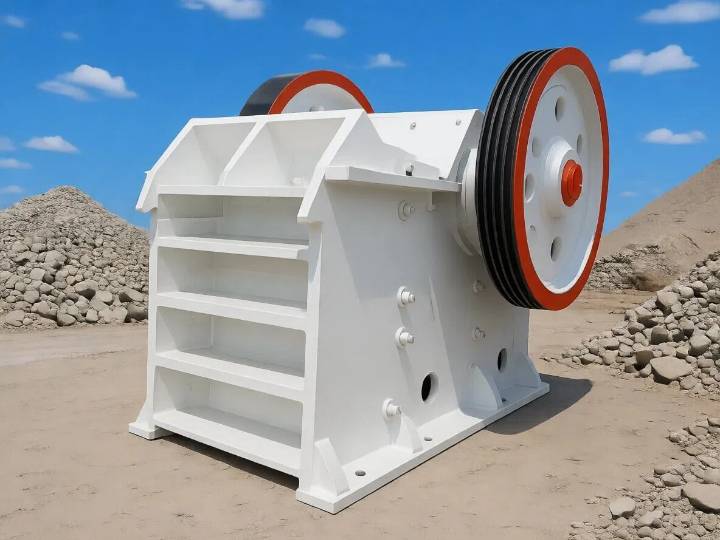
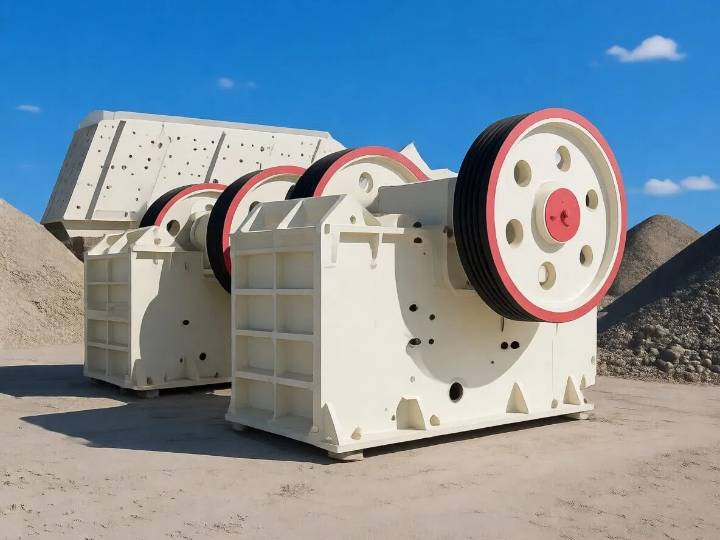
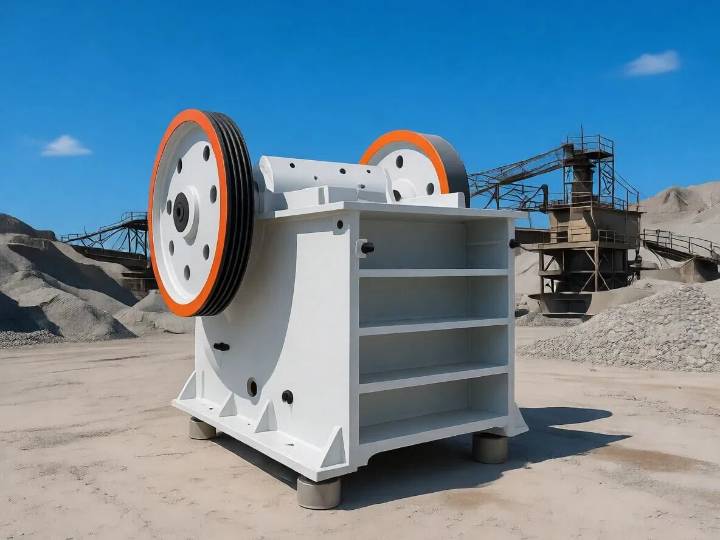
Shanghe Jaw Crusher
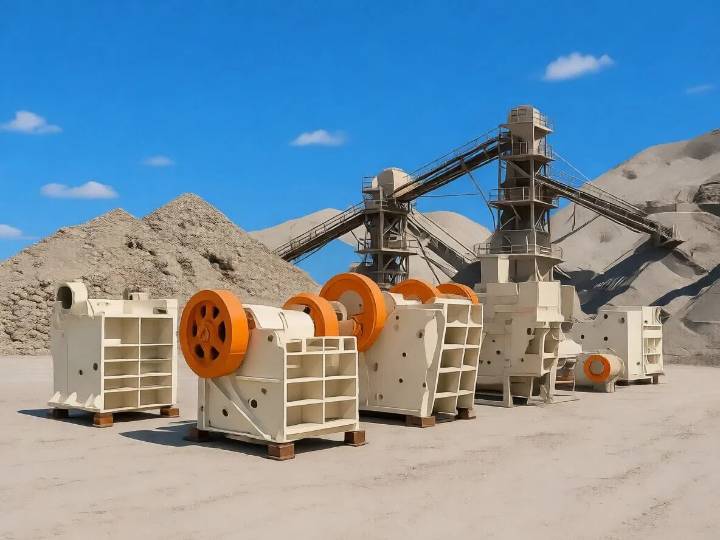
A jaw crusher is the primary workhorse for coarse rock and ore reduction. It operates on a straightforward principle of compression: immense compressive force is applied by two mechanical jaws—one stationary and one that moves in a cyclical motion. These jaws are pitched in a V-configuration, forming the crushing chamber where material is progressively fractured until small enough to escape.
Common Applications
A jaw crusher’s ability to crush extremely hard and abrasive materials makes it a foundational machine across multiple industries. Its core applications include:
- Primary Rock Reduction in Mining & Quarrying: It serves as the critical first stage, breaking down blasted or extracted material like granite, basalt, iron ore, and quartz into manageable sizes for further processing.
- Recycling of Demolition & Construction Materials: Jaw crushers are essential for recycling operations, powerfully crushing concrete (with or without embedded rebar), asphalt, bricks, and other demolition debris into reusable aggregate.
- Industrial Material Processing: Various industrial sectors rely on jaw crushers for the initial size reduction of hard minerals and ores in the production of cement, chemicals, and for metallurgical processes.
Advantages
- Exceptional Versatility and Efficiency
Capable of handling a wide range of hard and abrasive materials (like granite, basalt, and concrete) and efficiently reducing large feed size with a high crushing ratio, thanks to its deep, V-shaped chamber.
2. Robust and Reliable Design
Built with a simple structure, fewer moving parts, and durable, wear-resistant materials to ensure high reliability and long-lasting performance in demanding environments.
3. Economic Operation and Maintenance
Offers a lower initial investment and reduced operating costs, complemented by easy maintenance, straightforward replacement of wear parts, and minimal downtime.
4. Flexible and User-Controlled Output
Provides the ability to easily adjust the jaw gap to control the final product size, combined with modern features that manage noise and dust for greater operational flexibility and a better working environment.
Types
Classification by Pivot Point (Swing Jaw Motion)
This classification defines the crusher’s fundamental action and output characteristics.
- Blake Crusher (Overhead Pivot): The most common industrial design. The swing jaw is pivoted at the top, creating a fixed feed opening and a variable discharge area. It excels at handling large boulders for primary crushing, offering high capacity and reliable performance.
- Dodge Crusher (Bottom Pivot): Features a swing jaw pivoted at the bottom, resulting in a fixed discharge opening that ensures a uniform product size. Its tendency to clog makes it suitable primarily for laboratory settings or specialized small-scale applications.
- Universal Crusher (Intermediate Pivot): The swing jaw is pivoted at a midpoint, attempting to combine the advantages of the Blake and Dodge designs. While offering versatility, it is less prevalent in heavy-duty mining operations.
Classification by Toggle Mechanism
The toggle system transmits motion from the drive to the swing jaw, influencing efficiency and wear.
- Single Toggle Jaw Crusher: Employs a simpler, more compact mechanism with an eccentric shaft directly driving the swing jaw. This creates an elliptical motion that combines compression with a downward rubbing action, aiding material flow and providing high throughput.
- Double Toggle Jaw Crusher: Uses two toggle plates and a separate pitman shaft. It generates a near-straight compressive motion, which reduces wear on the jaw plates and is particularly advantageous for processing extremely hard or abrasive materials, though the design is more complex.
Classification by Portability
This refers to the crusher’s mobility and setup configuration.
- Stationary Jaw Crushers: Large, permanently installed units on concrete foundations, designed for high-volume, long-term operation in fixed plants like mines and quarries.
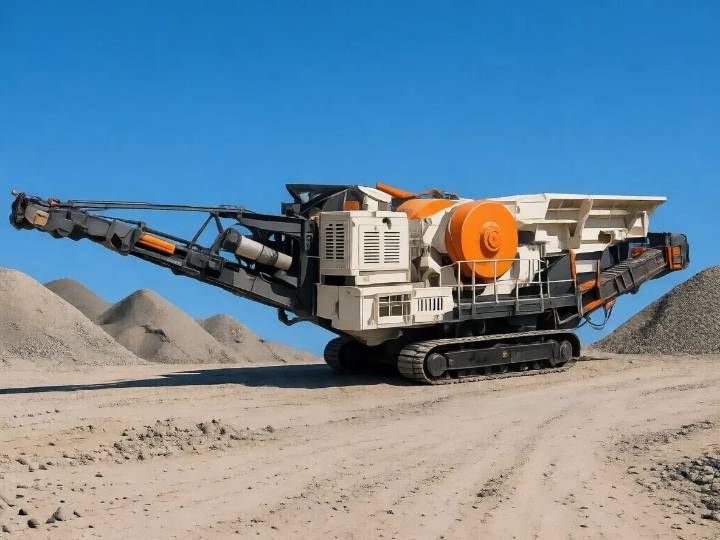
- Mobile Jaw Crushers: Self-propelled, track-mounted crushers that offer high mobility directly on site. They are ideal for demolition recycling, contract crushing, and moving along a quarry face.
- Portable Jaw Crushers: Wheel-mounted units designed for easy transport between job sites via standard haul trucks. They provide flexibility for operations at multiple locations.
Classification by Application Stage
This distinguishes crushers based on their role in the size reduction process.
- Primary/Coarse Jaw Crusher: Designed for the initial crushing stage, capable of accepting very large feed sizes (often exceeding 1 meter) to produce a coarse product for further processing.
- Secondary/Fine Jaw Crusher: Used for further size reduction. These crushers have a smaller feed opening and can be set for a tighter discharge to produce a finer, more uniform aggregate or product.
Working Principle
The core of a jaw crusher is its V-shaped crushing chamber, formed by two vertical jaw plates. The process operates on a continuous, reciprocating cycle:
- Drive and Motion: An electric motor powers a belt and pulley system to rotate an eccentric shaft.
- Crushing Stroke: As the eccentric shaft turns, it drives the pitman, which pushes the movable (swing) jaw toward the stationary jaw. This motion applies immense compressive force to the trapped material.
- Release and Discharge: On the return stroke, the movable jaw retracts. Crushed material falls by gravity, and particles smaller than the set discharge opening at the chamber’s bottom exit the crusher.
- Energy Management: Heavy flywheels store rotational energy during the return stroke and release it during the crushing stroke, ensuring smooth, powerful operation even under heavy load.
Key Components and Functions
- Jaw Plates: Replaceable crushing surfaces (typically made of hardened manganese steel) that constitute the fixed and movable jaws.
- Pitman: The main connecting rod and moving element, driven by the eccentric shaft to transmit motion to the swing jaw.
- Toggle Plate: A critical safety component. It acts as a mechanical fuse designed to fail and protect the crusher from damage if uncrushable material enters the chamber.
- Tension Rod & Spring: Maintains consistent pressure on the toggle plate and assists in returning the swing jaw to its starting position after each stroke.
Specification
| Model | Feeding Size(mm) | Discharge Size(mm) | Processing Capacity (t/h) | Motor Power(kw) | Overall Dimension(mm) |
|---|---|---|---|---|---|
| PE150×250 | ≤130 | 15-45 | 1-4 | 5.5 | 896×745×935 |
| PE250×300 | ≤150 | 15-55 | 3-6 | 7.5 | 1050×987×1000 |
| PE250×400 | ≤210 | 25-60 | 5-20 | 15 | 1215×1520×1030 |
| PE400×600 | ≤350 | 40-90 | 15-60 | 30 | 1650×1588×1050 |
| PE500×750 | ≤425 | 50-100 | 40-110 | 45 | 1956×1918×1920 |
| PE600×900 | ≤500 | 60-125 | 90-180 | 55 | 2250×2733×2280 |
| PE800×900 | ≤600 | 80-140 | 100-220 | 75 | 2450×2950×2490 |
| PE750×1060 | ≤630 | 60-150 | 110-380 | 110 | 2531×2455×2783 |
| PE900×1060 | ≤700 | 100-160 | 230-390 | 110 | 2900×2657×2950 |
| PE900×1200 | ≤750 | 110-165 | 220-450 | 132 | 3100×2760×3260 |
| PE1000×1200 | ≤900 | 110-185 | 315-500 | 132 | 3200×2760×3260 |
| PE1200×1500 | ≤950 | 115-195 | 550-1000 | 220 | 3710×3446×4075 |
| PE1500×1800 | ≤1200 | 135-225 | 600-1200 | 280 | 5100×4700×4300 |
| PEX150×750 | ≤120 | 10-40 | 8-25 | 15 | 1310×1118×1145 |
| PEX250×750 | ≤210 | 15-50 | 15-35 | 22 | 1400×1751×1515 |
| PEX350×750 | ≤300 | 15-50 | 18-40 | 30 | 1485×1680×1648 |
| PEX250×1000 | ≤210 | 15-60 | 15-60 | 30 | 1550×1964×1380 |
| PEX250×1200 | ≤210 | 15-60 | 20-60 | 37 | 1530×1946×1380 |
| PEX300×1300 | ≤250 | 25-60 | 16-105 | 55-75 | 2000×2320×1730 |
| PEX300×1500 | ≤250 | 25-60 | 18-122 | 15-90 | 2200×2320×1730 |
| PEX500×1500 | ≤425 | 50-100 | 50-220 | 90-110 | 2300×2420×1840 |