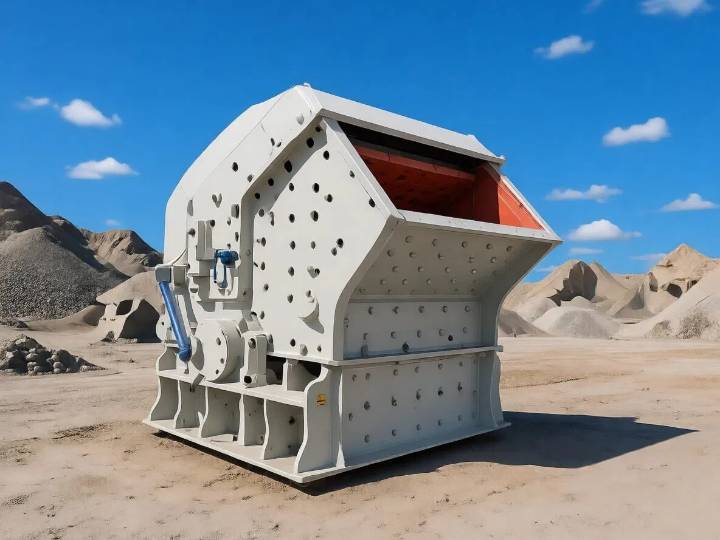
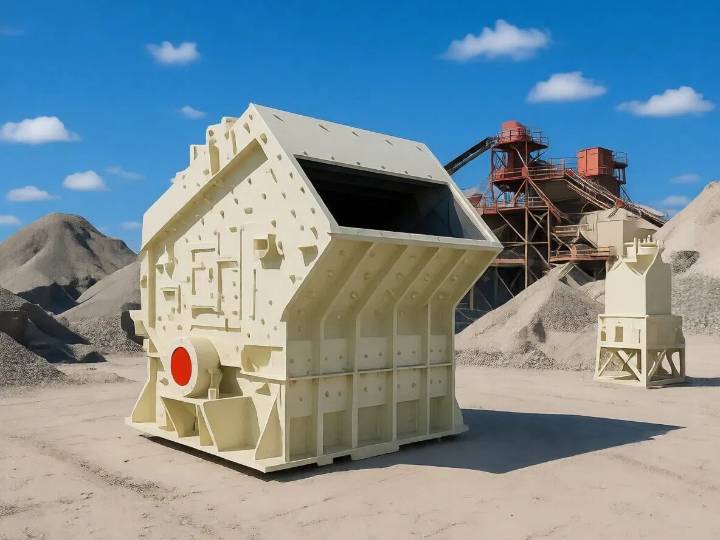
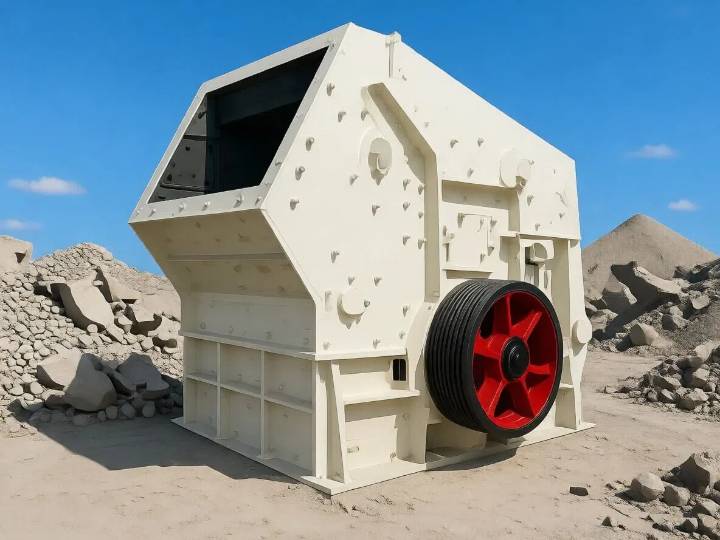
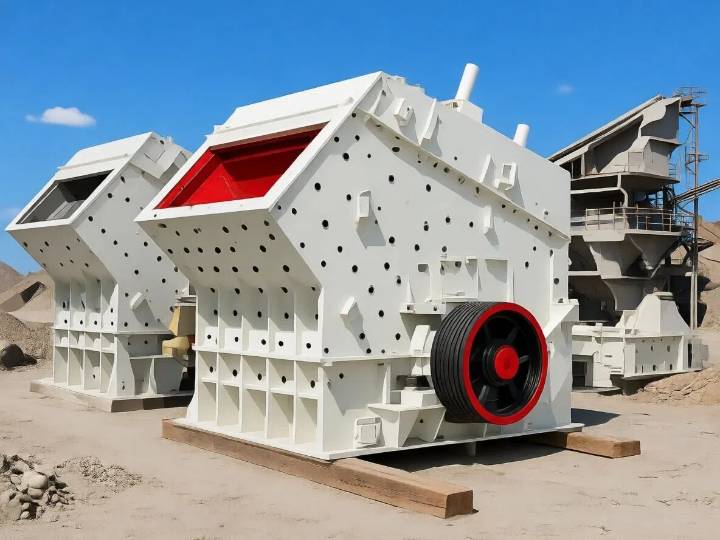
Shanghe Impact Crusher
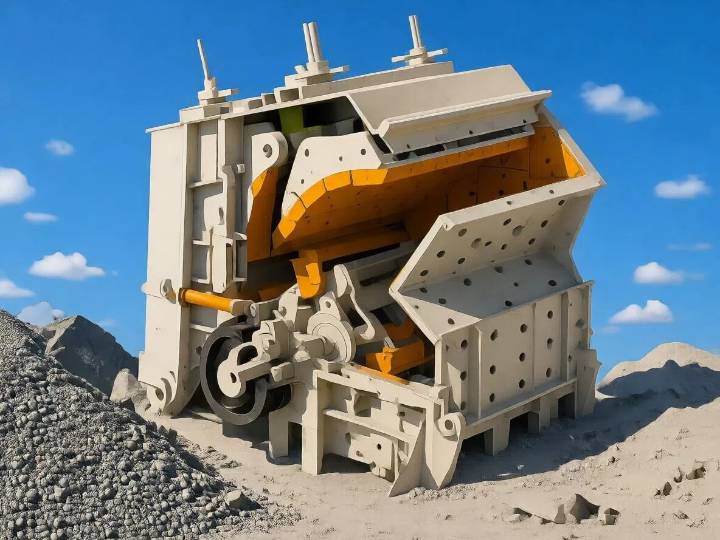
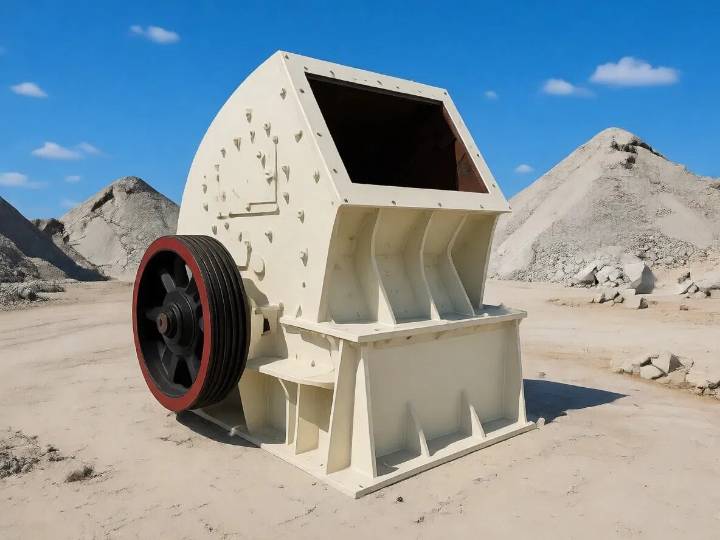
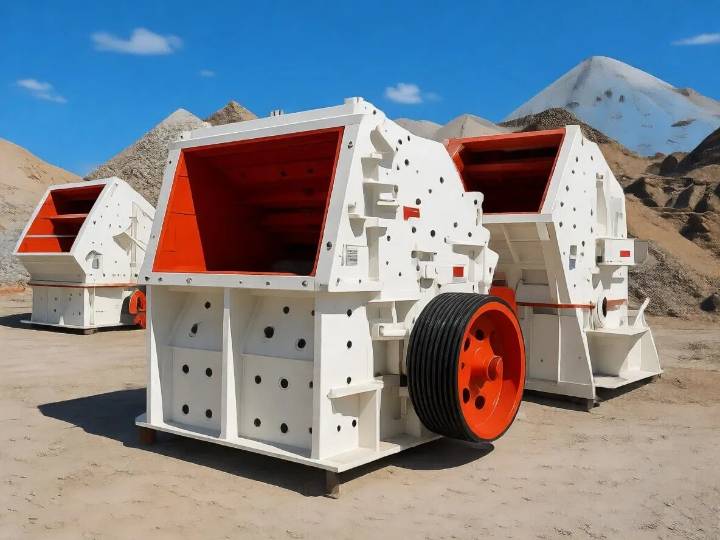
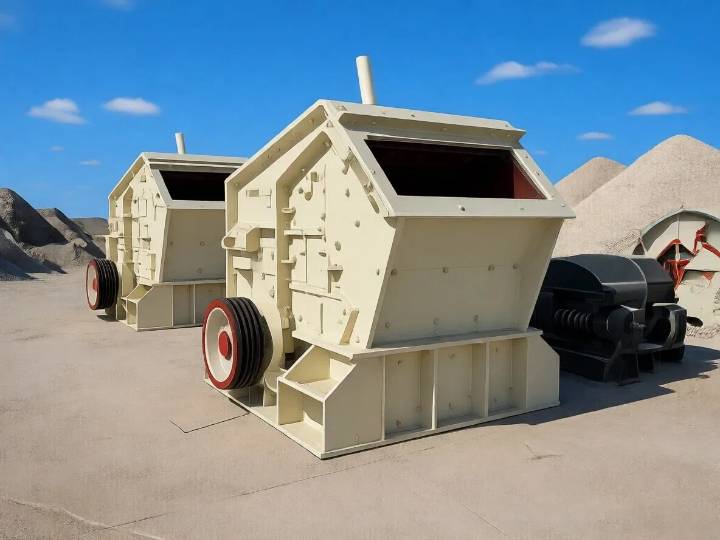
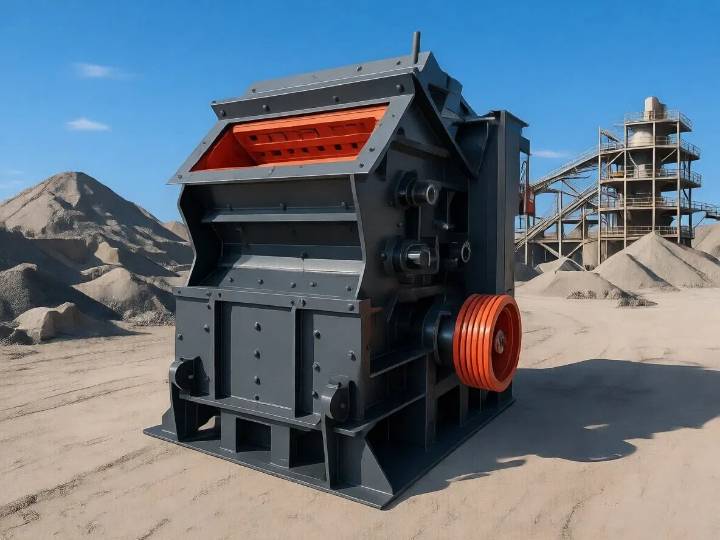
An impact crusher is a modern crushing machine that reduces material size through direct, high-velocity impact rather than compression. By rapidly accelerating and shattering feed material against durable breaker plates, it efficiently produces a uniform, cubical product—a key advantage in construction aggregate production and recycling applications.
Common Applications
Impact crushers are essential in several key industries due to their ability to produce a well-shaped, cubical product.
- Construction Aggregates: Producing high-quality, cubical gravel and sand for concrete and asphalt in infrastructure projects.
- Recycling: Processing demolition waste like concrete (with rebar), asphalt, and glass into reusable construction materials.
- Mining & Quarrying: Crushing medium-hard, non-abrasive minerals such as limestone, gypsum, coal, and dolomite.
- Cement Manufacturing: Reducing raw materials like limestone and clay before the kiln process.
Advantages
Key Advantages of Impact Crushers
Impact crushers offer distinct operational and economic benefits, making them a preferred choice for many applications.
- Superior Product Quality: They produce uniform, cubical aggregates ideal for high-strength concrete and asphalt, offering excellent compaction and stability.
- High Reduction Ratio & Simplicity: With ratios often reaching 20:1 or higher, a single impact crusher can sometimes perform both primary and secondary crushing, streamlining the production circuit.
- Material Versatility: They handle wet or sticky feed better than compression crushers and are highly effective at processing recycled materials like concrete and asphalt, efficiently separating rebar.
- Efficiency & Maintenance: They provide high energy efficiency for soft to medium-hard materials and are designed for easier maintenance, with features like hydraulic hood opening and quick-change wear parts.
Types
Impact crushers are categorized by their internal mechanism, operational purpose, and mobility. The primary types are defined by the orientation of the drive shaft and the specific crushing action.
1. Horizontal Shaft Impact (HSI) Crushers
The most common and versatile type, used for primary, secondary, and recycling applications.
- Mechanism: A high-speed horizontal rotor fitted with fixed blow bars hurls material against stationary breaker plates (aprons), shattering it through repeated impacts.
- Applications: Ideal for soft to medium-hard materials (limestone, recycled concrete/asphalt) where a high-quality, cubical product is required.
- Key Advantage: Delivers an excellent combination of a high reduction ratio and superior product shape.
2. Vertical Shaft Impact (VSI) Crushers
Specialized machines designed for fine crushing, shaping, and sand production.
- Mechanism: Material is fed into a vertically oriented rotor and accelerated at extreme speeds to be ejected into a crushing chamber. Two main configurations exist:
- Rock-on-Rock: Material is crushed by impact with a cascade of other rocks, minimizing wear part consumption.
- Rock-on-Anvil: Material is thrown against stationary steel anvils for higher energy impact on harder stone.
- Applications: Tertiary and quaternary stages for manufacturing high-specification sand and improving aggregate shape.
3. Hammer Mills
A distinct, related technology that utilizes an impact principle with a different hammer design.
- Mechanism: Swinging or pivoting hammers mounted on a horizontal rotor crush material upon impact and against grate screens.
- Applications: Best suited for crushing brittle, low-abrasive materials like coal, gypsum, and agricultural products.
4. Mobility Configurations
Impact crushers are deployed in formats to suit any project scope and duration.
- Stationary Plants: Permanently installed for high-volume, long-term production in quarries and mines.
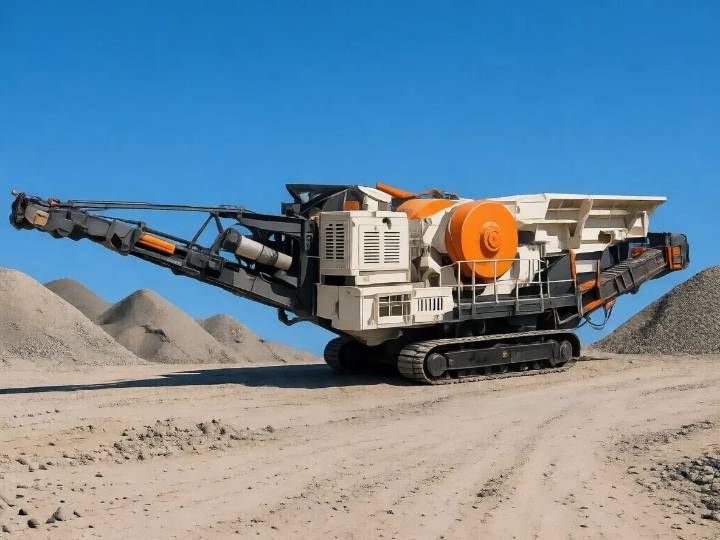
- Track-Mounted (Mobile): Self-propelled units that offer maximum on-site mobility for demolition, recycling, and moving quarry faces.
- Wheel-Mounted (Portable): Trailer-based units designed for easy transport between multiple job sites via standard haul trucks.
Comparative Overview: Crusher Types
| Feature | Impact Crusher | Jaw Crusher | Cone Crusher |
|---|---|---|---|
| Primary Force | High-Speed Impact | Compression | Compression |
| Product Shape | Excellent (Cubical) | Jagged/Slabby | Good/Consistent |
| Best Material Suitability | Soft to Medium-Hard, Recycled | Hard & Abrasive | Hard & Abrasive |
| Moisture Tolerance | High | Low | Low |
| Reduction Ratio | High (Up to 20:1+) | Low (~6:1) | Medium/High |
Working Principle
The crushing process is a continuous cycle of acceleration, impact, and fragmentation.
- Feed Introduction: Material is fed into the top of the crushing chamber.
- Primary Acceleration & Impact: A high-speed rotor equipped with fixed blow bars strikes the incoming feed, imparting massive kinetic energy and projecting it across the chamber.
- Secondary Fragmentation: The hurled material collides with stationary impact plates (aprons) lining the chamber walls, causing it to shatter.
- Recirculation & Final Sizing: The fragmented pieces rebound back into the path of the rotor for further impacts. This cycle repeats within the chamber until the material is reduced to a size small enough to exit through the adjustable discharge gap at the bottom.
Specification
| Model | Specification | Feed Opening (mm) | Max Feed Size (mm) | Capacity (t/h) | Power (kW) | Dimensions (mm) |
|---|---|---|---|---|---|---|
| PF-1007 | φ1000×700 | 400×730 | ≤250 | 15-60 | 45 | 2319×1654×2558 |
| PF-1010 | φ1000×1050 | 400×1080 | ≤300 | 50-90 | 55 | 2319×2001×2558 |
| PF-1210 | φ1250×1050 | 450×1060 | ≤300 | 80-150 | 90 | 2585×2053×2809 |
| PFV-1214 | φ1250×1400 | 450×1440 | ≤300 | 100-200 | 132 | 2582×2403×2809 |
| PFV-1315 | φ1320×1500 | 550×1530 | ≤350 | 210-220 | 185 | 2930×2761×3053 |
| PFV-1320 | φ1320×2000 | 610×1900 | ≤500 | 220-250 | 220 | 3224×3175×2706 |
| PFV-1520 | φ1500×2000 | 830×2040 | ≤700 | 300-550 | (220-250)×2 | 3959×3564×3330 |
| PFV-1820 | φ1800×2000 | 1260×2040 | ≤800 | 600-800 | 630-710 | 4400×3866×4009 |