Introduction
Choosing the right cement silo is an important decision for any concrete batching plant or construction project. The silo capacity directly affects material storage efficiency, project productivity, transportation cost, and equipment investment.
Among different options, 50 ton cement silos and 100 ton cement silos are two of the most popular choices in the global market. But which one is better for your project?
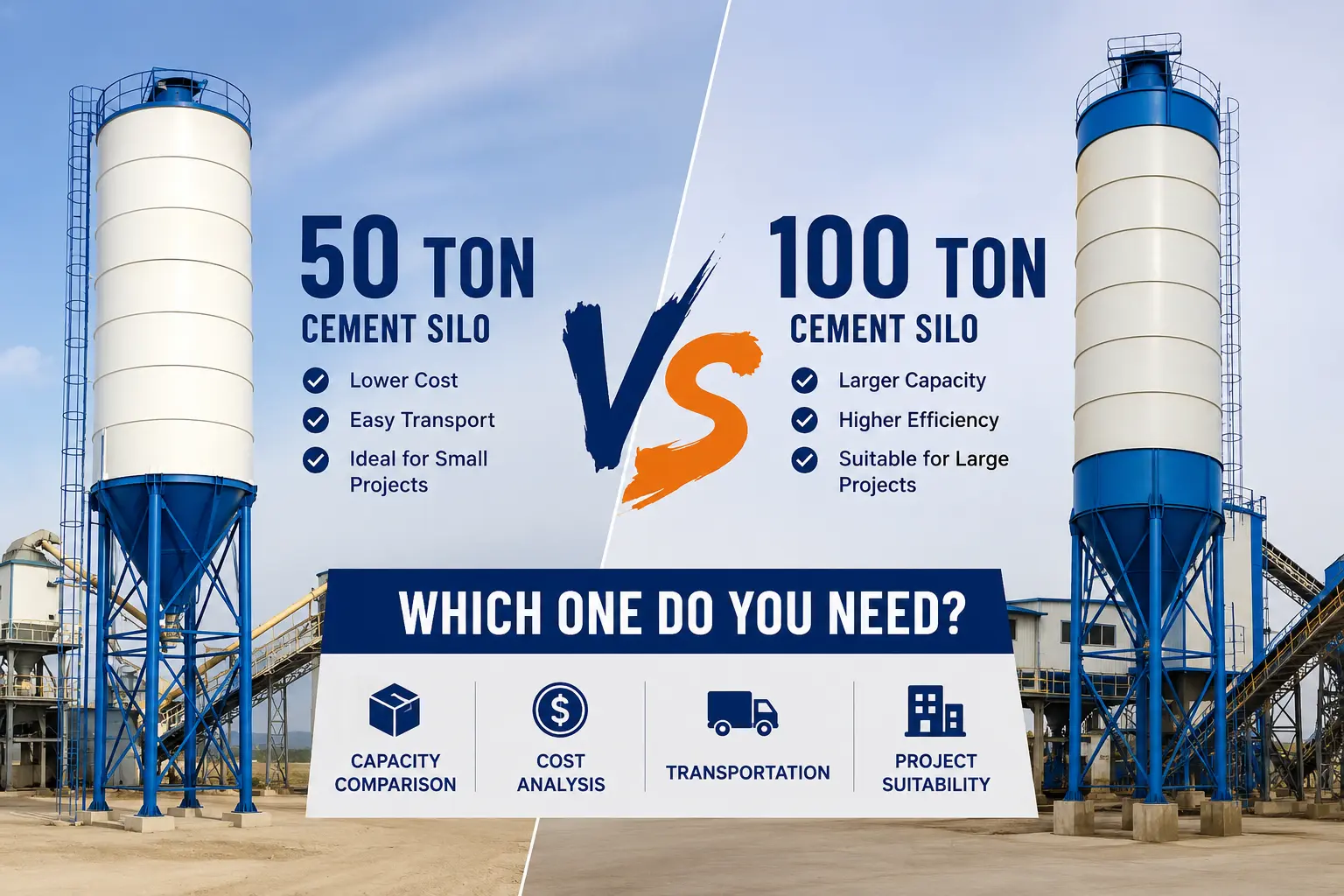
In this article, we will compare the 50 ton and 100 ton cement silo in terms of capacity, applications, transportation, cost, and project suitability to help you make the right decision.
What Is a Cement Silo?
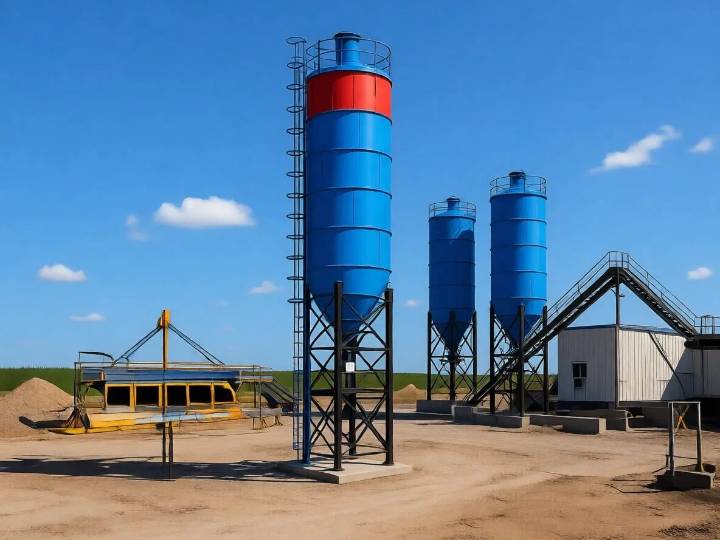
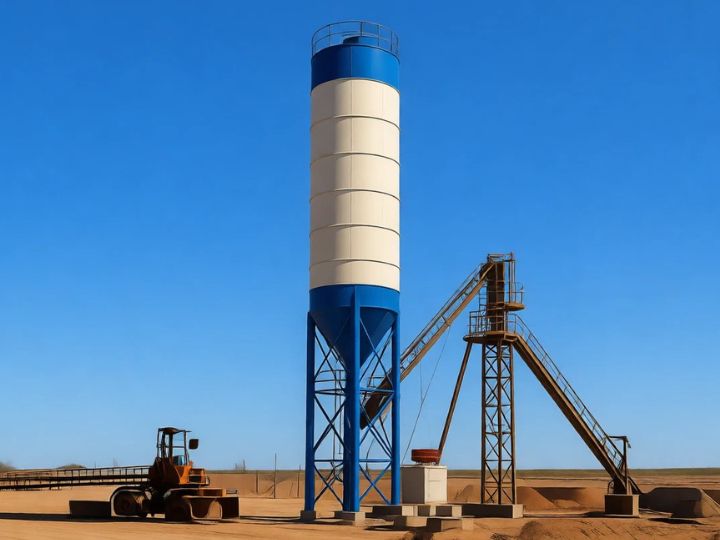
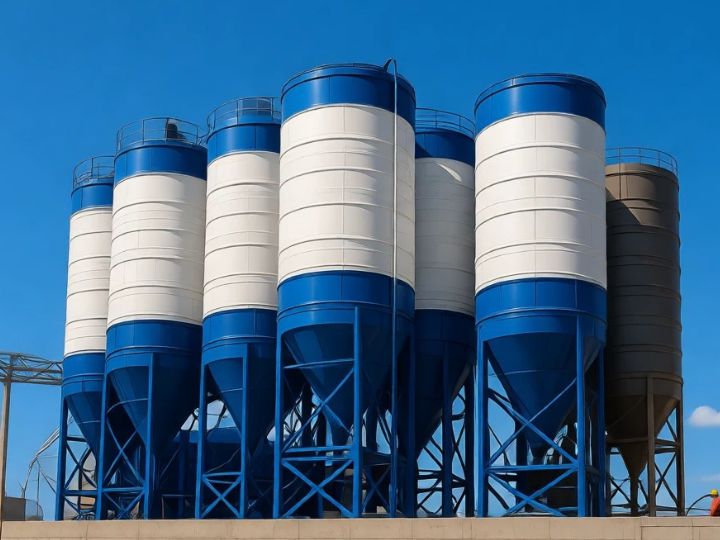
A cement silo is a bulk storage tank used for storing cement, fly ash, lime powder, and other dry bulk materials. It is widely used in:
- Concrete batching plants
- Road construction projects
- Precast concrete production
- Commercial concrete supply
- Infrastructure construction
A complete cement silo system usually includes:
- Silo body
- Dust collector
- Safety valve
- Level indicator
- Screw conveyor
- Supporting structure
50 Ton Cement Silo Overview
A 50 ton cement silo is considered a compact storage solution suitable for small and medium-sized projects.
Main Features
- Smaller footprint
- Easier transportation
- Lower investment cost
- Fast installation
- Suitable for mobile batching plants
Common Applications
- Rural road construction
- Small building projects
- Temporary construction sites
- Mobile concrete batching plants
- Small ready mix operations
Advantages
Lower Initial Cost
The 50 ton silo requires less steel material and lower transportation costs, making it budget-friendly.
Easier Transportation
It is easier to transport in containers or by truck, especially for overseas export projects.
Flexible Installation
The compact structure is suitable for projects with limited space.
100 Ton Cement Silo Overview
A 100 ton cement silo is designed for medium and large-scale concrete production projects.
Main Features
- Larger storage capacity
- Reduced cement delivery frequency
- Better for continuous production
- Suitable for stationary batching plants
Common Applications
- Commercial concrete plants
- Highway construction
- Large infrastructure projects
- Long-term construction sites
- High-capacity batching plants
Advantages
Higher Production Efficiency
A larger cement reserve ensures continuous concrete production without frequent refilling.
Lower Long-Term Operating Cost
Although the initial investment is higher, bulk cement transportation becomes more economical over time.
Better for Large Projects
The 100 ton silo supports higher daily concrete output.
50 Ton vs 100 Ton Cement Silo Comparison
| Item | 50 Ton Cement Silo | 100 Ton Cement Silo |
|---|---|---|
| Storage Capacity | Smaller | Larger |
| Project Size | Small & Medium | Medium & Large |
| Transportation | Easier | More complex |
| Installation | Faster | Requires more preparation |
| Investment Cost | Lower | Higher |
| Cement Supply Frequency | More frequent | Less frequent |
| Space Requirement | Smaller | Larger |
| Suitable Batching Plant | Mobile / Small Stationary | Stationary Plant |
Which Cement Silo Should You Choose?
Choose a 50 Ton Cement Silo If:
- Your project is temporary
- You use a mobile batching plant
- Daily concrete demand is low
- Installation space is limited
- You want lower initial investment
- Transportation convenience is important
Typical projects:
- Village roads
- Small housing construction
- Remote site projects
Choose a 100 Ton Cement Silo If:
- Your project requires continuous concrete production
- You operate a commercial batching plant
- Daily concrete output is high
- The project duration is long-term
- Bulk cement supply is stable
Typical projects:
- Highway construction
- Commercial concrete production
- Infrastructure projects
- Industrial construction
Factors That Affect Cement Silo Selection
1. Concrete Production Capacity
The larger the batching plant output, the larger the silo capacity required.
For example:
- HZS25 / HZS35 batching plant → 50 ton silo
- HZS60 / HZS90 batching plant → 100 ton silo
2. Cement Supply Frequency
If cement delivery is difficult or infrequent, a larger silo is recommended to avoid production interruptions.
3. Project Duration
For short-term projects, smaller silos are usually more economical.
For long-term projects, larger silos improve operational efficiency.
4. Transportation Conditions
Some countries or regions have transportation size restrictions, making smaller silos easier to deliver.
Bolted cement silos are often preferred for export projects because they reduce shipping costs and container space.
Bolted Cement Silo vs Welded Cement Silo
When choosing between 50 ton and 100 ton capacity, buyers should also consider silo structure type.
Bolted Cement Silo
Advantages:
- Easy transportation
- Lower shipping cost
- Convenient overseas export
- Easy installation on-site
Welded Cement Silo
Advantages:
- Faster local installation
- Strong integrated structure
For international projects, bolted cement silos are generally more popular.
Maintenance Tips for Cement Silos
To ensure long service life and safe operation:
- Regularly check the dust collector
- Inspect the safety valve
- Prevent cement moisture blockage
- Clean the screw conveyor periodically
- Monitor the material level indicator
Proper maintenance can significantly reduce downtime and repair costs.
Conclusion
Both 50 ton and 100 ton cement silos have their own advantages. The best choice depends on your project scale, concrete production demand, transportation conditions, and investment budget.
In general:
- 50 ton cement silo → flexible and economical for smaller projects
- 100 ton cement silo → efficient and reliable for large-scale concrete production
Before purchasing, it is recommended to evaluate:
- Daily concrete output
- Project duration
- Site space
- Transportation conditions
- Budget plan
Choosing the right cement silo can improve construction efficiency and reduce overall operating costs.
FAQs
How many bags of cement can a 50 ton silo store?
A 50 ton cement silo can store approximately 1,000 bags of cement (based on 50 kg per bag).
Is a 100 ton cement silo suitable for mobile batching plants?
Generally, 100 ton silos are more suitable for stationary batching plants due to their larger size and weight.
Which is better for export projects?
Bolted cement silos are usually better for export because they reduce shipping space and transportation costs.
Can cement silos be customized?
Yes. Cement silos can be customized according to:
- Capacity
- Height
- Steel thickness
- Discharge system
- Dust collection system
- Color and branding