

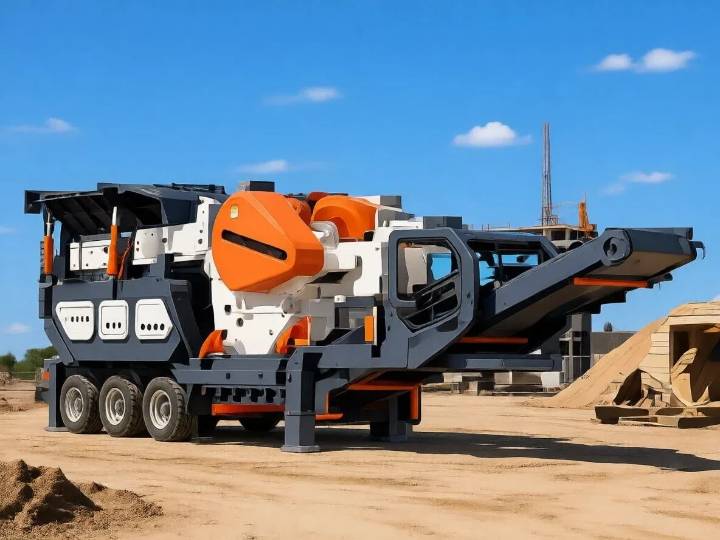
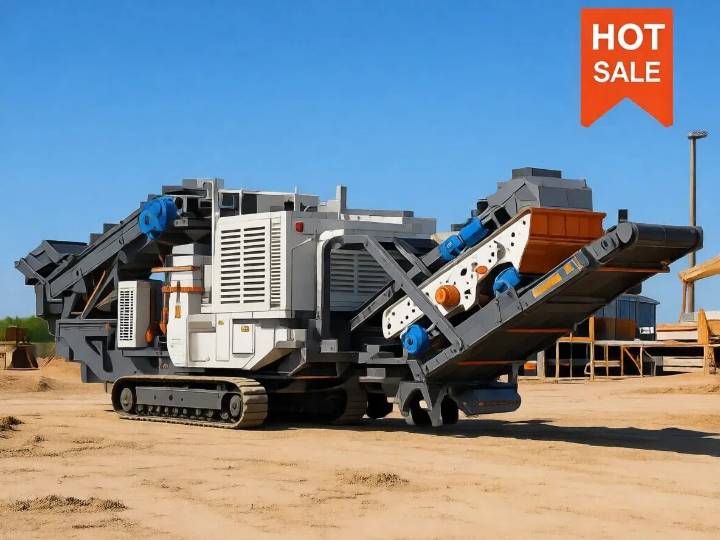
Shanghe Mobile Crushing Plant
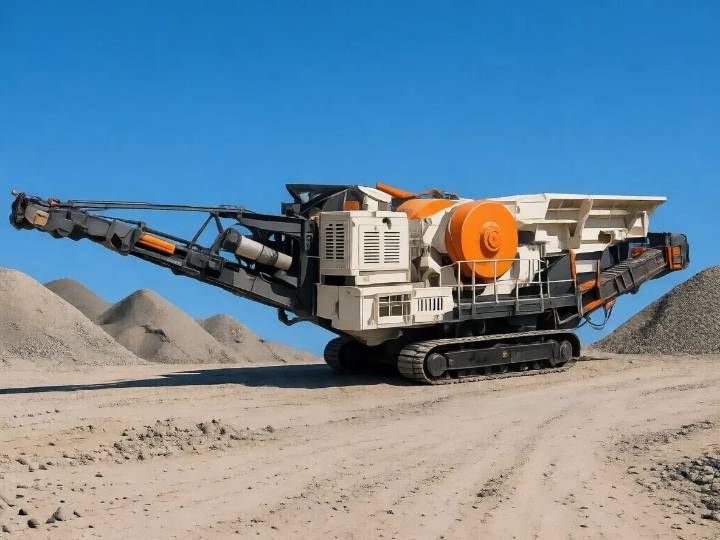
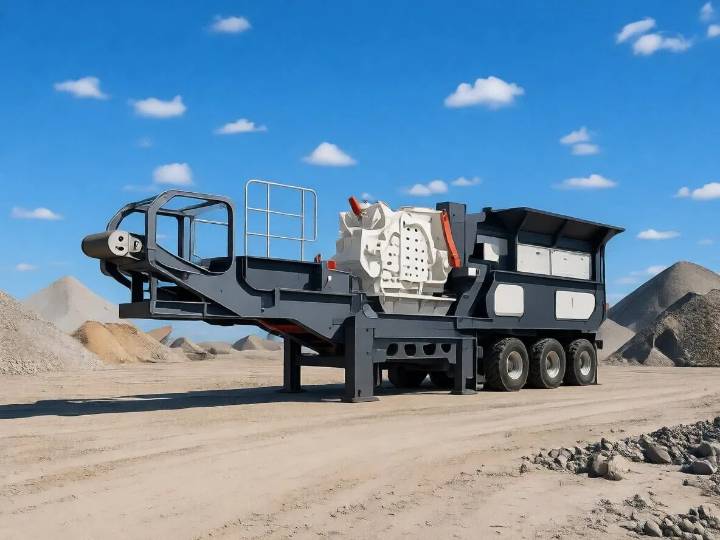
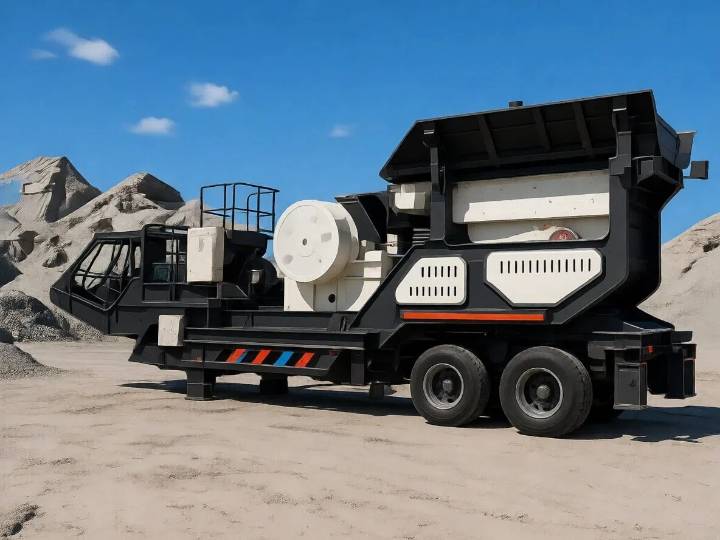
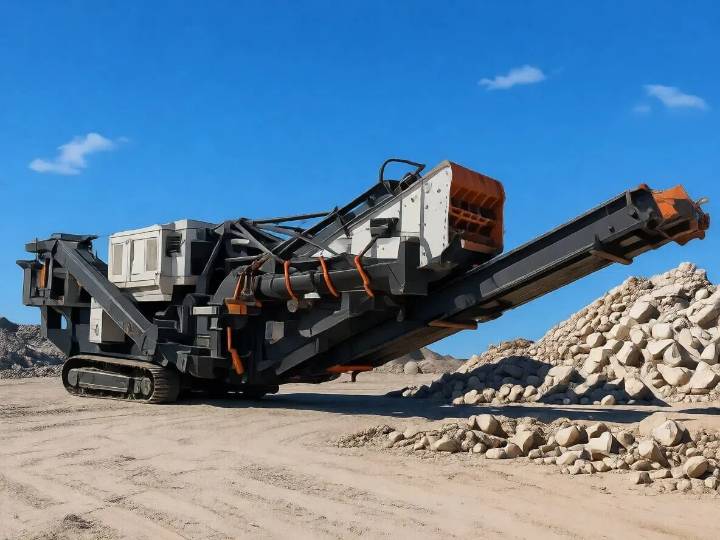
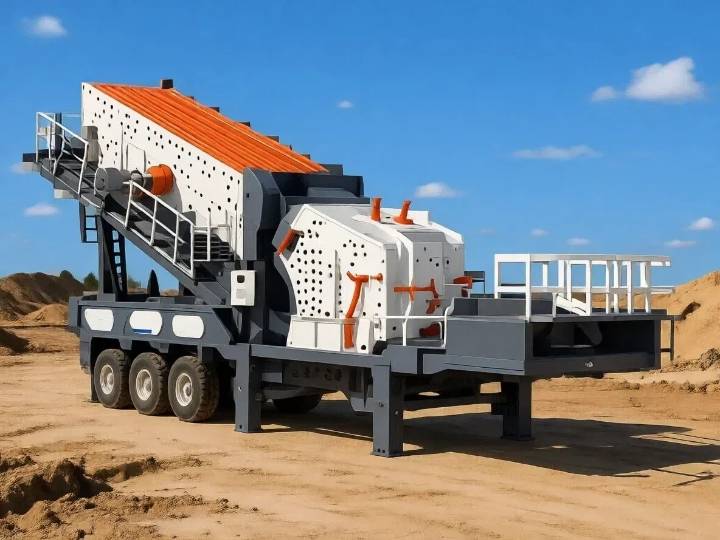
A mobile crushing plant is a portable system, typically wheeled or tracked, which consolidates the core functions of material processing—feeding, crushing, screening, and conveying—into a single, movable entity. This design allows you to relocate the plant directly to the work site. This mobility substantially lowers costs associated with transporting raw materials and offers greater operational flexibility and efficiency than stationary crushing installations.
Core Industrial Applications
- Infrastructure Construction: Mobile plants are deployed directly on large-scale projects—such as highways, railways, and bridges—to produce aggregates on-site. This eliminates long-distance hauling, ensures a steady supply of base and surfacing materials precisely where needed, and significantly cuts transportation costs and emissions.
- Recycling & Urban Mining: These units are fundamental to the circular economy by processing construction and demolition (C&D) waste—such as concrete, asphalt, and brick—directly on-site. Furthermore, they effectively transform this waste into high-quality recycled aggregates, which minimizes landfill reliance and provides a sustainable supply of raw materials for new builds.
- Mining & Quarrying: In open-pit mines and quarries, mobile crushers follow the working face, performing primary crushing where the material is extracted. This “pit-to-portable” approach drastically reduces the need for dump trucks to haul raw ore over long distances, optimizing fuel use and increasing overall operational efficiency.
Advantages
Financial & Logistical Efficiency
- Direct Cost Reduction: By processing material directly at the source, you can eliminate or drastically reduce hauling costs, which often account for up to 30% of total project expenses. In fact, implementing a mobile plant can decrease these transportation expenditures by an estimated 20–30%.
- Lower Capital Outlay: Because they require minimal permanent infrastructure, such as deep concrete foundations or fixed utilities, these plants allow you to significantly slash your upfront site preparation costs.
- High Resale Value: Moreover, their cross-industry versatility—ranging from aggregates and mining to waste recycling—ensures higher residual values, ultimately leading to a more favorable long-term return on investment.
Operational Agility & Speed
- Rapid Deployment: Unlike stationary installations that require weeks of civil work, mobile plants offer a true “plug-and-play” solution, reaching full operational status within just 4 to 6 hours of arrival on site.
- Project Flexibility: Their mobility allows contractors to follow a resource (e.g., an advancing quarry face) or seamlessly relocate between job sites, making remote or short-duration projects economically feasible.
Environmental & Technological Leadership
- Reduced Environmental Impact: Beyond economic gains, on-site processing slashes truck traffic, fuel consumption, and associated carbon emissions. Furthermore, our modern systems integrate advanced dust suppression and noise control, ensuring cleaner and fully compliant operations in sensitive environments.
- Integrated Intelligence: Equipped with sophisticated telematics and automation, our 2026 models enable real-time performance monitoring and remote diagnostics. Consequently, these systems allow for automated adjustments, thereby empowering a single operator to manage the entire crushing circuit with ease.
Types
Classification by Chassis Type
This defines the plant’s mobility and terrain capability.
| Type | Key Characteristics | Primary Applications |
|---|---|---|
| Tracked (Crawler) Mobile Crushers | Move on self-powered crawler tracks, often via remote control. Offer superior traction and minimal ground pressure. | Ideal for complex, soft, or steep terrains such as quarries, mining faces, wetlands, and mountainous areas. |
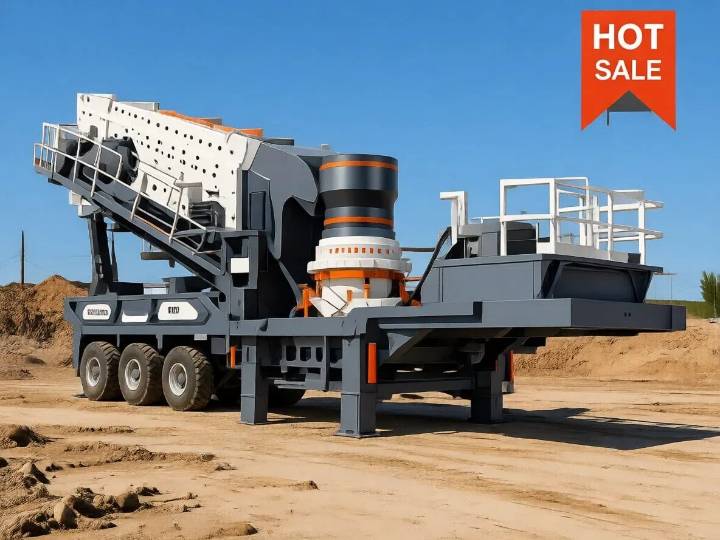
| Wheeled (Tire-Type) Mobile Crushers | Mounted on a trailer with tires; require truck towing for relocation. Offer faster road transit and simpler setup. | Best for multi-site projects on stable, flat ground like urban construction, roadwork, and fixed recycling yards. |
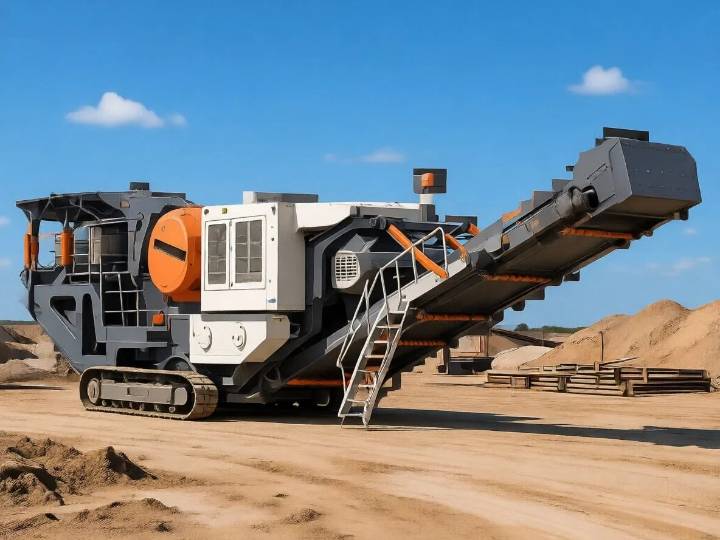
Classification by Crushing Technology
The core crusher unit defines the plant’s material processing capability and product shape.
- Mobile Jaw Crushers: The primary crushing workhorse. Use compressive force to break down large, hard feed materials (e.g., granite, basalt) into coarse aggregate.
- Mobile Impact Crushers: Beyond its role in secondary crushing, this impact crusher is a powerhouse for recycling. By applying high-speed impact to soft-to-medium materials like limestone, asphalt, and concrete, it delivers superior, cubical-shaped aggregate that meets the strictest project specifications.
- Mobile Cone Crushers: By leveraging a gyrating mantle, this unit excels at the secondary and tertiary crushing of hard and abrasive materials. Furthermore, this design ensures a consistent, high-quality output, which is essential for precision-focused industries like concrete production and asphalt mixing.
- Mobile Hammer Crushers: Employ impact from swinging hammers to crush brittle materials (e.g., limestone, coal) in smaller-scale mining or aggregate production.
- Mobile Screening Stations: In addition to primary crushing, these dedicated sizing and sorting units are essential for maintaining a high-efficiency closed circuit. By continuously separating finished materials and recirculating oversized debris back to the crusher, they optimize the entire production line for maximum precision.
Classification by Power System
Power source selection balances operational flexibility, efficiency, and environmental compliance.
- Full Hydraulic Drive: Commonly integrated into crawler models, the diesel-hydraulic drive system leverages the engine’s output to power the crusher and track movement simultaneously. Consequently, operators benefit from both superior raw power and high maneuverability, making it the ideal choice for heavy-duty, on-site processing.
- Hybrid Drive (D-type): Combines a diesel engine with electric crusher motors. Provides significant fuel savings, lower emissions, and reduced noise levels during operation.
- Electric Drive (E-type): Offering flexible power options, this system connects seamlessly to an external grid or an onboard generator. Consequently, it enables zero-exhaust operation at the point of use, ultimately providing the lowest possible operating costs and carbon emissions for fixed-site or sensitive urban projects.
Working Principle
The plant functions as a continuous production line through the following stages:
- Feeding
Material is initially loaded into a vibrating feeder, which ensures a consistent, regulated flow to the crusher. Furthermore, an integrated grizzly section often pre-screens fine material, directing it away from the crusher; consequently, this process significantly improves operational efficiency and reduces unnecessary wear. - Crushing
The heart of the plant, where size reduction occurs. The crushing action varies by machine type:- Compression (Jaw & Cone Crushers): Material is squeezed between two surfaces until it fractures.
- Impact (Impact & Hammer Crushers): Material is shattered by rapid blows from hammers or blow bars.
- Screening
Once crushed, the material is transported to a vibrating screen, which sorts it into precise product sizes based on mesh openings. Subsequently, the properly sized material is discharged via stockpile conveyors, thereby ensuring a streamlined production of ready-to-use aggregate. - Conveying & Stockpiling
A system of conveyor belts transports the screened products to separate stockpiles based on size. - Recirculation (Closed-Circuit Systems)
Oversized material from the screen is automatically fed back to the crusher via a return conveyor for further processing, ensuring precise control over the final product size.
Key Components & Features
- Mobility System: Tracked for off-road stability and self-propulsion on difficult terrain; Wheeled for easy highway towing between sites.
- Power Source: Options include diesel engines, direct electric drive (for fixed-site operation), or hybrid systems balancing power and fuel efficiency.
- Automation & Control: Modern plants use PLC systems and telematics for remote monitoring, automated operation, and real-time tracking of performance and maintenance data.
Crusher Types: Principle & Application
| Crusher Type | Primary Action | Best For | Typical Crushing Stage |
|---|---|---|---|
| Jaw Crusher | Compression (fixed & moving plate) | Hard, abrasive rock (Granite, Iron Ore) | Primary (Coarse Reduction) |
| Impact Crusher | High-Speed Impact (blow bars & plates) | Medium-hard to soft, non-abrasive stone (Limestone, Recycled Concrete) | Primary or Secondary |
| Cone Crusher | Compression (gyrating mantle) | Hard, abrasive stone for precision grading | Secondary or Tertiary (Fine Crushing) |
| Hammer Crusher | Impact (swinging hammers) | Brittle materials (Coal, Gypsum, Chalk) | Primary (for specific materials) |
Specification
| Model | TC96 | TC106 | TC116 | TC120 |
|---|---|---|---|---|
| Feeding Machine | ||||
| Equipment | GZD9638 | ZSW1042 | GZD1142 | GZD1248 |
| Motor | 5.5KW×2 | 7.5KW×2 | 7.5KW×2 | 7.5KW×2 |
| Drive Mode | Motor Driven | |||
| Crusher | ||||
| Equipment | SC96 | SC106 | SC116 | SC120 |
| Max Feeding Size | 550mm | 650mm | 700mm | 800mm |
| Motor | 90KW | 110KW | 132KW | 160KW |
| Drive Mode | Motor Driven | |||
| Frame | ||||
| Hydraulic Tracked Chassis | 35T | DL385V | DL385V | NS415E |
| Boat Frame | Q345B Welding | |||
| Main Conveyor | ||||
| Stack Height | B1000×12.9m | B1000×12m | B1000×12m | B1000×12.9m |
| Drive Power | 11KW Motor reducer | 15KW Motor reducer | ||
| Main Belt | EP300-B1000×5(6.0+1.5) | EP300-B1200×5(6.0+1.5) | ||
| Unearthed Belt Conveyor | ||||
| Specification | B650×6.8m | B650×6.8m | B650×6m | B650×6.8m |
| Drive Mode | 4KW Motor reducer | |||
| Conveyor Belt | EP200-B650×3(4.5+1.5) | |||
| Iron Remover | ||||
| Specification | RCYQ-13 | |||
| Drive Mode | 3KW Motor reducer | |||
| Power System | ||||
| Generator Set | 240KW | 300KW Engine Block | ||
| Electrical System | ||||
| Control Cabinet | Soft start jaw crusher, direct start other motors, Schneider components | |||
| Hydraulic System | ||||
| Silo | Hydraulic Automatic Folding | |||
| Conveyor Folding | Hydraulic Automatic Folding | |||
| Pumps & Valves | Load Sensitive, Electro-hydraulic Proportional | |||
