Shanghe Cone Crusher
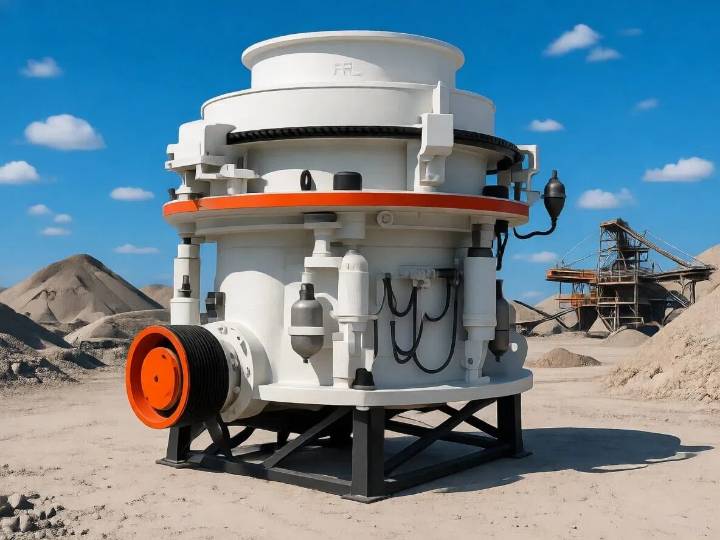
A cone crusher is a high-capacity compression crusher essential in mining and aggregate operations for secondary and tertiary reduction. It transforms coarse rock from a primary crusher into precisely sized gravel, sand, or mill feed.
The core of its operation is an eccentric gyrating mantle that rotates within a stationary bowl liner, creating a progressively narrower crushing chamber. As rock enters the top, it is repeatedly squeezed and crushed between these surfaces until it is small enough to fall through the gap at the bottom. The final product size is precisely calibrated by adjusting this discharge gap. This design enables continuous, efficient crushing of hard and abrasive materials with high productivity and excellent control over particle shape.
Common Application
- Mining & Mineral Processing: They crush hard ores (copper, iron, gold) to liberate valuable minerals for subsequent grinding and concentration.
- Aggregate Production: Essential for creating high-specification gravel, sand, and crushed stone with the cubical shape required for high-strength concrete and stable asphalt.
- Construction & Civil Works: Supply graded materials for road bases, railway ballast, and drainage layers that meet strict engineering standards.
- Recycling: Process concrete and asphalt debris, with advanced systems capable of separating bitumen from aggregate to produce high-percentage recycled asphalt.
- Industrial Processing: Crush raw materials like limestone and slag for cement manufacture and other chemical processes.
Advantages
- Superior Output: They produce uniform, cubical aggregates through inter-particle crushing, essential for high-specification concrete and asphalt where particle shape directly impacts strength and workability.
2. Operational Excellence: Their optimized chamber geometry and continuous gyratory action achieve a high reduction ratio and throughput. They are uniquely engineered to efficiently process hard, abrasive materials like granite and basalt.
3. Reliability & Control: Advanced hydraulic systems provide instant protection by allowing tramp metal to pass, preventing damage. Automated control systems enable remote, real-time adjustment of settings for peak performance without shutdown.
4. Economic Efficiency: While the initial investment is higher, cone crushers offer lower long-term operating costs due to energy efficiency and durable wear parts. Features like quick-change liner systems drastically reduce downtime, maximizing production time and overall cost-effectiveness.
Types
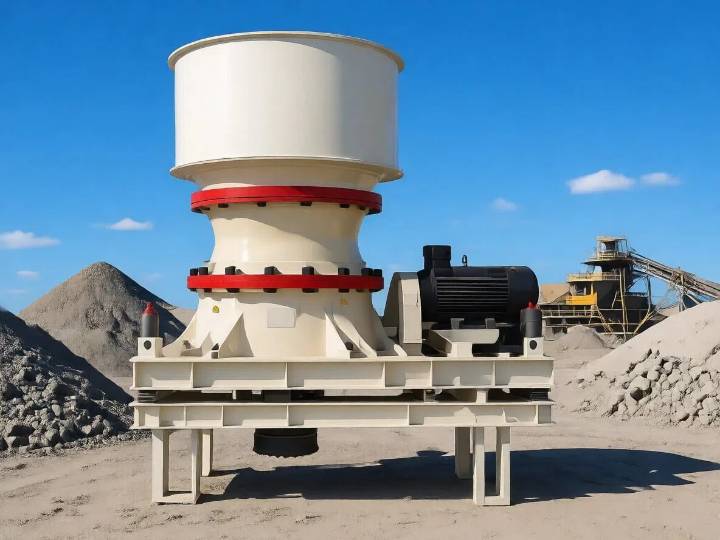
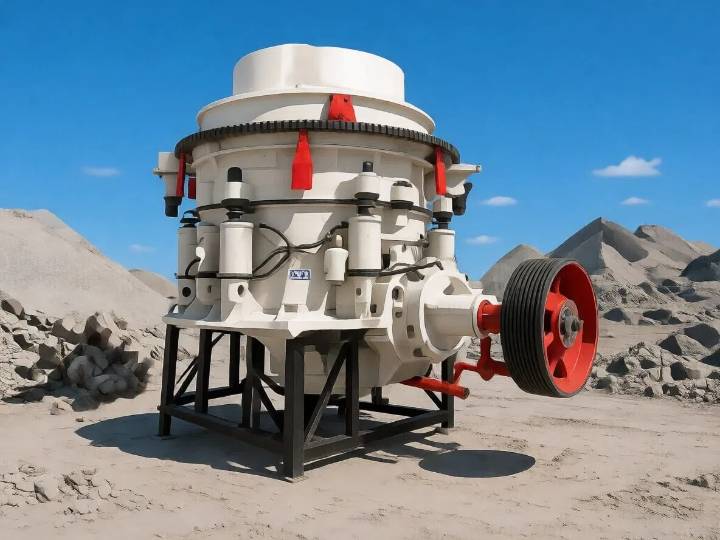
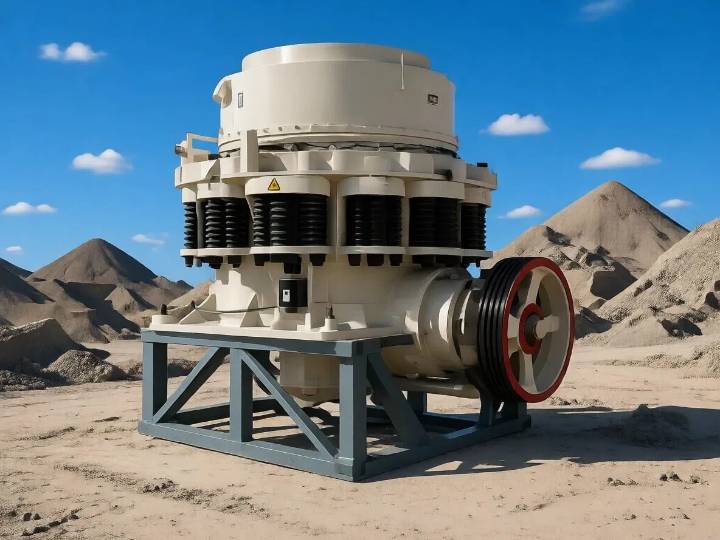
1. Classification by Design & Mechanism
This categorization is defined by the system used to apply crushing force and provide overload protection.
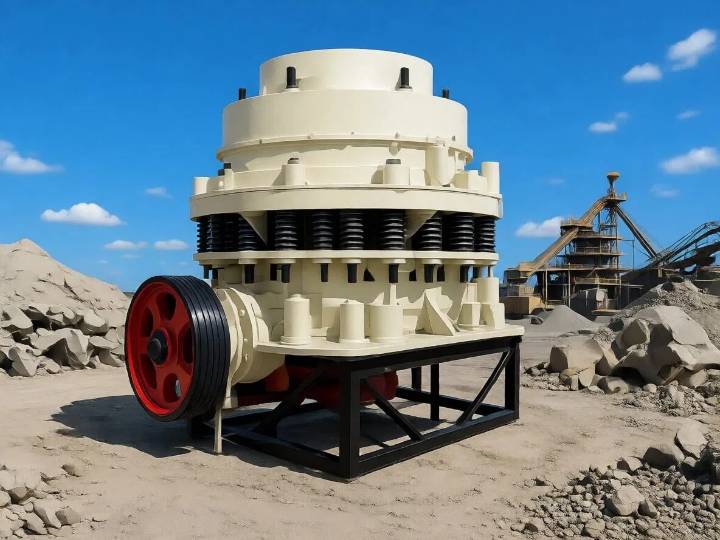
- Spring Cone Crusher (Symons Type): The traditional design, using heavy-duty springs as a mechanical safety system to allow uncrushable material to pass and protect the machine.
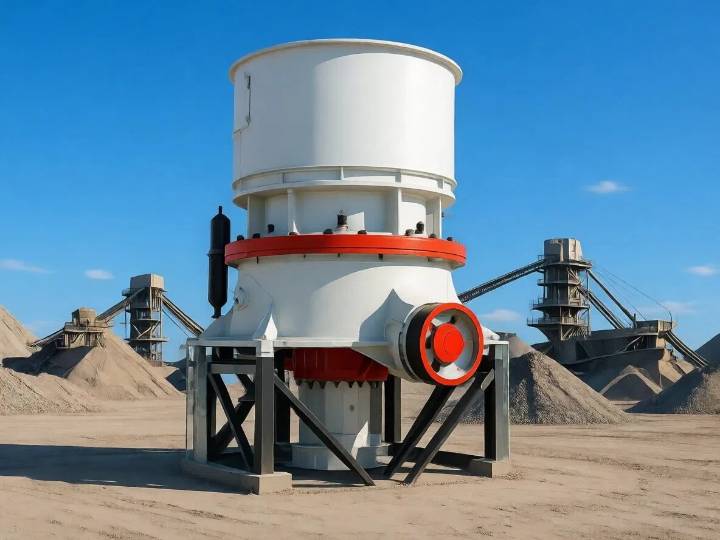
- Single-Cylinder Hydraulic Cone Crusher: Employs one central hydraulic cylinder to adjust the discharge setting and provide overload relief. Known for a simple, robust design that facilitates automation.
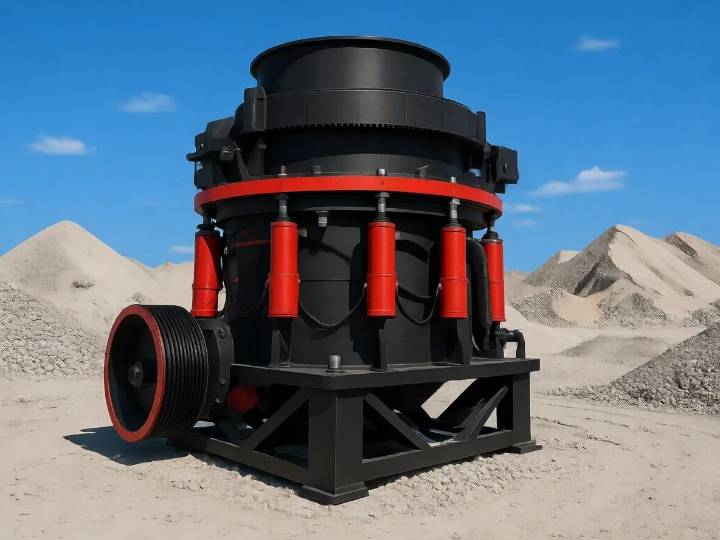
- Multi-Cylinder Hydraulic Cone Crusher: Utilizes several hydraulic cylinders arranged around the body. This delivers greater crushing force, higher efficiency, and is optimized for processing very hard, abrasive materials.
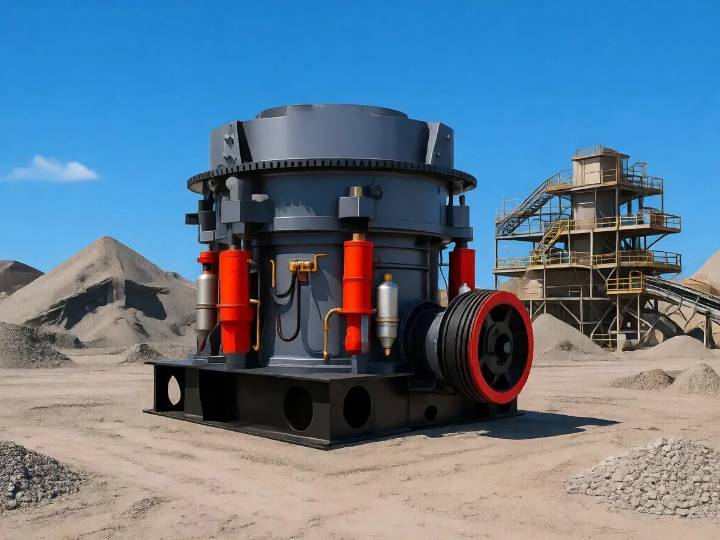
- Compound Cone Crusher: A hybrid design that integrates the spring-based framework of the traditional Symons crusher with modern hydraulic systems for chamber clearing and adjustment.
2. Classification by Cavity Shape (Application Stage)
The internal chamber profile determines whether the crusher is configured for coarse or fine reduction.
- Standard (Coarse) Cavity: Characterized by a steeper head angle and larger feed opening. Designed for secondary crushing, producing medium-sized aggregate.
- Short Head (Fine) Cavity: Features a shallower, steeper cone and a smaller feed opening. Optimized for tertiary or quaternary crushing to generate fine, well-shaped aggregates.
- Medium Cavity: Offers a middle-ground profile for intermediate product sizing needs.
3. Specialty & Application-Specific Types
- Gyradisc Crusher: Engineered specifically for tertiary crushing and sand production, utilizing a principle of inter-particle compression to create fine, cubical material.
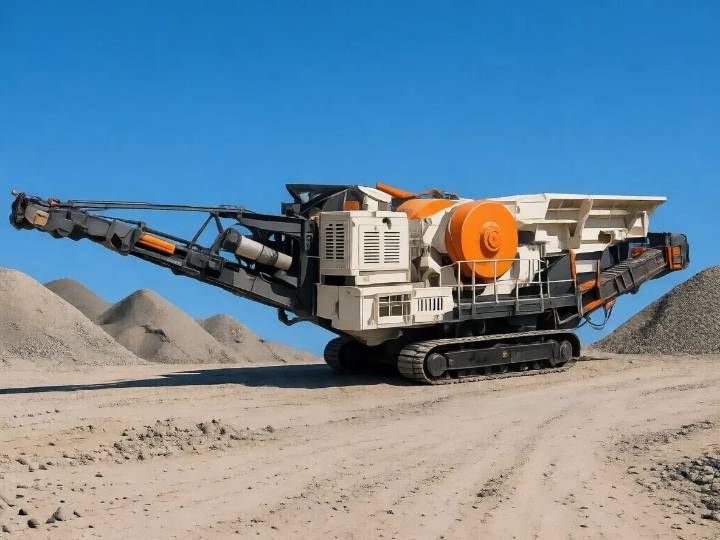
- Mobile Cone Crushers: Track- or wheel-mounted portable units (e.g., models like the Nordberg® HP Series™) that provide on-site, high-quality crushing for aggregate and recycling operations.
- Spider-Bearing Top-Supported Crushers (e.g., TG Series): Employ a top-mounted spider bearing to support the main shaft, similar to a gyratory crusher. This design is built for high-tonnage, heavy-duty secondary crushing applications.
Working Principle
A cone crusher reduces material through continuous compression, crushing rock between a gyrating inner cone (the mantle) and a fixed outer shell (the concave or bowl liner). This action resembles a mechanical pestle and mortar, efficiently processing hard, abrasive feed.
Operational Stages
- Feeding: Material is fed into the top of the crusher. A distributor plate spreads the feed evenly around the circumference of the crushing chamber.
- Gyratory Motion: A driveshaft turns an eccentric bushing at the base of the main shaft. This eccentric rotation causes the entire shaft and attached mantle to gyrate, tracing a circular path within the stationary concave.
- Compression Cycle: The mantle’s gyration creates a repetitive crushing action.
- As it swings toward the concave, the gap narrows (closing side), compressing and fracturing the rock.
- As it swings away (opening side), the gap widens, allowing the broken material to descend by gravity further into the chamber for subsequent crushing.
- Discharge: Material continues to be crushed in this manner as it moves down the chamber. Once particles are smaller than the narrowest gap, known as the Closed Side Setting (CSS), they exit through the bottom discharge opening onto a conveyor. This process creates a continuous compression cycle.
Specification
| Model | Cavity Types & Specs | Power (kW) | Dimensions (mm) |
|---|---|---|---|
| CS75 |
Fine: Feed Port: 83mm | Capacity: 45-91 t/h
Coarse: Feed Port: 159mm | Capacity: 59-163 t/h
| 75 | 2821×1880×2164 |
| Shaft Speed: 580 RPM | |||
| CS110 |
Fine: Feed Port: 127mm | Capacity: 63-188 t/h
Medium: Feed Port: 156mm | Capacity: 100-200 t/h
Coarse: Feed Port: 178mm | Capacity: 141-308 t/h
| 110 | 2821×1974×2651 |
| Shaft Speed: 485 RPM | |||
| CS160 |
Fine: Feed Port: 109mm | Capacity: 109-181 t/h
Medium: Feed Port: 188mm | Capacity: 132-253 t/h
Coarse: Feed Port: 216mm | Capacity: 172-349 t/h
| 160 | 2800×2342×2668 |
| Shaft Speed: 485 RPM | |||
| CS220 |
Fine: Feed Port: 155mm | Capacity: 180-285 t/h
Medium: Feed Port: 188mm | Capacity: 215-330 t/h
Coarse: Feed Port: 230mm | Capacity: 230-570 t/h
| 220 | 3360×2650×3050 |
| Shaft Speed: 485 RPM | |||
| CS250 |
Fine: Feed Port: 188mm | Capacity: 181-327 t/h
Medium: Feed Port: 213mm | Capacity: 220-417 t/h
Coarse: Feed Port: 241mm | Capacity: 299-635 t/h
| 250 | 3911×2870×3771 |
| Shaft Speed: 485 RPM | |||
| CS315 |
Fine: Feed Port: 253mm | Capacity: 281-726 t/h
Medium: Feed Port: 303mm | Capacity: 608-998 t/h
Coarse: Feed Port: 334mm | Capacity: 789-1270 t/h
| 315 | 4631×3251×4732 |
| Shaft Speed: 435 RPM | |||