Shanghe Concrete Mixer Tank
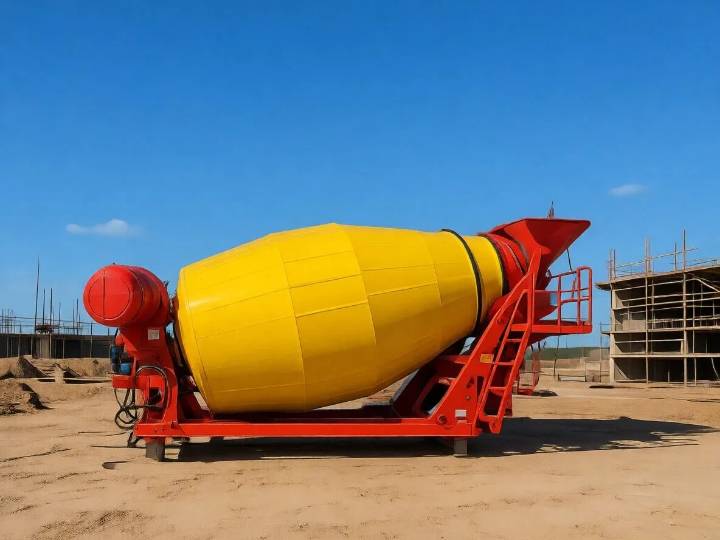
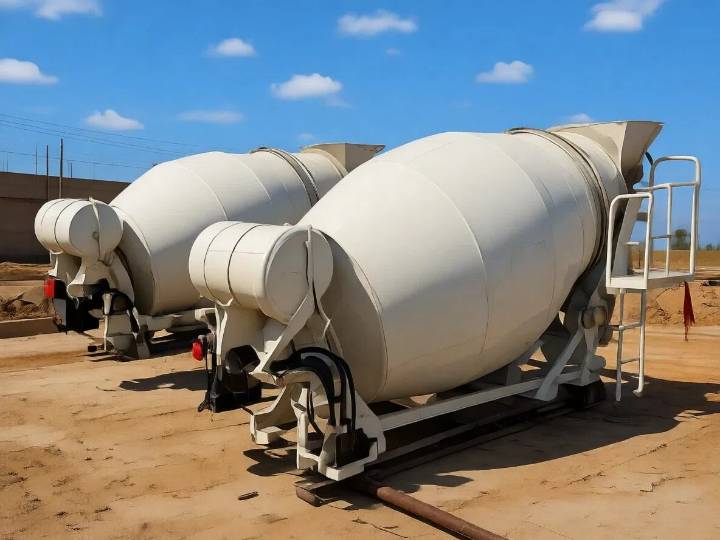
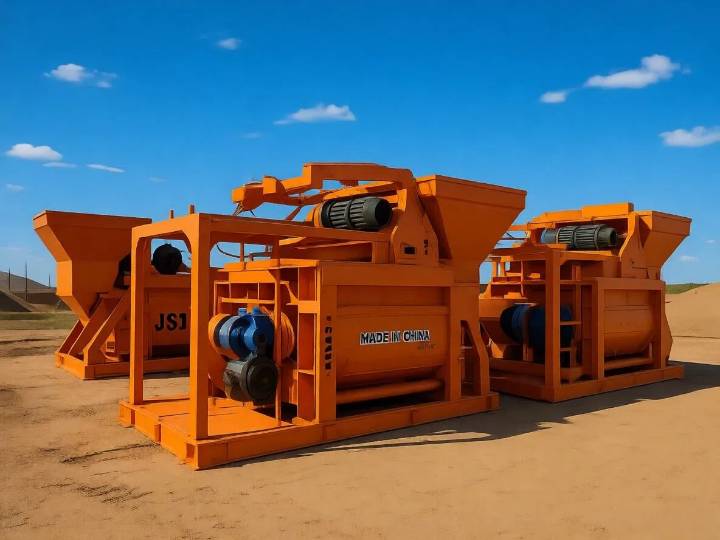
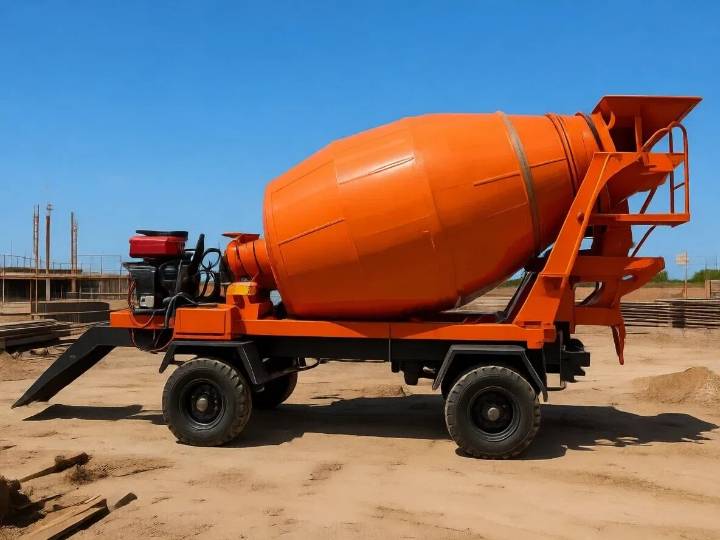
The concrete mixing tank, also known as a mixing drum, serves as the heart of any mixer, where raw materials are combined into a uniform, workable material. Its design is critical to achieving a consistent mix and directly influences the machine’s application, from small-scale projects to large industrial sites.
Key Features
- Mixing capacity: 2-10m³/batch
- Mixing mechanism: the free mechanism, stirring according to the rotating movement of the mixing drum
- Low mobility. The machine is usually fixed in place or pulled at a close distance.
- Specialized for mixing slurry, mortar and flexible concrete. Combined with trucks to transport concrete over long
- Feeding: using an excavator
- Discharding: concrete mixture is discharged by reversing the mixing tank
Get everything you want with our concrete trailer

An Off-Grid Solution
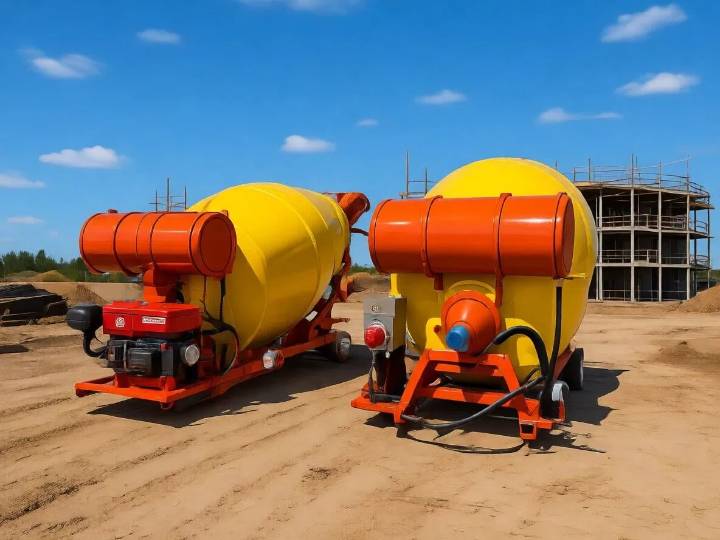
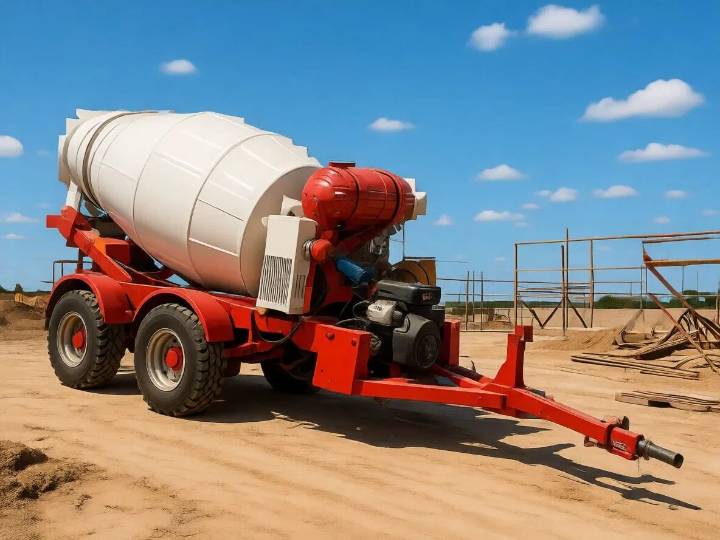
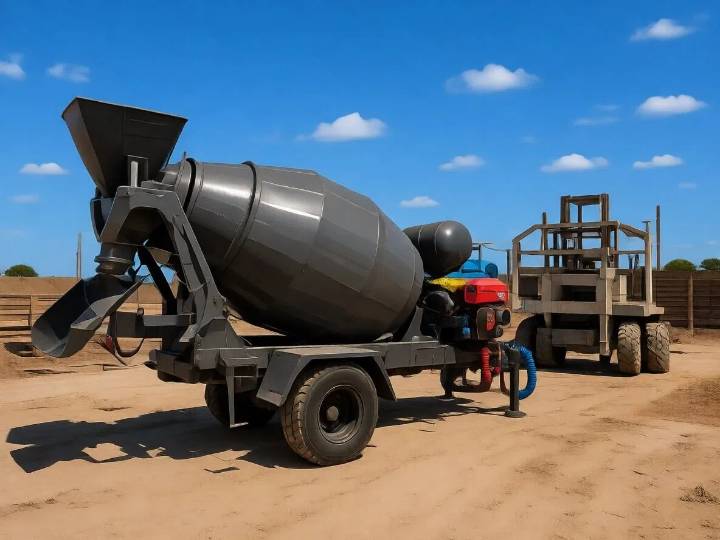
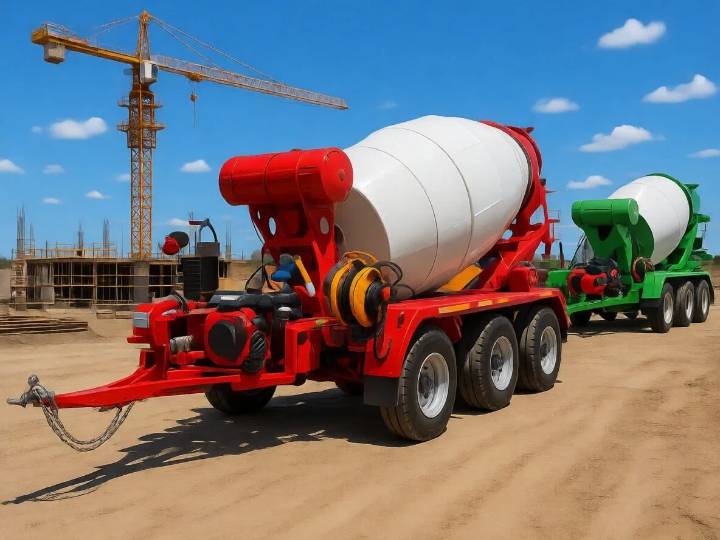
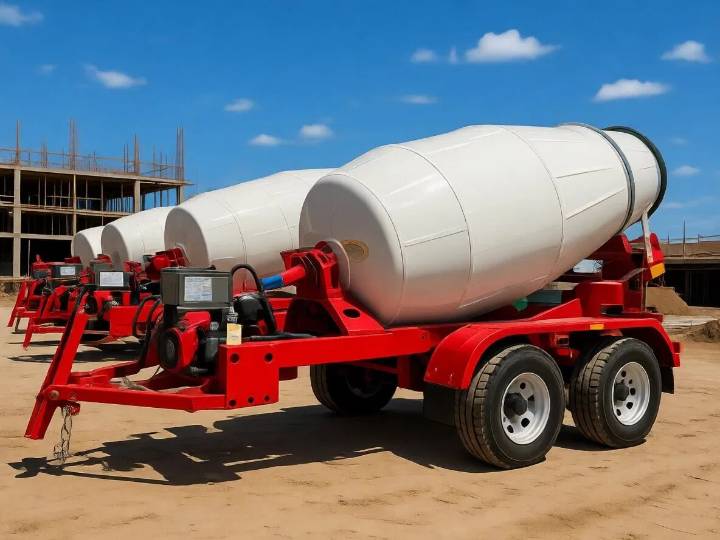
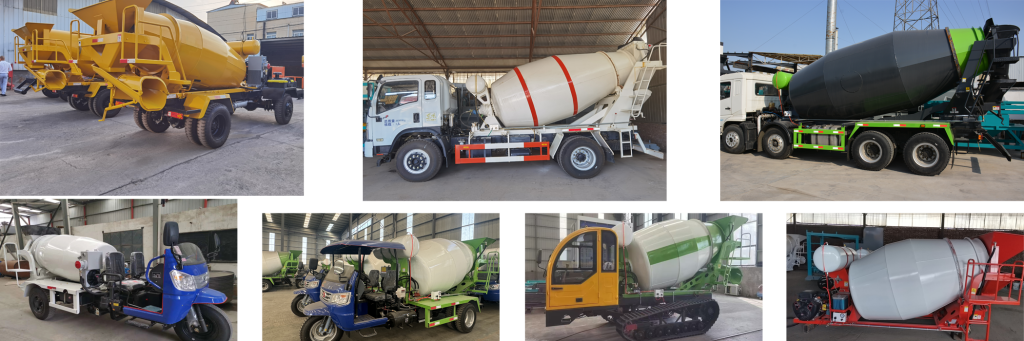
Shanghe’s portable mixer concrete skid alows you to mount the mixing unit on a trailer, truck, floor stand or move it with a forklift.
It is designed so that diferent power engines (not motor driven) and hydrauic power systems can be moved with the unit. No auxiiary power unit is required.
fyou are working indoors,you can choose an electric motor and electrical control panel to power the hvdraulic operaton.If diese or gasoline a power source that beter suits your needs, you can use this option
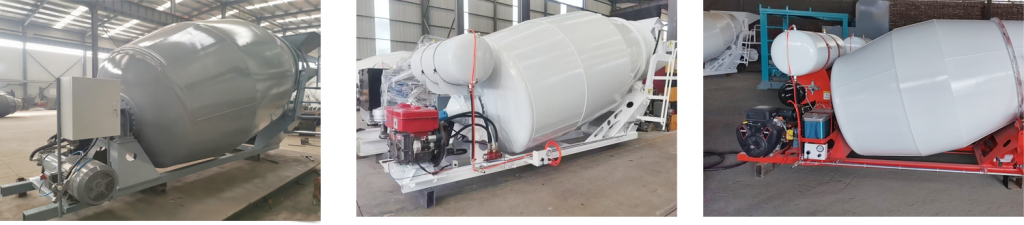
DlY your own traction power chassis
You can choose to buy our portable concrete mixer and modify it to suit your needs, You can also provide us with your drawings or ideas and we will help you realize the machine you want.
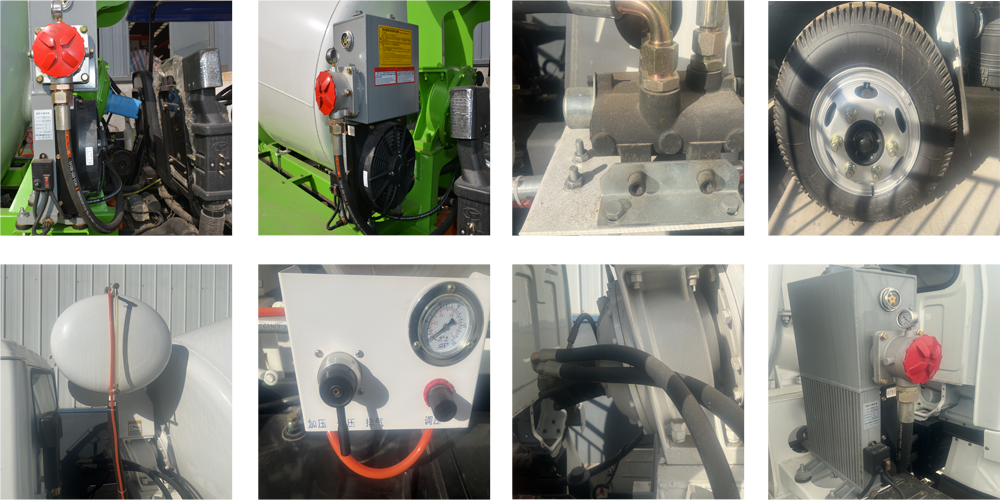
Available add-ons for concrete mixer trailers:
Advantages
Ensured Quality & Consistency
- Uniform Homogeneity: The rotating drum with its internal helical blades provides continuous, thorough mixing. This prevents the segregation of aggregates and cement, eliminating weak spots and ensuring a consistent mix from the first yard to the last.
- Predictable Performance: This homogeneity is critical for achieving the designed structural strength, durability, and longevity of concrete elements, from foundations to beams.
- Controlled Process: Modern systems allow for precise control over mixing time, drum rotation speed, and water addition, guaranteeing each batch meets exact project specifications and maintains the correct water-cement ratio.
Enhanced Efficiency & Productivity
- Optimized Workflow: Mixing in transit eliminates the need for a stationary on-site batching plant, saving crucial setup time and space. Concrete production and delivery become a single, streamlined operation.
- High-Volume Delivery: The ability to transport large, ready-to-pour volumes (typically 6-12 cubic meters) in one trip is essential for large-scale projects, enabling continuous pours and minimizing costly delays.
- Simplified Logistics: Combining mixing and hauling into one vehicle streamlines scheduling and site coordination, freeing crews to focus on placement and finishing.
Direct Cost & Labor Savings
| Advantage | Impact |
|---|---|
| Reduced Labor | Automates the mixing process, significantly cutting manual labor requirements and associated costs. |
| Minimized Waste | Precise, on-demand batching and controlled mixing reduce material waste from over-ordering, spillage, or premature setting. |
| Overall Cost-Effectiveness | The combined savings in labor, material, and time contribute directly to a project’s bottom line. |
Operational Flexibility & Sustainability
- Site Accessibility: Mixer trucks bring production capability directly to the project, providing vital flexibility for remote sites or locations with limited access to fixed ready-mix concrete (RMC) plants.
- Terrain Versatility: These vehicles can operate in diverse and often challenging site conditions where stationary equipment would be impractical.
- Reduced Environmental Footprint: On-demand mixing and optimized transport routes can lower the overall carbon footprint compared to long-haul deliveries from distant plants, contributing to more sustainable construction practices.
Working Principle
The concrete mixer tank functions as a mobile, rotating blender. Its core operation relies on the continuous or controlled rotation of a cylindrical drum equipped with internal helical blades. This motion ensures the homogeneous mixing of cement, aggregates, and water during transit, preventing the concrete from segregating or setting prematurely.
Core Mixing Mechanism
The process is driven by a rotating drum, typically tilted, with fixed internal spiral blades. As the drum turns, these blades lift the mixture upward. Gravity then causes it to tumble back down, creating a continuous folding and blending action that achieves a uniform consistency.
Operational Phases
Function is dictated by the direction and speed of the drum’s rotation, managed through three distinct phases:
- Loading & Mixing: The drum rotates in the mixing direction (typically clockwise from the rear). The blade design forces material inward and upward, creating the tumbling action that thoroughly combines all components.
- Transporting: The drum continues to rotate slowly at a designated agitating speed. This maintains the concrete’s plasticity and prevents settling or initial setting during the journey to the site.
- Discharging: At the point of placement, the drum rotation is reversed. The blades then guide the mixed concrete outward and downward, funneling it efficiently through the discharge chute.
Power & Control Systems
Precise control over this process is achieved through integrated systems:
- Hydraulic Drive: The truck’s engine (or a separate auxiliary engine) powers a hydraulic system that provides the high torque needed to rotate the heavy, loaded drum.
- Operator Controls: Levers or an electronic interface in the cab allow the operator to select the direction (mix or discharge) and precisely control the rotational speed to achieve the required concrete consistency.
- Onboard Water System: A dedicated water tank and pump enable the operator to adjust mix consistency on-site and perform thorough internal cleaning after discharge to prevent buildup.
Specification
| Type | 2m³ | 3m³ | 4m³ | 5m³ | 6m³ | 7m³ | 8m³ | 9m³ | 10m³ |
| Geometric Volume | 3.6m³ | 5.2m³ | 6.1m³ | 8.5m³ | 9.6m³ | 10.2m³ | 11.8m³ | 13.2m³ | 15m³ |
| Diameter of Drum | 1.6M | 1.8M | 1.8M | 2.05M | 2.05M | 2.15M | 2.2M | 2.3M | 2.3M |
| Angle of Inclination | 13° | 15° | 15° | 14° | 14° | 16° | 16° | 14° | 14° |
| Overall Size | 3750*1600*1810 | 4220*1800*2160 | 4610*1800*2215 | 4690*2050*2320 | 5100*2050*2432 | 5180*2150*2510 | 5374*2200*2573 | 5640*2300*2687 | 6120*2300*2742 |
| Size of installing base | 760*2750 | 800*3300 | 800*3600 | 800*3900 | 800*4200 | 800*4200 | 860*4530 | 860*4900 | 860*5300 |
| Rotation Speed | 0-10r/min | 0-10r/min | 0-10r/min | 0-10r/min | 0-10r/min | 0-10r/min | 0-10r/min | 0-14r/min | 0-14r/min |
| Hydraulic Oil cooler | 16L | 16L | 16L | 16L | 18L | 18L | 18L | 20L | 20L |
| Total Weight | 1200KG | 1400KG | 1500KG | 2280KG | 2330KG | 2450KG | 2670KG | 2980KG | 3210KG |
Choosing the Right Manufacturer: Reliability, Support, and Warranty Considerations
Choosing the right Portable concrete mixer manufacturer requires careful evaluation of thre key factors: reliability, after-sales support,and warany terms.These factors direcly affect operational efficiency, long-term costs, and project success.
| Relabllty. Proven track record industry experience: Look for manufacturers with a decade or more of experise in designing and manufacturing Portable concrete mixer Qualifications: 1S0, CE or other global standards ensure compliance with safety and quality benchmarks. Customer testimonials: Project examples or testimonials from customers in similar industries verify the actual performance of the equipment. |
| After-Sales Support: Minimize Downtime 24/7 Technical Assistance: Rapid response team to troubleshoot and resolve issues promptly. Training Programs: Onsite or virtual operator training to maximize plant efficiency and reduce operating errors Spare Parts Availability: Quick and easy access to mobile concrete plant spare parts to minimize downtime during maintenance. |
| Waranty: Protect your investment Coverage duration: Standard waranties are usually one year, but extended waranties can provide added peace of mind. Inclusions: Clarify which components are covered. Exclusions: Look out for exclusions such as wear parts or clauses regarding misuse. |