Shanghe Cement Silo
Cement silos are crucial to construction projects by enabling the bulk storage of cement directly on-site. This eliminates reliance on frequent deliveries, saving high costs and streamlining operations for greater efficiency.
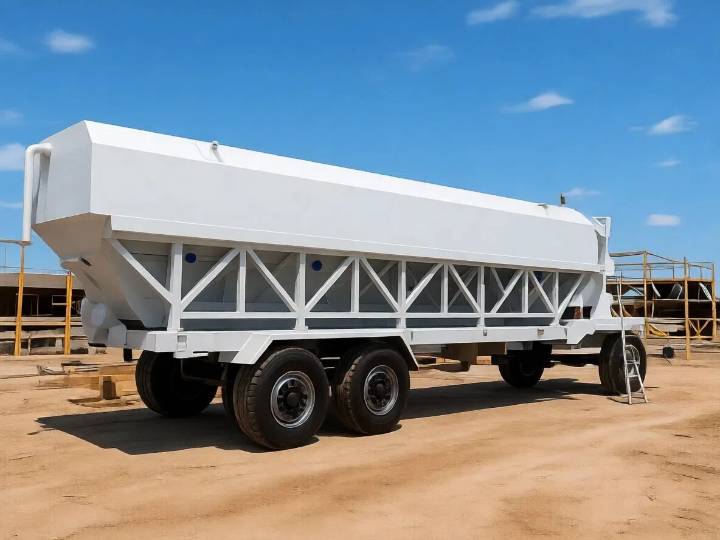
A horizontal cement silo is a portable, low-profile storage tank for bulk powders like cement and fly ash. Its primary advantage is mobility, allowing for quick setup and relocation on temporary or space-constrained construction sites without the need for deep foundations.
We provide a comprehensive range of high-quality silos, available in vertical and horizontal designs with capacities from 50 to 1000 tons. They are engineered for reliable storage of cement, fly ash, lime, and other powdered materials. Our silos ensure material protection and feature easy, rapid setup with minimal foundation requirements. Designed for mobility and integration, options include weighing systems, screw conveyors, and compatibility with various batching plants.
Beyond concrete production, these silos are perfect for independent use in terminals, factories, and stockpiling projects. We offer tailored solutions and expert guidance to meet your specific operational needs.
Cement Silo Types
Cement silos are classified by their design, construction, and mobility to suit different project needs.
By Structure:
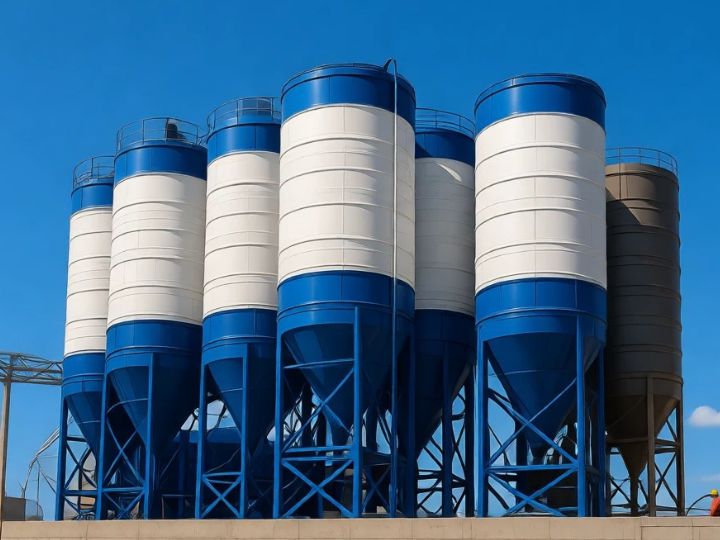
Vertical silos are tall, cylindrical units ideal for permanent, high-capacity storage with a small footprint.
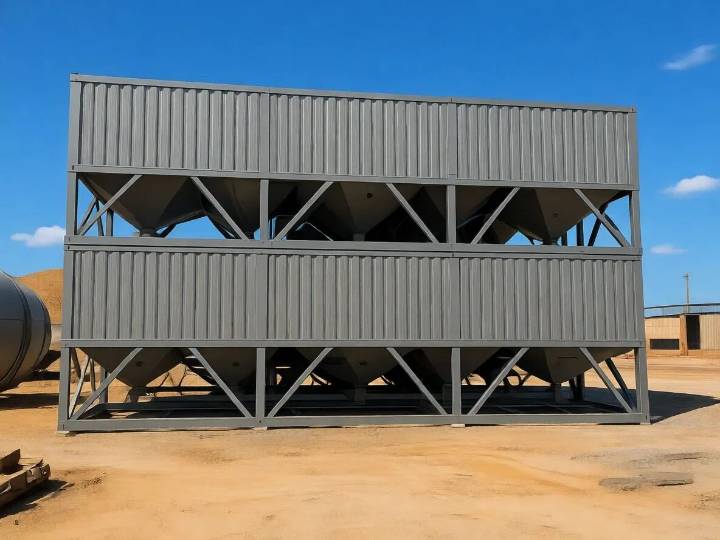
Horizontal silos offer a low-profile design, making them easier to transport and suitable for sites with height limits or temporary setups.
By Construction:
Bolted silos are modular for easy shipping and on-site assembly.
Welded silos arrive as a single, pre-assembled unit for simpler installation.
Spiral silos are formed from a folded steel strip for excellent strength and sealing.
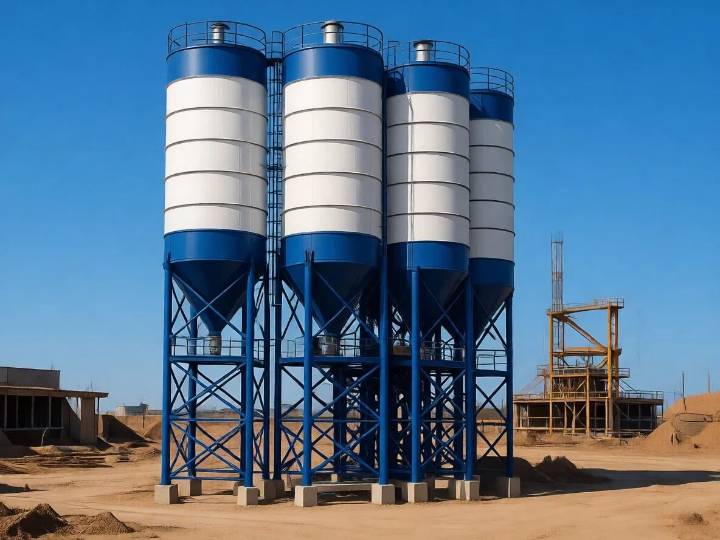
Bolted Cement Silo
Horizontal Cement Silo
By Mobility:
Stationary silos are fixed foundations for long-term, high-volume plants.
Portable silos, including telescopic and tip-up models, are designed for easy transport and rapid deployment across multiple sites.
By Discharge System:
Common bottom types include cone-bottom for gravity flow and flat-bottom designs that use mechanical augers. Split silos feature internal compartments to store different materials simultaneously.
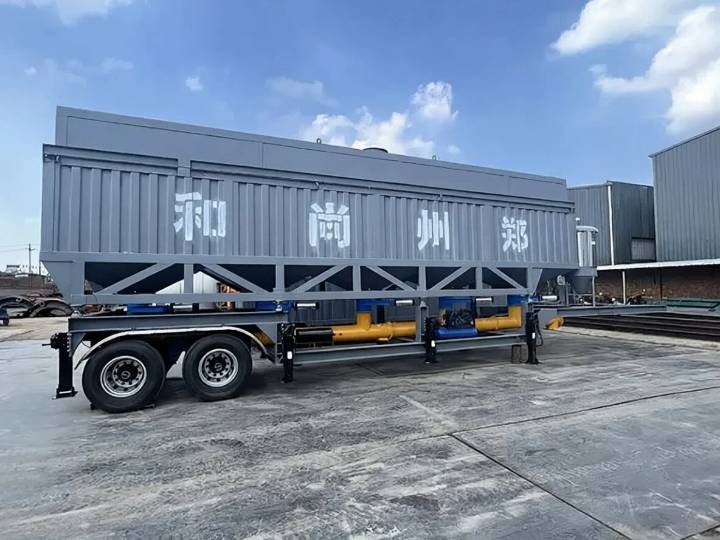
Mobile Horizontal Cement Silo
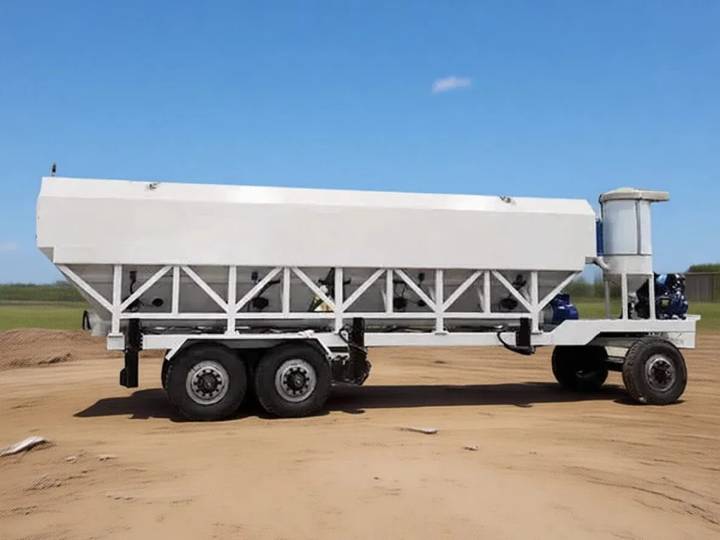
Horizontal Low Level Cement Silo
Cement Silo Comparison
| Type | Key Advantage | Use Case | Installation |
|---|---|---|---|
| Concrete | 50+ year durability | Permanent facilities | Weeks |
| Steel | Fast construction | General projects | 1-2 weeks |
| Bolted | Easy transport | Temporary projects | 1-3 days |
| Horizontal | Low profile | Urban sites | Hours |
Advantages
1. Unmatched Mobility & Simplified Installation
The design is inherently mobile. These silos can be transported via standard truck and set up on a new site within hours, dramatically reducing downtime between projects. They eliminate the most burdensome aspects of installation: there is no need for deep concrete foundations or large cranes. Many units feature integrated lifting systems or adjustable legs, allowing for quick positioning on any flat, stable surface.
2. Optimized Spatial Efficiency & Accessibility
The low-profile, horizontal footprint directly addresses spatial constraints. It minimizes vertical height, making it ideal for urban sites, indoor use, or locations under overhead obstacles. This design also enhances safety and convenience, as critical components are easily accessible from ground level for inspection, maintenance, and operation.
3. Integrated Operation & Material Integrity
Horizontal silos function as complete, self-contained systems. Key accessories like screw conveyors, dust collectors, and control panels are typically integrated, ensuring rapid operational readiness and streamlined material handling. The sealed, robust construction acts as a protective vault, safeguarding powdered materials from moisture and contamination while integrated dust control systems ensure environmentally clean operation.
4. Versatile Application
While essential for mobile concrete production and civil construction, their utility extends to any industry requiring flexible bulk powder storage, including agriculture, soil stabilization, and industrial processing.
Applications
1. Construction & Infrastructure
This is the primary domain of the horizontal silo, where it enables dynamic project execution.
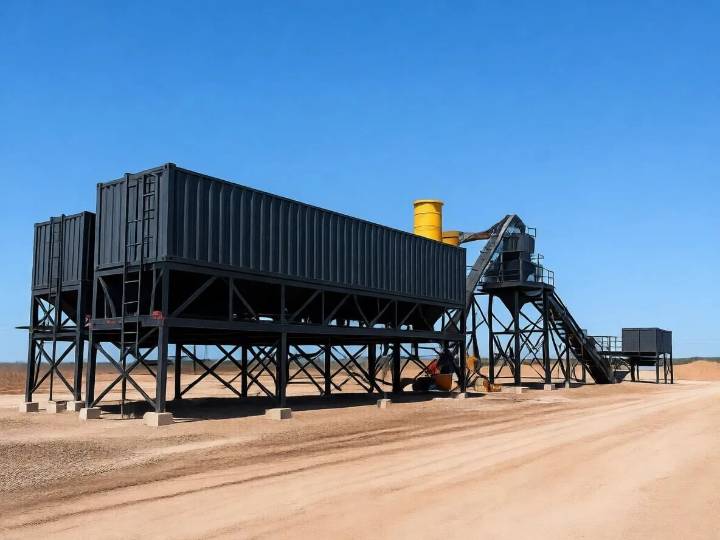
- Mobile Concrete Production: Acts as the essential cement and fly ash storage component for mobile batching plants, allowing complete production setups to relocate with the project’s progress.
- Linear & Urban Projects: Ideal for road, bridge, and tunnel construction due to its low profile (clearing height restrictions) and ease of relocation along a worksite. Its design is equally suited for congested urban sites or indoor installation within existing structures.
- Temporary & Remote Sites: Eliminates the cost and delay of pouring permanent foundations, making it the practical choice for short-duration projects or inaccessible locations.
2. Specialized Industrial & Environmental Processing
Beyond standard construction, these silos provide precision storage in demanding industrial settings.
- Material Production: Serve as integral components in asphalt plants and dry mortar lines for storing binders, fillers, and powders.
- Ground Stabilization: Are directly integrated with mixing and spreading equipment to accurately dose additives like lime or cement for soil and roadbase stabilization.
- Mining, Energy, & Recycling: Provide robust, sealed storage for mineral powders, fly ash, chemical raw materials, or agents like bentonite in challenging operational environments, from mining sites to recycling facilities.
3. Broad Material Versatility
The silo’s sealed, controlled environment accommodates a wide range of dry bulk materials, including:
- Industrial Powders: Fly ash, lime, gypsum, silica fume.
- Granular Materials: Fine aggregates, stone powder, sand.
- Agricultural Products: Grains, feed, and pellets.
Working Principle
The system functions through a seamless, three-phase cycle:
1. Sealed Pneumatic Loading
Material is delivered by pneumatic tanker trucks, which pump dry cement or powder through a feed pipe into the silo’s sealed chamber. During this transfer, a top-mounted dust collector filters exhaust air to eliminate particulate emissions, while a pressure relief valve maintains safe internal conditions.
2. Protected Storage & Monitoring
The cement is stored within an airtight, robust steel vessel that shields it from environmental moisture and contamination. Integrated electronic level sensors continuously monitor fill status, providing automated alerts to optimize refill scheduling and prevent overfilling.
3. Assisted Mechanical Discharge
When material is required, a discharge valve opens at the base. Since the horizontal design limits gravity flow, a powered screw conveyor (auger) actively transports the powder to the outlet. To ensure consistent, clog-free operation, internal devices such as vibrators or pneumatic arch-breakers fluidize the material, preventing clumping or bridging.
Key System Components
- Silo Body: A heavy-duty, horizontal cylindrical or rectangular steel tank.
- Discharge System: Centered around a horizontal screw conveyor that enables controlled material extraction.
- Flow Assistance: Pneumatic or mechanical arch-breakers that maintain material fluidity.
- Support Structure: Adjustable legs or a mobile chassis that provides stability without deep foundations.
- Control System: Integrates monitoring for level, pressure, and equipment operation.
Primary Advantages Over Vertical Silos
The horizontal configuration offers distinct practical benefits:
- Minimal Site Preparation: Requires no permanent concrete foundations; can be positioned on any flat, stable surface.
- Enhanced Mobility: Its low-profile design allows for transport on standard trucks, facilitating rapid relocation between sites.
- Space Optimization: Ideal for height-restricted areas, including urban sites, indoor workshops, or locations under overhead obstacles.
Specification
| Volume | 27m³/35 tons | 55m³/72 tons | 15m³/20 tons | 29m³/38 tons | 54m³/70 tons | 110m³/144 tons |
| Size | 6058*2438*2591mm | 12192*2438*2591mm | 6447*2108*2477mm | 9797*2216*2477mm | 6058*2438*5182 | 12192*2438*5182 |
| Steel plate thickness | 5mm | 5mm | 5mm | 5mm | 5mm | 5mm |
| Air compressor | 1 unit | 1 unit | 1 unit | 1 unit | 1 unit | 1 unit |
| OLI-WOLONG | 6 sets | 10 sets | 6 sets | 12 sets | 12 sets | 20sets |
| Vibrator | ||||||
| Upper level sensor | 3 units | 6 units | 3 units | 3 units | 6 units | 12 units |
| Lower level sensor | 3 units | 6 units | 3 units | 3 units | 6 units | 12 units |
| Pressure relief valve | 1 set | 1 set | 1 set | 1 set | 2 sets | 2 sets |
| Dust collector | 1 set | 1 set | 1 set | 1 set | 1 set | 1 set |
| Control cabinet | Fully-automatic control system | |||||
Key Factors For Selecting A Cement Silo
When selecting a cement silo, key factors include project scale, site logistics, and material specifications. Evaluating these ensures optimal performance and cost-efficiency.
1. Capacity & Silo Type
- Capacity: Match silo size to daily output. Small-to-medium projects typically need 50–500 tons, while large industrial sites may require 3,000+ tons.
- Type: Choose vertical silos for permanent, high-capacity storage; horizontal/low-profile for height-restricted or mobile setups; and bolted designs for easy transport and modular assembly.
2. Performance & Maintenance
- Material Flow: Prioritize systems with vibrators or aeration pads to prevent clumping and ensure steady discharge.
- Moisture Protection: Airtight construction is essential to prevent hardening.
- Access: Ensure safe, easy access for cleaning and upkeep via ladders, manholes, and valves.
3. Compliance & Modern Features
- Dust Control: Integrated filters or collectors are mandatory to meet particulate emission standards.
- Safety: Pressure relief valves and level indicators are critical to prevent over-pressurization and overfilling.
- Durability: Opt for galvanized or corrosion‑resistant coatings for long‑term use.
- Smart Integration: IoT‑enabled monitoring for real‑time inventory tracking and predictive maintenance is increasingly standard.
- Compatibility: Confirm discharge height and conveyor systems align with your existing batching or loading setup.
Choosing the right silo involves balancing storage needs, site constraints, and modern operational standards to ensure reliable, efficient, and compliant material management.
Maintaining Tips
proactive, routine care to prevent blockages, material hardening, and structural issues. Focus on these key areas:
1. Prevent Moisture & Ensure Flow
- Control Moisture: Use dry, moisture‑free air in handling systems, especially in humid climates.
- Empty Regularly: Completely discharge the silo periodically to avoid material compaction.
- Practice FIFO: Use older cement first to minimize hardening.
- Maintain Fluidizing Equipment: Regularly check air pads, diffusers, and vibrators to ensure consistent material flow.
2. Routine Inspection Schedule
- Daily/Weekly: Visually check for cracks, rust, leaks, or unusual noises.
- Quarterly: Inspect and clear relief valves and vents; schedule professional cleaning to remove buildup.
- Annually: Conduct a professional structural inspection, focusing on corrosion, coating integrity, and roof condition.
3. Structural & Component Care
- Roof Integrity: Monitor for leaks or water pooling, which can cause internal corrosion.
- Corrosion Protection: Apply or refresh protective coatings on metal surfaces.
- Lubricate Moving Parts: Monthly, lubricate discharge gates, bearings, and hinges.
- Filter Maintenance: Clean or replace dust collector filters to maintain airflow and safety.
4. Safety First
- Professional Cleaning Only: Never allow untrained personnel inside a silo due to risks of falling material and toxic fumes.
- Lockout/Tagout: Always de‑energize and secure equipment before starting any maintenance.
Following these guidelines will help ensure safe, efficient, and long‑lasting silo operation.
Why Choose Shanghe?
Custom-Engineered Per Project: Shanghe engineers work directly with your project team to design silos to spec.
Backed by Experience: As a major bolted silo manufacturer in China, we bring a commitment to give decades experience, technical expertise and storage solutions to meet global quality standards. From strong bolted silo designs to seamless on-site installation and after post-sales support, we ensure that you get maximum value for your investment. Partners with us to secure high-capacity storage who is fully suited to your logistics and operational demands. Our Bolted Silos available in strong Steel or light Aluminium material to match your project requirements.