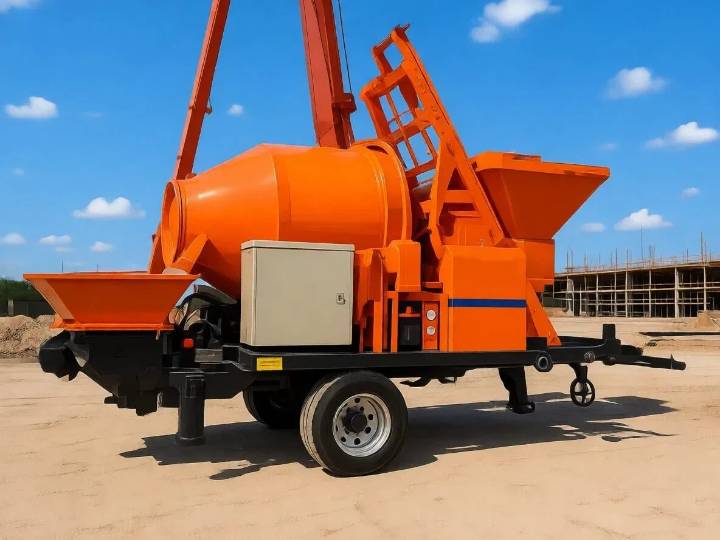
In the world of construction, time is money, and efficiency is king. The relentless pursuit of faster project timelines, tighter budgets, and simplified logistics has led to the rise of a true game-changer: the concrete mixer pump. This powerhouse machine is revolutionizing job sites by merging two critical processes into one seamless operation, offering an unbeatable solution for modern concrete placement.
Gone are the days of coordinating separate mixing and pouring teams. Whether you’re pouring foundations for a housing development or navigating the tight deadlines of a commercial high-rise, the concrete mixer pump stands as the ultimate tool for streamlined efficiency.
What Is a Concrete Mixer Pump?
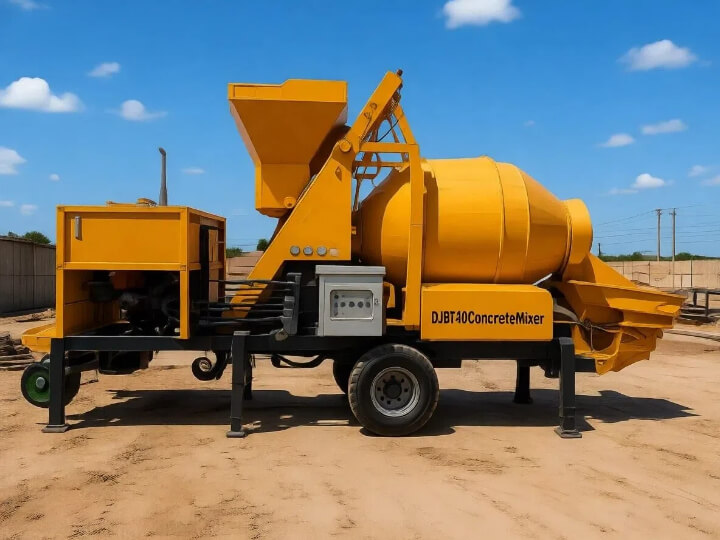
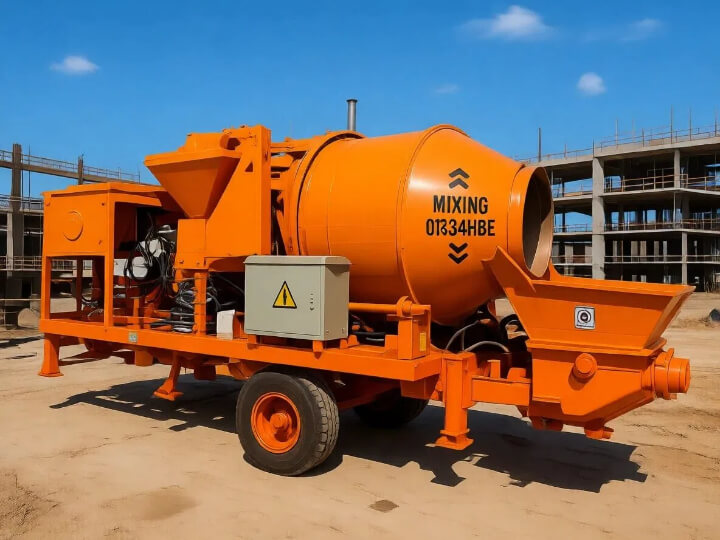
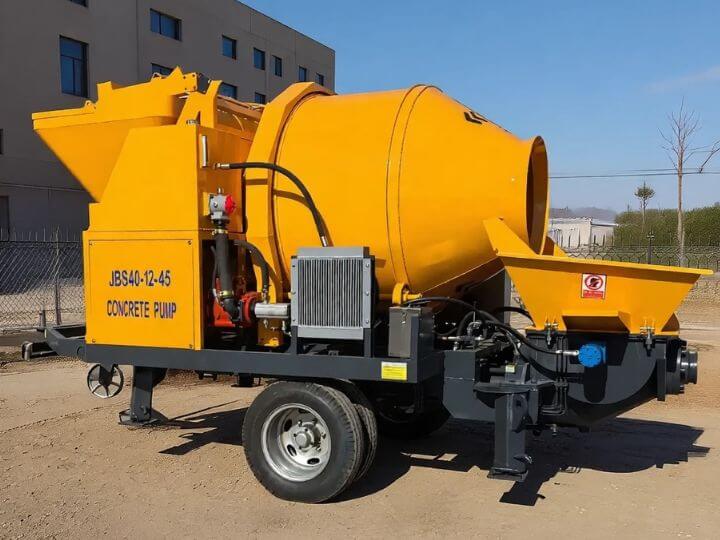
A concrete mixer pump is an integrated piece of equipment that combines a concrete mixer with a high-pressure concrete pumping system. Think of it as a fusion of a traditional transit mixer and a concrete pump. Instead of mixing concrete in a central batch plant, transporting it via truck, and then manually moving it to the pour site, this machine does it all. It mixes the concrete and then pumps it directly—through a pipeline and often a robotic boom—to the exact point of placement.
This integrated approach eliminates multiple handling steps, drastically reduces labor dependence, and creates a continuous, high-speed workflow.
How It Works: Efficiency in Motion
The operation is a clever feat of engineering designed for continuity:
- Loading: Aggregates, cement, and water are loaded into the machine’s mixing system—either a rotating drum or a volumetric hopper.
- Mixing: Components are thoroughly blended to the perfect, pumpable consistency within the machine itself.
- Pumping: A hydraulic pumping system takes over. Using a valve mechanism (like an S-tube or rock valve), it creates a steady flow, pushing the mixed concrete through a series of steel or flexible pipelines.
- Precision Placement: The concrete is delivered with pinpoint accuracy via a remote-controlled articulating boom or a stationary pipeline, reaching difficult locations like high floors, deep foundations, or behind obstacles.
Types of Concrete Mixer Pumps: Choosing Your Mixer Pump
The right machine depends on your project’s needs and environment:
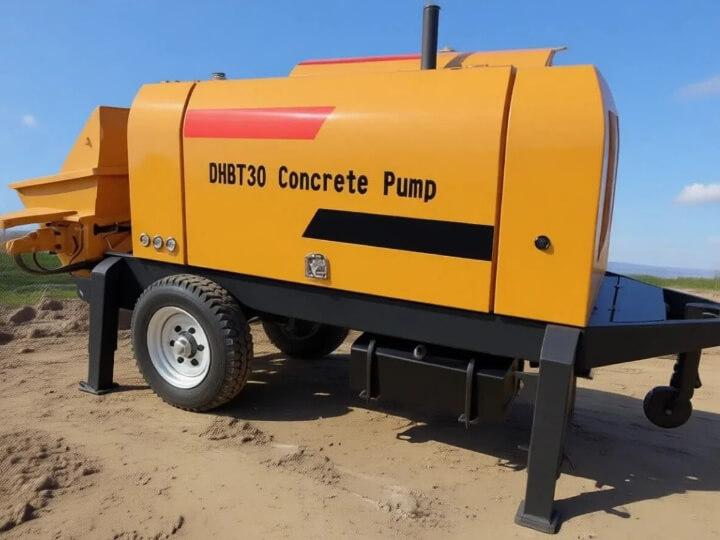
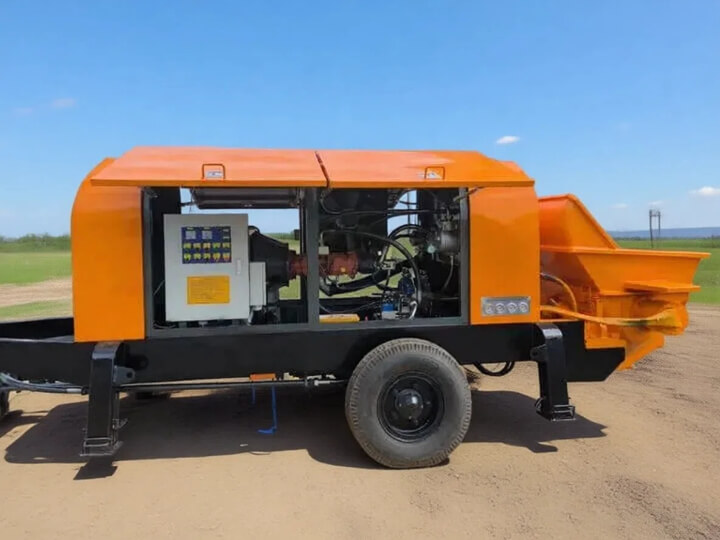
Trailer-Mounted Pump: A portable unit without its own mixer, towed to site and fed by separate mixer trucks. Ideal for smaller sites or projects with space constraints.
Diesel vs. Electric Power:
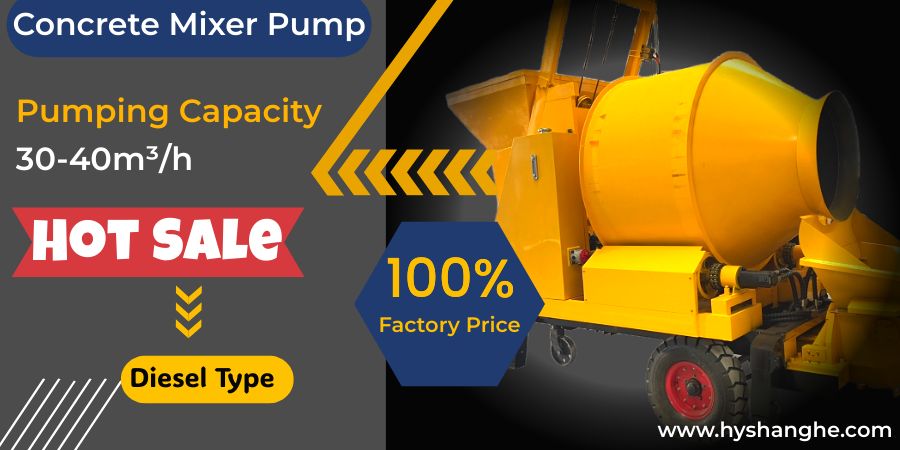
Diesel Mixer Pumps: Offer robust power and complete independence from the grid. Perfect for remote sites, large-scale projects, and applications requiring maximum pumping distance and height.
Electric Mixer Pumps: Provide quieter, zero-emissions operation with lower running costs. The go-to choice for urban projects, indoor work, and sites with strict noise or environmental regulations.
Key Advantages
The move to mixer pumps is driven by undeniable, bottom-line benefits that solve traditional construction pain points.
- Unmatched Cost Efficiency: It consolidates two major equipment costs into one. You save on rental/purchase costs, fuel, and, most significantly, labor. By automating the most strenuous part of the process, it reduces the crew size needed for concrete placement dramatically.
- Dramatic Time Savings: The continuous “mix-and-pour” cycle eliminates waiting and handling time. Projects that once took days can be completed in hours, accelerating your entire construction schedule and allowing faster progression to the next trade.
- Superior Versatility and Reach: These machines conquer site challenges. With pumping capacities that can reach 80-120 meters vertically and 300-600 meters horizontally, they easily access high floors, navigate over obstacles, and work in confined spaces where cranes and trucks cannot.
- Enhanced Concrete Quality & Consistency: The rapid, continuous pour minimizes the risk of cold joints and segregation. Concrete is placed quickly after mixing, ensuring optimal workability and strength in the finished structure.
- Improved Site Safety and Organization: Reducing the number of laborers moving wet concrete and the elimination of crane-hoisted buckets or congested wheelbarrow paths leads to a safer, cleaner, and more manageable job site.
Is a Concrete Mixer Pump Right for Your Project?
- Residential Construction: Perfect for efficiently pouring slabs, foundations, and walls for housing developments.
- Commercial & High-Rise Buildings: Essential for the rapid core-and-slab cycles of modern urban construction.
- Infrastructure & Civil Works: Ideal for bridges, tunnels, retaining walls, and roadworks.
- Agricultural & Industrial Projects: Excellent for silos, barns, factory floors, and large-scale sheds.
Choosing the right model comes down to a few key questions:
- What is the total concrete volume and required pour rate (e.g., 30m³/h, 40m³/h)?
- What are the maximum pumping height and distance needed?
- Is diesel independence or electric quietness more important for your site?
- How is site access? Do you need a large boom truck or a more nimble trailer pump?
Shanghe: Your Best Choice
Choosing the right concrete machinery supplier can make all the difference in your project’s speed and profitability—and that’s exactly why contractors worldwide trust Shanghe. With years of industry experience, strict quality control, and a commitment to reliable after-sales support, we deliver concrete mixer pumps that are built to perform and built to last. We don’t just offer machines—we offer complete solutions, from expert guidance on model selection to fast delivery and lifetime service support. When you choose us, you’re choosing efficiency, durability, and a partner who truly understands your construction needs.